








































The problems plaguing Gaza’s day-after plan
Plus, the shifting politics of being pro-Israel


 Add JewishInsider on Google
👋 Good Friday morning!
In today’s Daily Kickoff, we do a deep dive into the Trump administration’s struggles to lay out a clear vision for its Gaza peace plan, and report on Sen. Ted Cruz’s criticism of House Foreign Affairs Committee members who altered the House version of Cruz’s legislation to sanction the Muslim Brotherhood. We profile academic Adam Louis-Klein about his efforts to reframe discourse around Israeli and Zionism, and talk to Rabbi Ammiel Hirsch about his meeting on Thursday with New York City Mayor-elect Zohran Mamdani. Also in today’s Daily Kickoff: Rabbi Shalom Landau, Maj. Gen. Shlomi Binder and Julie Benko.
Today’s Daily Kickoff was curated by Jewish Insider Executive Editor Melissa Weiss with assists from Danielle Cohen-Kanik, Emily Jacobs and Marc Rod. Have a tip? Email us here.
For less-distracted reading over the weekend, browse this week’s edition of The Weekly Print, a curated print-friendly PDF featuring a selection of recent Jewish Insider and eJewishPhilanthropy stories, including: Eisenhower’s great-grandson carries the torch for Holocaust remembrance; Iran International holds Iranian regime accountable — from afar — with aggressive journalism; and Experts raise red flags over AI’s potential to disrupt Israel’s next election. Print the latest edition here.
What We’re Watching
- In Washington today, the Hudson Institute’s Center for Peace and Security in the Middle East is hosting a daylong seminar titled “Antisemitism as a National Security Threat.” Speakers include the White House’s Seb Gorka, former antisemitism envoy Deborah Lipstadt, House Foreign Affairs Committee Chairman Brian Mast (R-FL), CNN’s Scott Jennings, Walter Russell Mead and former State Department senior advisor Ludovic Hood.
- On Sunday, Maryland Gov. Wes Moore is hosting a Hanukkah brunch reception at the Government House of Maryland.
- Later Sunday, the National Menorah lighting for the first night of Hanukkah, hosted by American Friends of Lubavitch (Chabad), will take place on the Ellipse in Washington.
What You Should Know
A QUICK WORD WITH JI’S MELISSA WEISS
Last week, Maryland Gov. Wes Moore stood before a crowded room of Jewish attendees just outside the nation’s capital, and proclaimed: “Today, I want to be loud and clear, that Maryland stands with the Israeli people and we support their right to exist in the region with the same sense of safety and security that we all want,” Moore told attendees at the Jewish Community Relations Council of Greater Washington’s annual “Lox and Legislators” event.
The nuance in Moore’s statement was telling — an expression of support not for Israel specifically, but for the Israeli people. It’s a clear distinction — and a potential shift in messaging for mainstream Democrats seeking to put daylight between themselves and the Israeli government, while not, as they see it, throwing Israelis under the bus.
But it’s also the kind of language reserved for rogue and oppressive regimes. Few politicians mention “the South African people” when speaking about disagreements with Pretoria. Same with “the people of Brazil” or “the people of Poland” when disagreements between Washington and those countries arise.
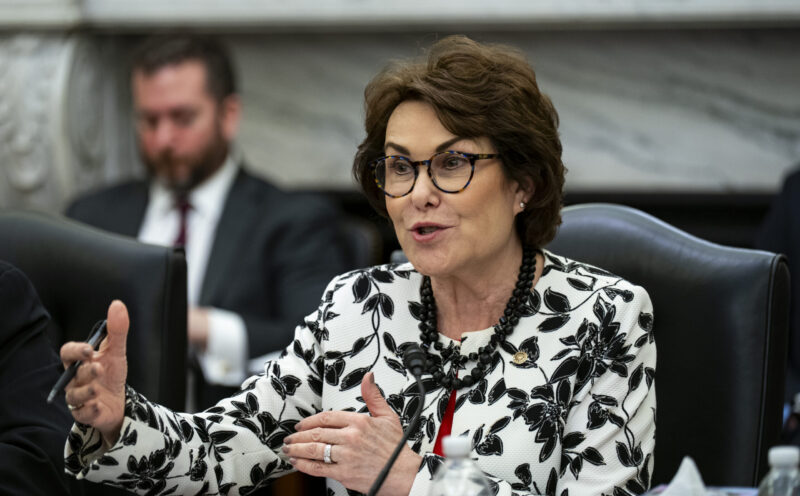
Separating governments from their populaces is commonplace when talking about countries committing grave human rights violations. In their co-sponsorship of legislation introduced last week backing internet freedom in Iran, Sens. Jacky Rosen (D-NV) and Dave McCormick (R-PA), both referred to “the people of Iran.” Last month, Rep. Young Kim (R-CA) introduced legislation supporting “The North Korean people” who “face torture, imprisonment, starvation, and forced labor every single day.”
But Israel, a key U.S. ally, is a parliamentary democracy that holds regular (some would argue too regular) elections. And Moore, a savvy politician with potential White House ambitions, can read the political tea leaves within his party.
A Gallup survey released over the summer found that a majority of Americans — 52% — viewed Israeli Prime Minister Benjamin Netanyahu unfavorably, while just 29% had a positive view of Israel’s longest-serving leader. The July poll reflected Netanyahu’s highest unfavorable numbers in nearly three decades.
But perhaps most telling was that Netanyahu, in the Gallup poll, was viewed favorably by just 9% of Democrats — likely due to the convergence of a number of factors, among them Israel’s prosecution of the war in Gaza and Netanyahu’s close ties with the Trump administration.
the day-after dilemma
Trump administration struggles to lay out clear vision for Gaza peace plan

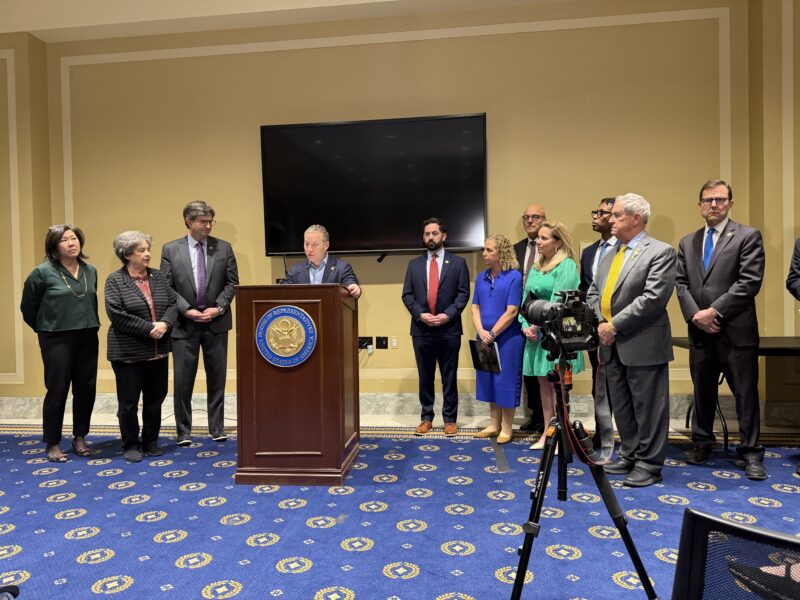
It has been nearly three months since President Donald Trump unveiled his 20-point peace proposal for Gaza, but officials have yet to explain how key aspects would function in practice or how Hamas’ entrenched presence in the enclave will be addressed, Jewish Insider’s Matthew Shea reports. Under the plan, Gaza’s governance would be overseen by a Trump-led “Board of Peace,” followed by an international executive board expected to include Jared Kushner and White House Special Envoy Steve Witkoff. Beneath the board would sit a technocratic Palestinian government of approximately a dozen Palestinians who are not affiliated with Hamas.
Implementation challenges: But as Trump focuses on handpicking members for his ideal Palestinian governing body, experts told JI that the administration has offered little clarity on how this layered structure would actually govern Gaza — or, more consequentially, how it can operate while armed Hamas terrorists remain in control of much of the enclave. Israel currently controls 53% of Gaza, as demarcated by the “Yellow Line,” while Hamas maintains control in the remaining western part of the enclave. Despite heavy losses, Hamas fighters continue to operate and have given no indication of relinquishing power. Elliott Abrams, who served as Iran envoy during Trump’s first term, told JI that the White House has yet to “seriously address the question of who would maintain security in Gaza and prevent a Hamas recovery.”
cruz control
Cruz rips House committee over changes to Muslim Brotherhood terrorism bill
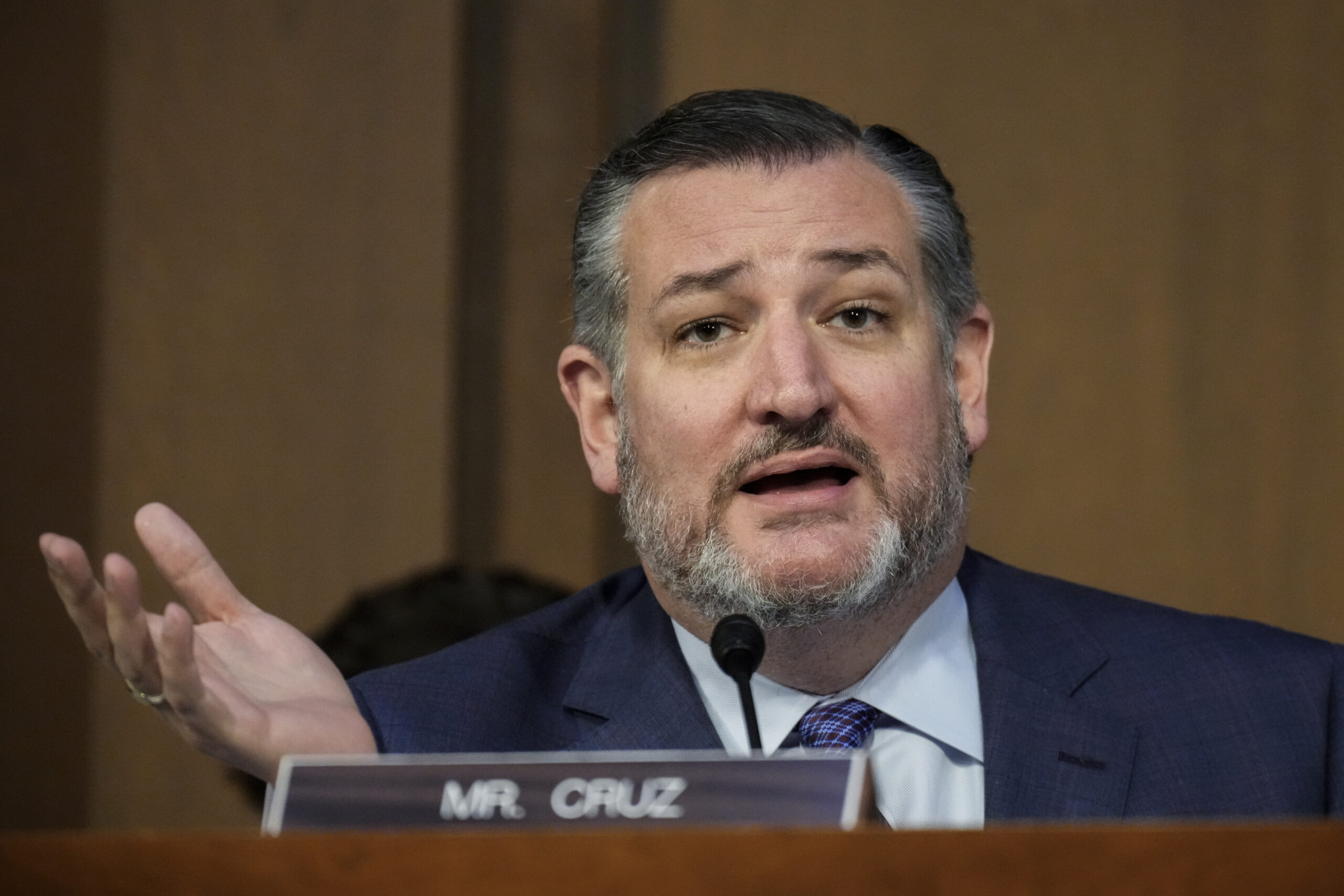
Sen. Ted Cruz (R-FL), the lead Senate sponsor of legislation to designate the Muslim Brotherhood as a terrorist organization, criticized members of the House Foreign Affairs Committee for voting to modify the House version of the bill, removing key provisions requiring the designation of Muslim Brotherhood branches and the organization as a whole as a terrorist group, Jewish Insider’s Marc Rod reports.
Notable quotable: “Last week, frustratingly, the House version of my bill was advanced but terminally weakened by the House Foreign Affairs Committee,” Cruz said during a Senate Foreign Relations Committee hearing on Thursday. “They took out the ‘designation’ part of the Muslim Brotherhood Terrorist Designation Act. The Senate should do better, and we should move the full bill on our side.” Cruz suggested that some House lawmakers “did not believe that Congress should have a role in crafting sanctions, which are to be implemented by the executive.” He said he considers that argument “specious” and that most Senate colleagues agree.
olive branch
Rabbi Ammiel Hirsch, outspoken backer of Israel, leaves meeting with Mamdani ‘encouraged’
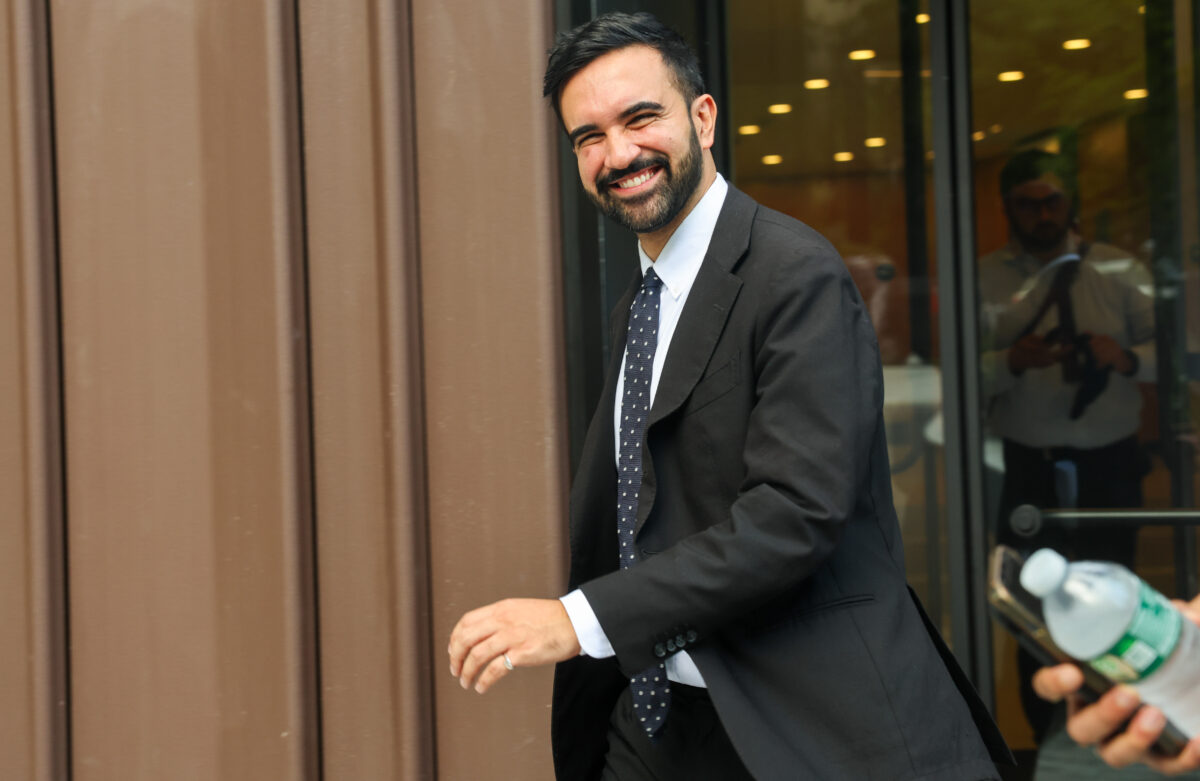
Prominent Reform Rabbi Ammiel Hirsch left a meeting on Thursday afternoon with New York City Mayor-elect Zohran Mamdani and a dozen diverse rabbis and community leaders feeling “encouraged,” saying that there is “reason to be optimistic” that Mamdani will protect the Jewish community, Jewish Insider’s Haley Cohen reports. In addition to Hirsch, other rabbis in attendance included Rabbi Joshua Davidson of Temple Emanu-El, a Reform synagogue; and Rabbi Chaim Steinmetz of the Modern Orthodox Kehilath Jeshurun synagogue.
Meeting minutes: Hirsch, who spoke with JI following the mayor-elect’s private meeting with the New York Board of Rabbis, of which Hirsch is the president, said he was “encouraged by [Mamdani’s] willingness to continue to dialogue, knowing in advance that he’s going into meetings with people who have significant disagreements with him, and that he continues to be open to having these kinds of discussions.” Hirsch declined to share the content of Thursday’s private meeting, but called it “productive” and noting that “the mayor-elect stayed a little longer than anticipated so we were pleased with that. He listened attentively. We shared our concerns. We agreed that we’ll set up a mechanism to meet regularly with him and his senior staff so we can keep lines of communication open. We agreed to keep content and details confidential.”
No thanks, Nadler: CNN reports that aides to Mamdani rebuffed repeated overtures from Rep. Jerry Nadler (D-NY) to assist with outreach during the campaign. Nadler, who represents the heavily Jewish 12th Congressional District, had faced criticism from New York Jewish leaders over his endorsement of Mamdani in June.
community condemnation
Va. Jewish groups slam Sam Rasoul, anti-Israel state lawmaker exploring congressional bid
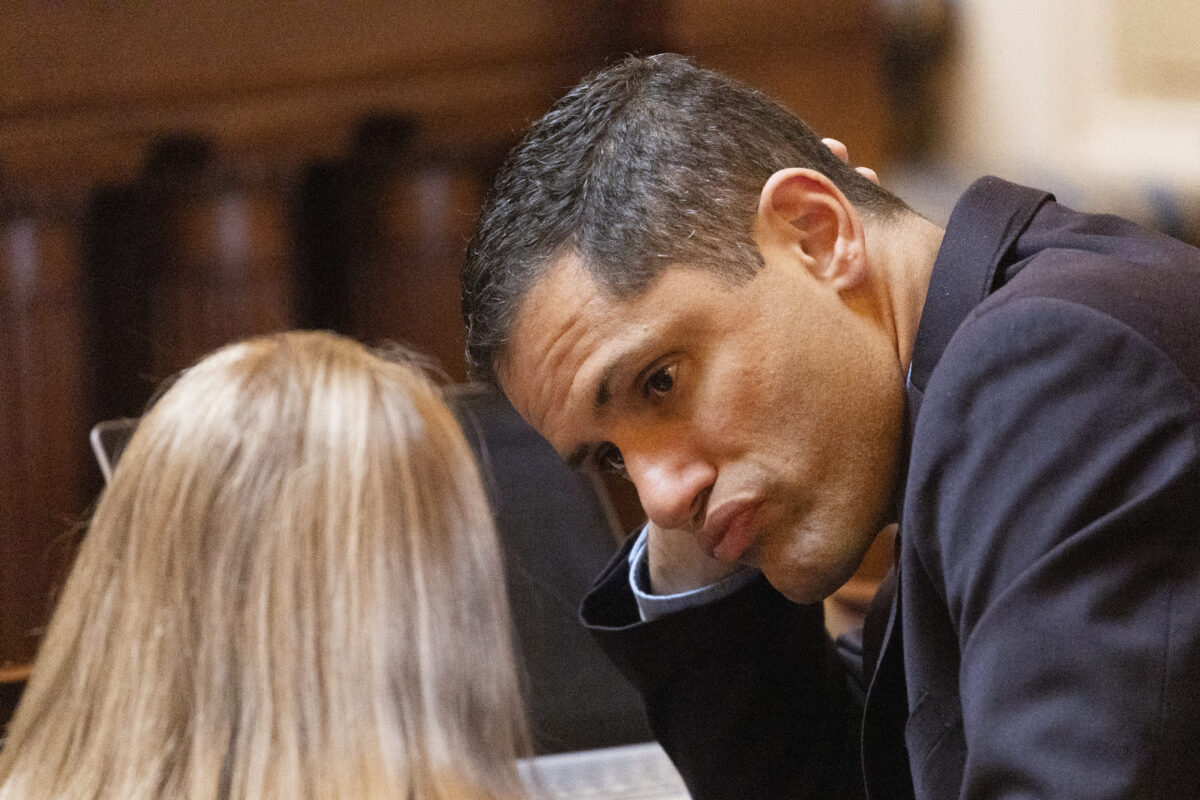
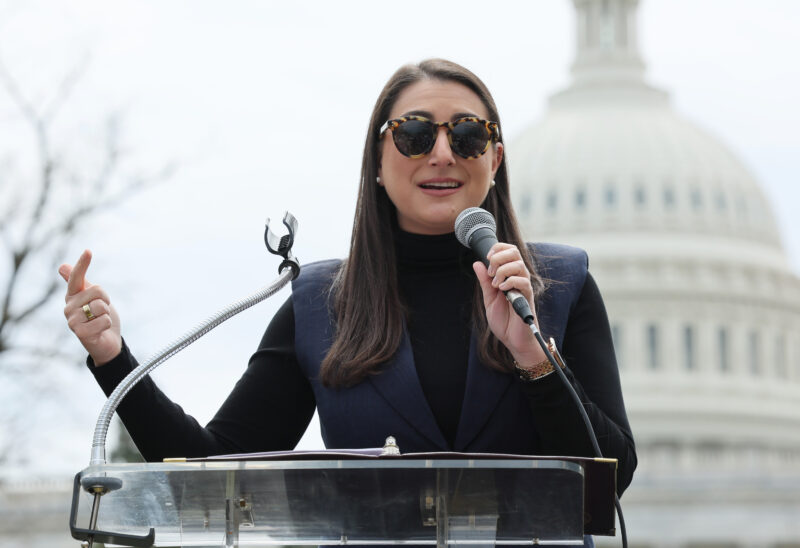
Several leading Jewish organizations in Virginia and Washington issued a joint statement on Thursday slamming state Del. Sam Rasoul and calling for his resignation as chair of the Virginia House of Delegates’ Education Committee, days after the Roanoke Democrat announced that he is considering running for Congress in 2026, Jewish Insider’s Gabby Deutch reports.
Commonwealth concerns: The statement — from the Jewish Community Relations Councils in the greater Washington area, Richmond, the Tidewater (including Virginia Beach) and the Virginia Peninsula (Newport News) — accused Rasoul, who is Palestinian American, of using rhetoric that fuels antisemitism. It did not mention Rasoul’s possible congressional bid. The four organizations are all nonprofits and prohibited from engaging in political advocacy. “Del. Rasoul’s antisemitic rhetoric dates back several years, and his vitriol has continued to increase in recent weeks. We are speaking out now because the situation demands it,” Vicki Fishman, director of Virginia government and community relations at the Washington JCRC, told JI on Thursday.
reframing the narrative
From the Amazon to anti-Zionism: The scholar seeking to stigmatize anti-Israel hate

Earlier this year, in the heavily saturated world of commentary about the Israeli-Palestinian conflict, a new name started to appear everywhere, though it seemed to come out of nowhere: Adam Louis-Klein, an anthropology Ph.D. student at McGill University. Until this past spring, he had hardly said anything about Israel publicly. He was too busy studying a remote Amazonian tribe. But then Louis-Klein, 32, built a platform and started writing. Anywhere he could, Louis-Klein was making the bold claim that American Jews need to stop arguing about when anti-Zionism crosses a line into antisemitism. In fact, he thinks they need to give up on their efforts to convince people that anti-Zionism is an antisemitic movement, Jewish Insider’s Gabby Deutch reports.
Hate ‘hiding in plain sight’: Louis-Klein’s thesis — the idea he is trying to get out into the world everyday, alternating between attention-catching social media graphics designed to go viral and lengthy posts using the dense academic jargon of anthropology — is that anti-Zionism should be considered a hate movement, something that is worthy of condemnation on its own, regardless of whether it is deemed antisemitic or not. “When someone’s marked as a Zionist, anti-Zionists treat those Zionists differently. They treat them in unequal ways. They advocate for violence, or they advocate for discriminating or boycotting them, or excluding them or purging them. Anti-Zionists stigmatize Zionists. They spread libels about Zionists. They call Zionists slurs,” Louis-Klein told JI in an interview last week. “It’s its own way of discriminating, and it’s hiding in plain sight. It’s there for everyone to see.”
exclusive
Rosen, McCormick push for new sanctions on the Houthis over human rights violations

Sens. Dave McCormick (R-PA) and Jacky Rosen (D-NV), respectively the chair and ranking member of the Senate Foreign Relations Committee’s Middle East subcommittee, are pushing for additional sanctions on the Houthis in response to the group’s violations of human rights and hostage-taking in a new bill set to be introduced Friday, Jewish Insider’s Marc Rod reports.
Letter of the law: The Houthi Human Rights Accountability Act would require the administration to assess whether members of the Houthis have committed gross violations of human rights, obstructed the delivery of humanitarian aid or have been involved in taking American hostages or supporting hostage-taking, qualifying them for sanctions under U.S. law. The bill also declares that it is the sense of Congress that “Houthi efforts to indoctrinate Yemenis into a violent, anti-Semitic, and extremist worldview are a threat to a Yemeni-led peace process and to regional stability” and that “it is counter to United States policy to provide support to the Houthis in Yemen.”
Worthy Reads
🕎 Home for the Holidays: In The Wall Street Journal, Mark Oppenheimer reflects on the value of spending Jewish holidays at home. “Being at home is a ritual, as religious, in its way, as remembering the Maccabees’ inextinguishable lamp or the exodus from Egypt. Being in my house, the only one our family has ever lived in, eating, laughing, arguing — it’s how I want to celebrate my good fortune, when the seasons call me to. … The stories of the Hebrew Bible frequently relate to central questions of family life: where to settle, whom to marry, when to have children. There are no desert hermits in our tradition, only moms and dads tending home fires. Judaism isn’t a celestial religion, lifting us into the clouds. Nor is there any commandment to spread the religion over the face of the earth. We have no obligation to travel far and wide, to make religious pilgrimages. Rather, we are directed to make Jewish families, and then to make their homes centers of Jewish life.” [WSJ]
🧑🎤 That’s Entertainment?: In The Washington Post, Michal Cotler-Wunsh and Nadav Steinman, respectively the CEO and board chair of the International Legal Forum warn of the rise in antisemitism in the entertainment industry, citing recent events in sports and music as well as the recent release of a letter by hundreds of celebrities calling for the release of convicted Palestinian terrorist Marwan Barghouti “The normalization of ever-mutating antisemitism creates the conditions for hate that does not stop with Jews, because it’s never about Jews alone. What is being mainstreamed is a thuggish sensibility in which any targeted group can be demonized, and people can be barred from public spaces for their own ‘safety.’ The deeper threat from rising antisemitism is the general erosion of fundamental principles of life and liberty.” [WashPost]
Word on the Street
The U.S. is reportedly mulling terrorism-related sanctions on the U.N. Relief and Works Agency, which works with Palestinians, over the organization’s ties to Hamas…
Iran is still plotting assassination attempts against officials from the first Trump administration involved in the killing of Quds Force head Gen. Qassem Soleimani, FBI operations director Michael Glasheen cautioned on Thursday, Jewish Insider’s Emily Jacobs reports…
A senior State Department official told lawmakers on Thursday that the U.S. believes there are “no good actors” in the brutal civil war between the Sudanese Armed Forces and the paramilitary Rapid Support Forces in the East African nation, and said the U.S.’ focus is on cutting off external support to both parties and achieving a temporary ceasefire, Jewish Insider’s Marc Rod reports…
Rabbi Shalom Landau, a Satmar Hasidic leader who posts online videos offering practical, Torah-based advice, has found unlikely supporters in prominent Jordanian-American tech founder Amjad Masad, who is outspokenly critical of Israel, and within white nationalist online subcultures, Jewish Insider’s Haley Cohen reports…
The Senate unanimously passed the bipartisan Holocaust Expropriated Art Recovery Act on Thursday aimed at eliminating loopholes used by museums and other stakeholders to continue possessing Nazi-looted artwork that Jewish families have been trying to recover. “This legislation renews our commitment to Holocaust survivors and their families by ensuring cases are heard on their merit, offering a path to restitution and assurance that such injustices are never forgotten,” Sen. John Cornyn (R-TX), who led the legislation with Sen. Richard Blumenthal (D-CT), said…
New York state Assemblymember Amanda Septimo officially launched a primary challenge to Rep. Ritchie Torres (D-NY); read JI’s report on Septimo’s candidacy from earlier this week here…
Renaissance Technologies is mulling a change to its trading models after two of its funds experienced their worst-ever months in October, followed by surges the following month…
Actress Julie Benko was tapped as Emma in the Broadway production of “Ragtime,” filling in for Shaina Taub, who is taking a three-month hiatus from the role in early 2026; Benko was previously the understudy for Fanny Brice in the Broadway revival of “Funny Girl”…
London’s Roundhouse music venue apologized for antisemitic imagery — including an intertwined swastika and Star of David — that appeared during a show by Scottish group Primal Scream…
Israeli Maj. Gen. Shlomi Binder, the head of the IDF’s military intelligence, told U.S. Ambassador to the U.N. Mike Waltz, who is in Israel this week, that Israel’s strikes on Iran during the 12-day June war were less severe than had initially been thought…
Israeli and U.S. officials are preparing for Israeli Prime Minister Benjamin Netanyahu to travel to Cairo in the near future, where he will meet with Egyptian President Abdel-Fattah el-Sissi and sign a natural gas agreement; the visit would be the first official state visit by an Israeli leader to Egypt in 15 years…
The Hostage and Missing Families Forum released video of a group of hostages known as the “Beautiful Six” that was obtained by the IDF in Gaza; in the video, which appeared to be filmed in December 2023, showed Hersh Goldberg-Polin, Carmel Gat, Eden Yerushalmi, Almog Sarusi, Ori Danino, and Alex Lobanov — all of whom were killed by Hamas in August 2024 as Israeli troops neared their location — celebrating Hanukkah and marking the new year…
A Guyana-flagged ship that was seized by the U.S. earlier this week and believed to be carrying sanctioned Iranian and Venezuelan oil appeared to be using spoofing to hide its location…
The Southern Transitional Council separatist group in Yemen told Western diplomats that it will soon declare an independent state; leaders of the group reportedly plan to recognize Israel once established, in an effort to gain support from the Trump administration, which is pushing for the expansion of the Abraham Accords…
The Wall Street Journal reports on efforts to track down Jamil al-Hassan, the head of Syria’s Air Force Intelligence agency during the Assad regime; al-Hassan, who is also wanted by the FBI for his role in the kidnapping of American citizens, is believed to be in hiding in Lebanon, where he and other former Syrian officials are working to reconstitute support…
The Jewish Heritage in Syria Foundation was approved as an official organization by Syria’s minister of social affairs and labor; the organization, led by Syrian American Rabbi Henry Hamra, is the first Jewish group to be officially recognized by the Syrian government…
Pic of the Day
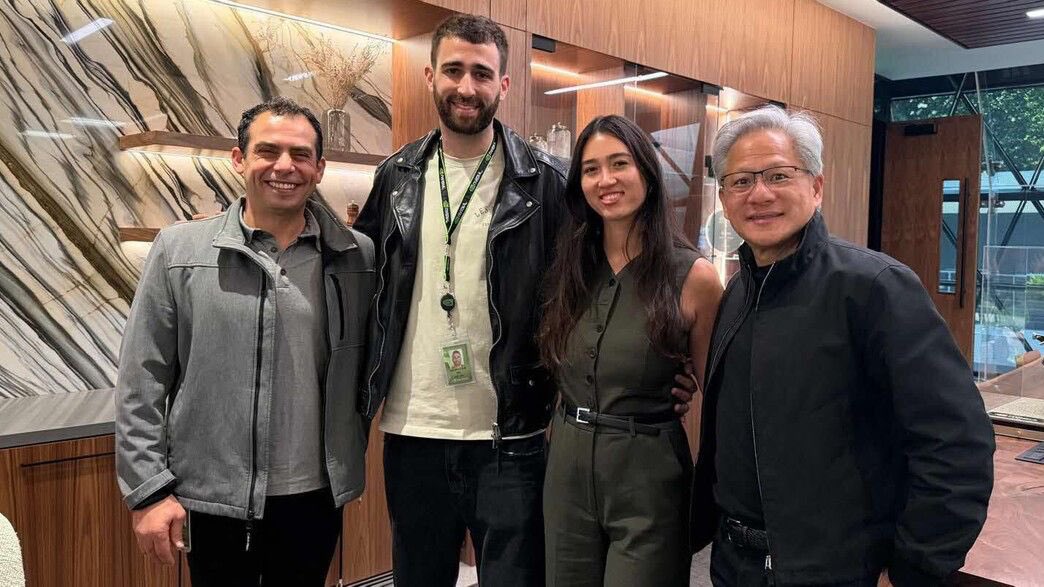
Nvidia CEO and President Jensen Huang (right) met on Thursday with returned Israeli hostages Avinatan Or and Noa Argamani at Nvidia’s U.S. headquarters in the Bay Area. Or had been an engineer at the chip giant when he was abducted from the Nova music festival on Oct. 7, 2023, and held hostage until October 2025.
Birthdays

Actress, game show host and neuroscientist, she played the role of neuroscientist Dr. Amy Farrah Fowler on CBS’ “The Big Bang Theory,” Mayim Chaya Bialik turns 50…
FRIDAY: Attorney, political operative, lobbyist, author and television commentator, Lanny Davis turns 80… Chairman of Full Stop Management which represents recording artists, Irving Azoff turns 78… Two-term congressman starting in 2007 (D-WI), he is a physician who founded four allergy clinics, Steven Leslie Kagen, M.D. turns 76… 2007 Nobel Prize laureate in economics, he is a professor at Harvard University, Eric Stark Maskin turns 75… Provost and VP for academic affairs at Yeshiva University since 2014, Selma Botman turns 75… Former member of the rock band Grand Funk Railroad, Bruce Kulick turns 72… Professor of psychology and psychiatry at the University of Wisconsin–Madison, Richard J. Davidson turns 64… Associated Press science writer and adjunct professor at NYU’s academic center in Washington, Seth Borenstein… Partner in Linear City Development, Yuval Bar-Zemer turns 63… CEO at Chicago-based Next Realty, Andrew S. Hochberg… Afternoon anchor on the Fox Business Network, Elizabeth Kate “Liz” Claman turns 62… Rabbi of the Bet Israel community in Zagreb, Croatia, Kotel Dadon turns 58… Israeli scientist and entrepreneur, he is the founder and chief technology officer at Vaxa Impact Nutrition, Isaac Berzin turns 58… Minnesota secretary of state, he was first elected in 2014 and then reelected in 2018 and 2022, Steve Simon turns 56… Israeli celebrity chef, Moshe Aharon “Moshik” Roth turns 54… Chair of the Jewish Federation of Cleveland and a member of the Board of Governors of the Jewish Agency for Israel, Jeffrey J. Wild turns 53… MSW candidate at the University of Denver and freelance PR consultant, Sarah R. Horowitz… Freelance field producer for ABC News, Rebecca “Becky” Perlow… One-half of the duo known for their YouTube channel h3h3Productions with 1.3 billion views, Hila Hakmon Klein turns 38… Israeli Olympic long-distance runner, she ran the marathon for Israel at the Paris Olympics last year, Lonah Chemtai Salpeter turns 37… Managing director at Narrative Strategies DC, David Pasch… Brazilian mixed martial artist, Neiman Gracie Stambowsky turns 37… Vice president for asset management at Fidelity Investments, Jeffrey S. Goldstein… Co-founder of The Next 50, now managing director of advocacy and strategy at Galaxy Gives, Zak Malamed turns 32… Film and television actor, Lucas Jade Zumann turns 25…
SATURDAY: Former New York state senator for 28 years, Suzanne “Suzi” Oppenheimer turns 91… California-based real estate developer active in the revitalization of downtown San Jose, he is a former co-owner of the Oakland Athletics, Lewis Wolff turns 90… Real estate developer and a minority-owner of the Minnesota Vikings, David Mandelbaum turns 90… Past president at UCLA Faculty Women’s Club, Bette Billet… Senior rabbi emeritus of Temple Israel of Hollywood, John Rosove turns 76… Executive chairwoman and chief media officer of Eko, Nancy Tellem turns 73… Chair of the Interdisciplinary Center for the Study of Poverty and Social Exclusion at the University of Haifa, Roni Strier turns 73… Former chairman of the Federal Reserve from 2006 to 2014, he won the 2022 Nobel Prize in economics, Ben Shalom Bernanke turns 72… Hedge fund manager, investor, writer and former adjunct professor at Columbia University, Joel Greenblatt turns 68… Former assistant secretary for management at the U.S. Department of the Treasury during the first Trump administration, David F. Eisner turns 68… Member of the U.S. House of Representatives since 2017 (D-MD), Jamin Ben “Jamie” Raskin turns 63… President of the American Academy in Rome, Peter N. Miller turns 61… Member of the Illinois Senate since 2019, she is running in 2026 to succeed retiring Rep. Jan Schakowsky (D-IL), Laura Fine turns 59… Chairman and CEO of Fontainebleau Development, Jeffrey M. Soffer turns 58… Co-founder and principal of The Lead PR, Jeffrey W. Schneider… Mayor of New Rochelle, N.Y., from 2006-2023, Noam Bramson turns 56… Comedian and actor, known by his stage name and alter ego, Wheeler Walker Jr., Benjamin Isaac Hoffman turns 51… Chair of the Florida Democratic Party since 2023, Nicole “Nikki” Heather Fried turns 48… Head of global civics partnerships at YouTube, Riva Litman Sciuto… American Israeli basketball player who played for three NCAA collegiate programs, then on the rosters of four Israeli teams, Eli Abaev turns 27…
SUNDAY: President emeritus of George Washington University, Stephen Joel Trachtenberg turns 88… Co-founder and chairman of Creative Artists Agency until 1995, then president of the Walt Disney Company for 18 months, Michael S. Ovitz turns 79… Retired New York State assistant housing commissioner, he also served as a military chaplain for 38 years, Jacob Goldstein… President of Bard College since 1975, he is also music director of the American Symphony Orchestra and conductor laureate of the Jerusalem Symphony Orchestra, Leon Botstein turns 79… Retired SVP at Warner Brothers, key advocate for Israel on the Platform Committee of the Democratic Party on the national and state levels, Howard Steven Welinsky… Retired U.S. Air Force general who served as the chief of staff of the Air Force, he is currently the president and CEO of the Institute for Defense Analyses, Norton Allan Schwartz turns 74… Director of government affairs at the Jewish Federation of Greater Philadelphia, Robin Schatz… Member of Knesset for the Likud party, now serving as the minister of agriculture, Avi Dichter turns 73… Co-founder of several companies, including Beanstalk, Sixpoint Partners and Vringo, author of New York Times bestseller Let There Be Water, Seth (Yossi) Siegel turns 72… Hedge fund manager, John Paulson turns 70… Owner of Bundles of Boston, Sheree Boloker… Retired CEO of San Francisco-based Jewish LearningWorks, David Jonathan Waksberg turns 69… Nurse and mental health counsellor, Martina Yisraela Rieffer… Ukrainian businessman and founder of EastOne Group LLC, Victor Pinchuk turns 65… Founder of the Center for Class Action Fairness established to combat abusive class-action settlements, now a division of the Hamilton Lincoln Law Institute, Ted Frank turns 57… Partner and COO of Chicago-based Resolute Consulting, David Smolensky… Jerusalem-born British chef, restaurateur and food writer, Yotam Assaf Ottolenghi turns 57… Co-founder of the Manhattan Jewish Experience, Jill Wildes… Senior rabbi of the Beth Jacob Congregation of Beverly Hills, Calif., Kalman Topp turns 53… Policy counsel in the criminal defense practice at The Bronx Defenders, Eli Clemans Northrup turns 41… Co-CEO of Health Consulting Services, Matt Kosman… Former NFL player, he was on the Patriots when they won three Super Bowls, Nathan “Nate” Ebner turns 37… Speech-language pathologist, Leora Neuberger… Former offensive lineman for the New York Giants, now a medical sales representative at Stryker, Adam Bisnowaty turns 32… Co-director of Chabad of Macalester-Groveland in the Minneapolis area, Tzemach Feller… Television, teen theater and voice actress, Mia Sinclair Jenness turns 20…