

















































House resolution calls for safeguards to address antisemitism in artificial intelligence
Rep. Sara Jacobs told JI that the resolution is a ‘first step’ to highlight bipartisan consensus on the issue
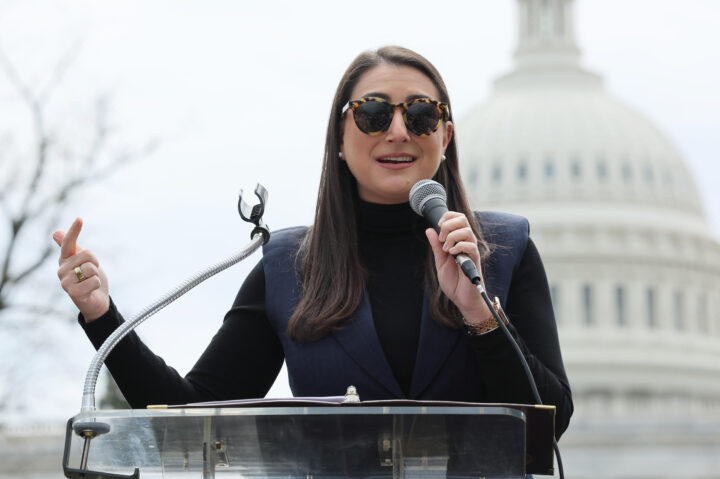
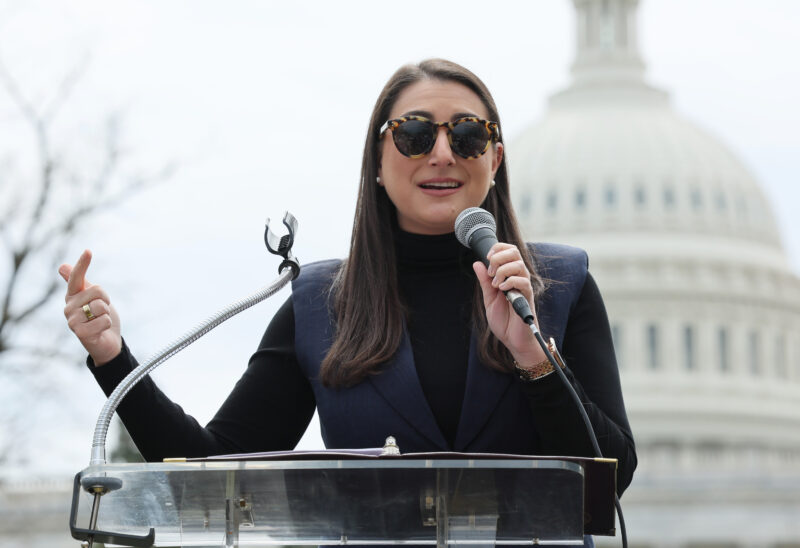
Jemal Countess/Getty Images for Fair Share America
Rep Sara Jacobs (D-CA) speaks at the rally to Say NO to Tax Breaks for Billionaires & Corporations at US Capitol on April 10, 2025, in Washington, DC.


 Add JewishInsider on Google
A bipartisan group of House members is introducing a resolution that sets out recommendations for tackling the spread of antisemitism through artificial intelligence models and highlights the ways those programs have been used to spread a variety of forms of anti-Jewish hate.
The resolution, led by Reps. Sara Jacobs (D-CA), Don Bacon (R-NE), Juan Ciscomani (R-AZ) and Laura Friedman (D-CA), highlights that AI models can “generate, amplify, or normalize antisemitic content, deepfakes, synthetic media, and deeply anti-Jewish bias, and can be weaponized to target Jewish individuals and institutions, as well as American institutions, normalizing antisemitism and anti-Jewish bias en masse.” It also notes that there is an extensive history of AI models espousing antisemitic attitudes, dating back to at least 2016.
The resolution states that combating antisemitism is a national priority and that technology companies have a “responsibility to implement robust safeguards,” including transparency measures, working with antisemitism experts and taking steps to prevent the spread of antisemitism or violent content targeting Jewish people.
Jacobs told Jewish Insider this week that AI is accelerating conditions of rising antisemitism and danger for the Jewish people “with the rapid creation, spread and amplification of antisemitic content that makes us actively less safe.”
She emphasized that the public is increasingly turning to AI as an information tool with “no checks” to the antisemitic content AI is spreading.
The resolution encourages tech companies to implement standards to prevent antisemitism including “supporting enforcement technology, red teaming methodologies, and datasets to guide risk identification, measurement, mitigation, and governance of AI systems,” as well as expanded data data sharing and access for researchers to study antisemitic content and assess potential responses.
It additionally recommends periodic public reporting by technology companies on antisemitic content on AI platforms and how the platforms are responding.
It urges governments, civil society, academia and the business community to develop “effective interventions” against antisemitic content and harassment, including plans for responding to threats of violence.
The legislation also calls for efforts to improve education and digital literacy among young people to recognize and resist antisemitic narratives and AI-generated hatred.
“Corporations need to step up and maintain standards and safeguards for AI systems that protect human rights and the safety of all people, including the Jewish community,” Jacobs said. “I think there’s a lot more they could be doing, and that’s why we need a whole of society approach to antisemitism, which is what we call for in this resolution.”
Jacobs said that the resolution is a “first step” to highlight bipartisan consensus on the issue, and noted that while it’s nonbinding, it does set out specific standards and recommendations for the industry.
More Stories

on the agenda
Trump meeting with Netanyahu at Mar-a-Lago later this month
chant controversy
Zohran Mamdani says ‘globalize the intifada’ is expression of Palestinian rights
blake's backtrack
In 2020 AIPAC position paper, Michael Blake vowed to support Israel, highlighted Black-Jewish unity

doha forum dispatch
Hillary Clinton reiterates concerns about anti-Israel ‘propaganda’ targeting American youth

MICHIGAN MOVES
Haley Stevens maintains support for Israel as her primary rivals battle over anti-Israel lane