












Trump vows additional strikes on Iran if it rebuilds ballistic missile or nuclear programs
Meeting in Florida, Trump and Netanyahu projected unity but highlighted disagreements on Turkey, Syria and the West Bank
Joe Raedle/Getty Images
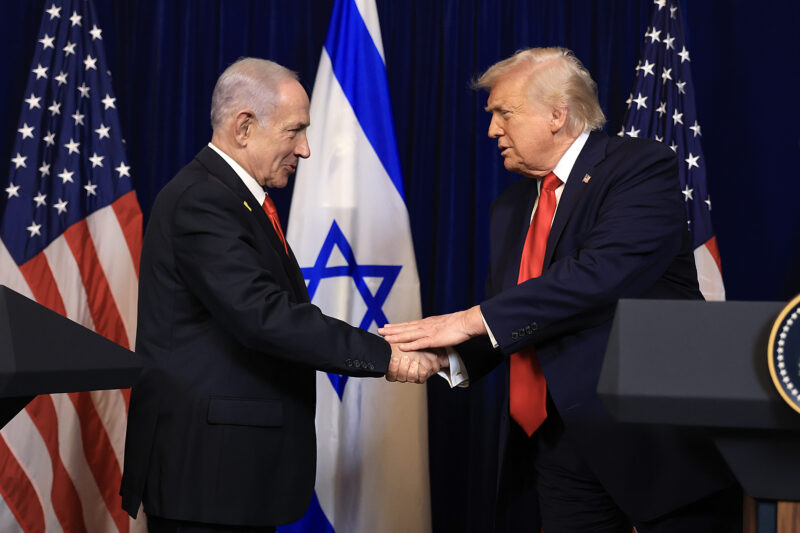
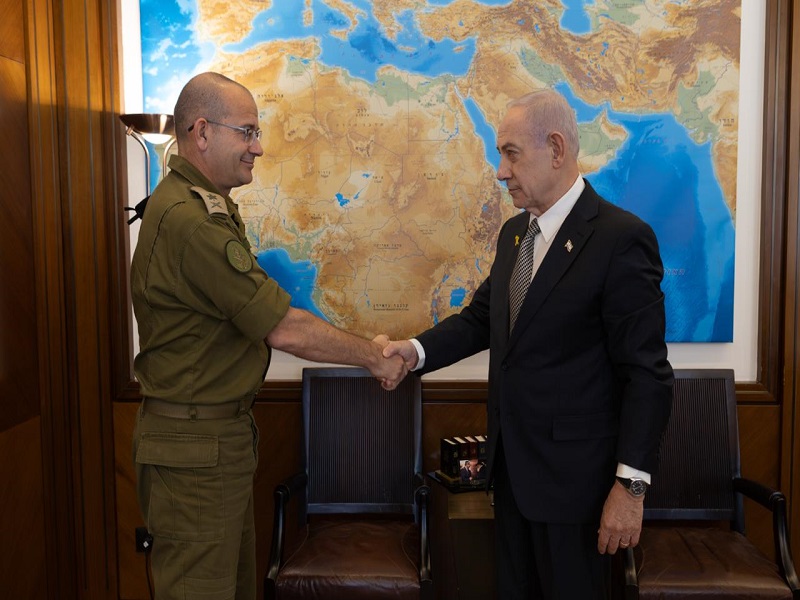
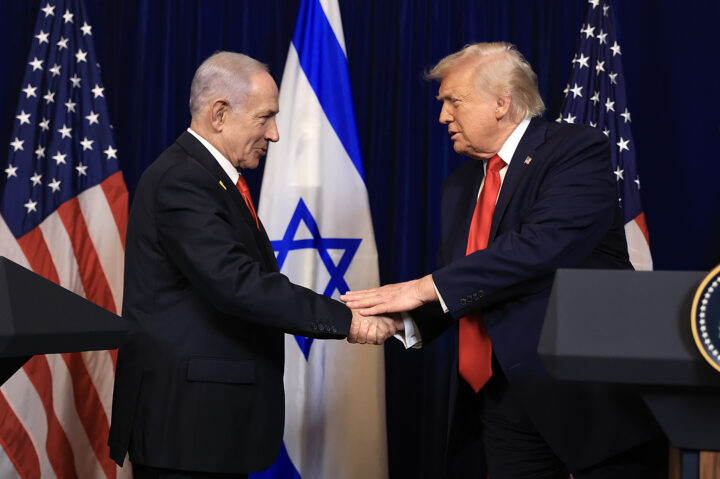
President Donald Trump shakes hands with Israeli Prime Minister Benjamin Netanyahu during a press conference at his Mar-a-Lago club on December 29, 2025 in Palm Beach, Florida.


 Add JewishInsider on Google
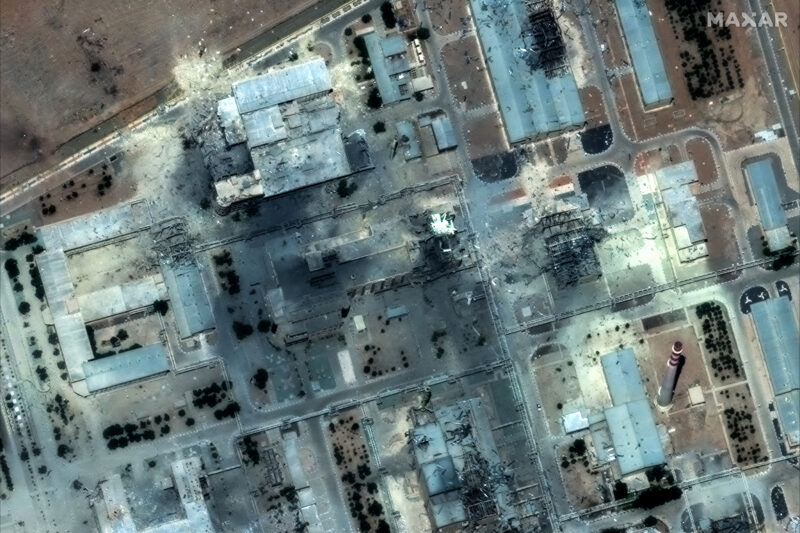
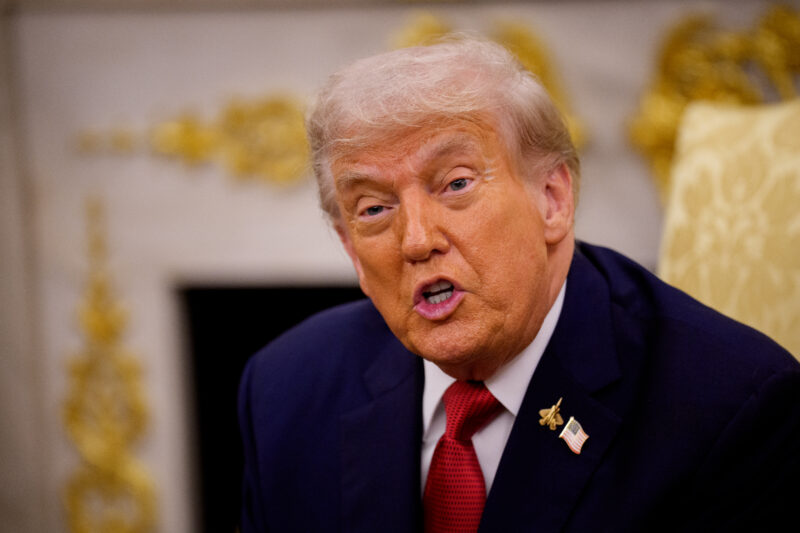
President Donald Trump vowed on Monday that he would support the U.S. or Israel launching another round of strikes against Iran if Tehran is attempting to rebuild its ballistic missile program or nuclear facilities.
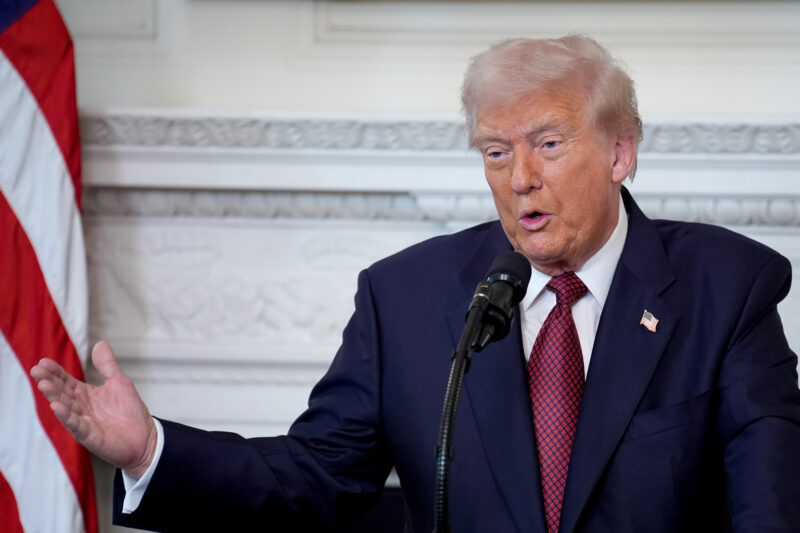
Trump made the comments while speaking to reporters from his Mar-a-Lago estate in Palm Beach, Fla., alongside Israeli Prime Minister Benjamin Netanyahu for the latter’s fifth visit to the United States this year.
Asked if he will support another Israeli attack on Iran if they continue their ballistic missile and nuclear programs, Trump said, “If they continue with the missiles? Yes. If the nuclear? Fast, okay? One will be yes, absolutely; the other was, we’ll do it immediately.”
He added later, “If they are [rearming], we’re going to have no choice but very quickly to eradicate that build up. … We don’t want to waste the fuel on a B-2 [bomber]. It’s a 37-hour trip, both ways, I don’t want to waste a lot of fuel,” suggesting the U.S. would again utilize its bomber jets that conducted the June strikes on Iran’s nuclear facilities.
The president repeatedly urged Tehran to return to the negotiating table with the U.S. while cautioning that the regime would face consequences for declining his offer to address the nuclear issue diplomatically. “They could have made a deal the last time before we went through the big attack on them, and they decided not to make the deal. They wish they made that deal. So I think, again, they should make a deal,” he said.
About reports that Iran is rearming, Trump said, “Iran may be behaving badly. It hasn’t been confirmed, but if it’s confirmed, look, they know the consequences.”
“This is just what we hear, but usually where there’s smoke, there’s fire,” he continued. “I’m hearing that their [efforts are] not nuclear yet, but maybe nuclear, too. The sites were obliterated, but they’re looking at other sites [than the ones the U.S. bombed in June]. That’s what I’ve heard. They’re looking. It’ll take a long time. They’re not going to go back to where they were, but they have other places they can go. And if they’re doing that, they’re making a big mistake.”
Trump repeatedly praised Turkish President Recep Tayyip Erdogan in his remarks with Netanyahu, pledging to thaw tensions between the Turkish and Israeli leaders and repeated that he was “very seriously” considering approving Turkey’s longstanding requests to purchase F-35 fighter jets from the United States. “We’re thinking about it very seriously,” Trump said about the move, which Israeli Ambassador to the U.S. Yechiel Leiter said last month that Israel opposes.
“I know President Erdogan very well, and as you all know, he’s a very good friend of mine … and I do respect him and Bibi respects him, and they’re not going to have a problem,” Trump said.
Speaking to reporters alongside Netanyahu ahead of their meeting, Trump also voiced his support for Turkey joining the proposed U.S.-led International Stabilization Force to be deployed in Gaza.
“I have a great relationship with President Erdogan, and we’ll be talking about it. And if it’s good, I think that’s good. And a lot will be having to do with Bibi, we’re going to be talking about that,” Trump said. “But Turkey has been great, and he [Erdogan] has been excellent, as far as I’m concerned. I don’t know about you [Netanyahu], but to me he’s been very good.”
Netanyahu did not comment on the suggestion at the time or during the press conference later on, though Israel, as well as several U.S. lawmakers, has said it opposes Ankara’s involvement in the proposed peacekeeping force due largely to Turkey’s ties to Hamas, despite the supportive posture from the Trump administration.
The president later used the topic of Syria to again praise Erdogan, arguing the Turkish leader deserved “a lot of credit” for ousting the Assad regime.
“Don’t forget, it was President Erdogan that helped very much get rid of a very bad ruler of Syria. That was President Erdogan, and he never wanted the credit for it, but he really gets a lot of credit. Bibi agrees with that. … I know it,” Trump told reporters.
The president went on to say that the U.S. and Israel “have an understanding regarding Syria” and that he was working to improve relations between the Jewish state and its neighbor, praising Syrian President Ahmad al-Sharaa along the way.
“We do have an understanding regarding Syria. Now with Syria, your new president. I respect him. He’s a very strong guy. That’s what you need in Syria. You can’t put a choir boy, you can’t put somebody that’s a perfect person — everything’s nice, no problems in life,” Trump said.
“I’m sure that Israel and him will get along,” he continued. “I will try and make it so that they do get along. I think they will.”
For its part, Israel has been wary of al-Sharaa and the new Syrian government, with the IDF maintaining control of the 155-square-mile buffer zone between the two countries since the fall of Syrian dictator Bashar Assad last year, against Damascus’ wishes. Israel and Syria have also continued to disagree on the contours of a potential security agreement, which the Trump administration has continuously sought, with Netanyahu maintaining that any agreement must require Syria to accept the demilitarization of territory stretching from southern Damascus to the Israeli border.
Trump was also asked about the Lebanese government’s failure thus far to disarm Hezbollah, amid reports that the terror group is rearming. The president demurred when pressed on his support of Israel striking Hezbollah targets in Lebanon again as a result, instead only acknowledging his disapproval with the terrorist organization.
“Well, we’re going to see about that. We’ll see about it,” Trump said. “The Lebanese government is at a little bit of a disadvantage, if you think of it, with Hezbollah, but Hezbollah has been behaving badly. So we’ll see what happens.”
Asked about attacks by Israeli settlers against Palestinians, Trump acknowledged that he and Netanyahu discussed the West Bank during the meeting and that they’re not in complete alignment on the issue. Still, Trump expressed confidence that all parties would reach “a conclusion” to prevent the matter from undermining the implementation of his broader peace plan, though he declined to offer specifics.
“Well, we have had a discussion, big discussion, for a long time on the West Bank. And I wouldn’t say we agree on the West Bank 100%, but we will come to a conclusion on the West Bank. … It’ll be announced at an appropriate time, but [Netanyahu] will do the right thing. I know that. I know him very well. He will do the right thing,” he said.
Trump also expressed gratitude during his remarks for being named the recipient of the Israel Prize, the Jewish state’s highest cultural honor awarded by the country’s education minister. Netanyahu said Trump will be the first non-Israeli to receive the award, which the president said “really is a great honor.”
Netanyahu invited Trump to visit Israel on Yom Ha’atzmaut, the Jewish state’s independence day, in April, which will be an election year, to receive the award in person.
Joined by Trump at his the meeting with Netanyahu were White House Chief of Staff Susie Wiles; Stephen Miller, deputy chief of staff for policy at the White House; Secretary of State Marco Rubio; Defense Secretary Pete Hegseth; Gen. Dan Caine, the chairman of the Joint Chiefs of Staff; Steve Witkoff, the White House’s Mideast envoy; and Jared Kushner, Trump’s advisor on Middle East efforts.
Netanyahu also met individually with Secretary of State Marco Rubio and Defense Secretary Pete Hegseth while at the president’s property.
More Stories
priority check
Trump’s national security strategy balances global engagement with ‘high bar’ for intervention
JOHNSON'S JOURNEY
House Speaker Mike Johnson headed to New Square on Sunday to help Mike Lawler
exclusive
New lawsuit accuses Binance of ‘knowingly’ enabling Oct. 7 terror attacks
DOHA DEALINGS
FBI Director Patel signs security deals with Qatar, his former lobbying client

center stage
Quincy Institute among anti-Israel sponsors of Doha Forum