



























‘There are no good actors in this conflict,’ State Dept. official says of Sudanese civil war
Speaking at a hearing on Capitol Hill, Deputy Assistant Secretary of State for African Affairs Vincent Spera said the U.S. is working to end all external support to the warring parties
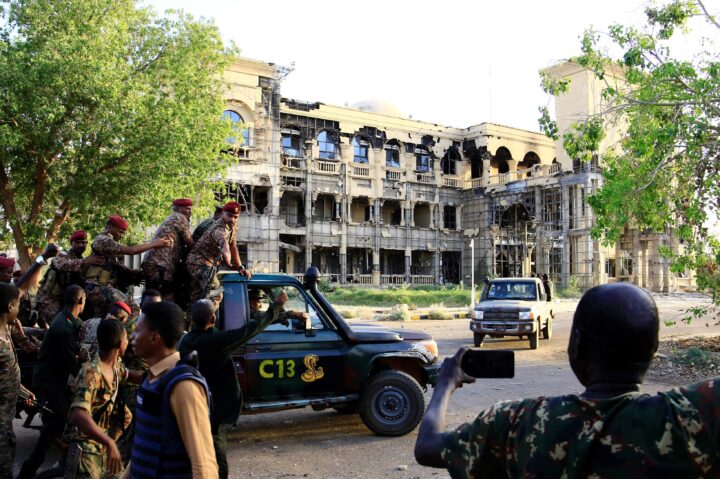
Tariq Mohamed/Xinhua via Getty Images
Abdel Fattah Al-Burhan in the vehicle, chairman of Sudan's Transitional Sovereign Council and commander of the Sudanese Armed Forces SAF, departs from the Presidential Palace in Khartoum, Sudan, on March 26, 2025.


 Add JewishInsider on Google
A senior State Department official told lawmakers on Thursday that the U.S. believes there are “no good actors” in the brutal civil war between the Sudanese Armed Forces and the paramilitary Rapid Support Forces in the East African nation, and said the U.S.’ focus is on cutting off external support to both parties and achieving a temporary ceasefire.
“From our perspective, there are no good actors in this conflict,” Deputy Assistant Secretary of State for African Affairs Vincent Spera said during a House Foreign Affairs Africa subcommittee hearing. “The administration unequivocally condemns the atrocities committed by both parties. Members of the RSF and allied militias have committed genocide, war crimes, crimes against humanitry and ethnic cleansing, and members of the SAF have also committed war crimes, including in May when the United States announced the government of Sudan used chemical weapons in 2024.”
Spera said that the administration is “committed to helping end these atrocities in Sudan,” and that “external support to the warring parties must stop.”
The United Arab Emirates is a key backer of the RSF, though it denies providing support to the paramilitary group, while Iran, Turkey, Saudi Arabia, Egypt and Russia back the SAF.
Spera said the administration has sanctioned leaders on both sides of the conflict and their supporters, including SAF-aligned Islamic actors, “to limit Islamist influence and curtail Iran’s destabilizing influence.”
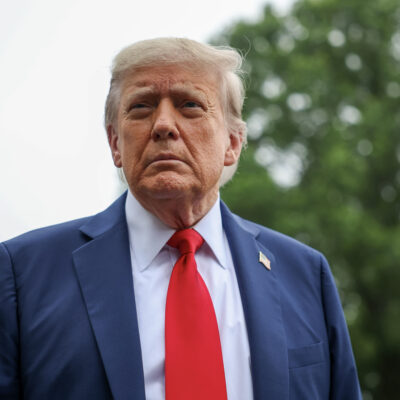
He said President Donald Trump is “personally driving” the effort to reach a humanitarian truce and ultimately a transition to new civilian leadership and end external support to the SAF and RSF, in cooperation with Egypt, Saudi Arabia and the UAE — referred to as the Quad — as well as other international partners.
“President Trump recognizes the importance of endless conflict and that an unstable Sudan threatens regional stability along the critical Red Sea corridor,” Spera said. “It also creates a permissive environment for terrorists, adversaries such as Iran and transnational criminal organizations.”
Lawmakers broadly condemned all outside actors fueling the violence in Sudan and called for accountability for atrocities by both the RSF and SAF. Significant criticism from both sides of the aisle focused on the UAE, with lawmakers questioning whether the U.S. can place more pressure on its ally to cut ties with the RSF.
“With the UAE, obviously [RSF leader] Hemedti is counting on the support he gets from them,” Rep. Chris Smith (R-NJ) said. “Is this something where the president could pick up the phone and talk to the UAE and say, ‘Just stop it’?”
Smith also called for the RSF to be designated as a Foreign Terrorist Organization.
Spera said that the administration has been clear that “we need to do everything we can to bring an end to external support, and that needs to stop. We’ve been making the case at the highest levels, and working through the Quad and other mechanisms, with any and all parties that have influence on actors to bring an end to that support.”
Rep. Sara Jacobs (D-CA), the subcommittee’s ranking member, called for the U.S. to cut off arms sales to both the UAE and to the other foreign powers involved in the conflict and potentially impose sanctions on Emirati entities involved in supporting the RSF.
Spera demurred on questions about leveraging U.S. arms sales, directing those questions to others at the State Department.
Rep. Greg Meeks (D-NY), the ranking member of the Foreign Affairs Committee, said that an end to external support would quickly bring the conflict to a close.
“This means not only pressing the RSF and SAF to agree to ceasefire negotiations, but also enforcing real consequences for external actors — all of them — who continue to fuel the conflict by providing arms or money or mercenaries,” Meeks said. “Without these external resources, both sides would be unable to continue killing civilians and committing mass atrocities and their push to take total control of Sudan. Let me be clear, this brutal war could end tomorrow, if the parties fueling this conflict ended their support, and there’s a number of them that are doing it. I’m talking about, all the parties need to be held accountable.”
More Stories
blake's backtrack
In 2020 AIPAC position paper, Michael Blake vowed to support Israel, highlighted Black-Jewish unity
JOHNSON'S JOURNEY
House Speaker Mike Johnson headed to New Square on Sunday to help Mike Lawler
temple talks
Khanna addresses California synagogues on Israel policy, antisemitism
DOHA DEALINGS
FBI Director Patel signs security deals with Qatar, his former lobbying client
MAKING IT OFFICIAL
Trump signs executive order pledging to designate chapters of Muslim Brotherhood as terrorist orgs