















U.S. federal funding uncertainty looms as Sydney attack renews American Jewish security fears
For the American Jewish community, the prospects for much-needed help from the federal government in the form of additional Nonprofit Security Grant Program funding remain unclear
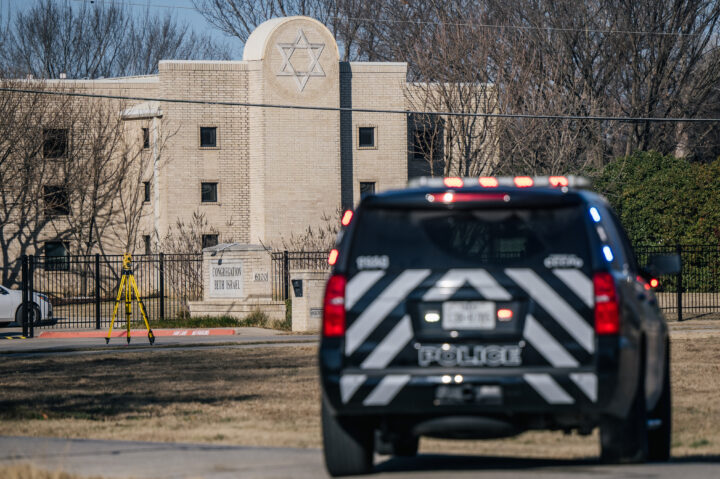
Brandon Bell/Getty Images
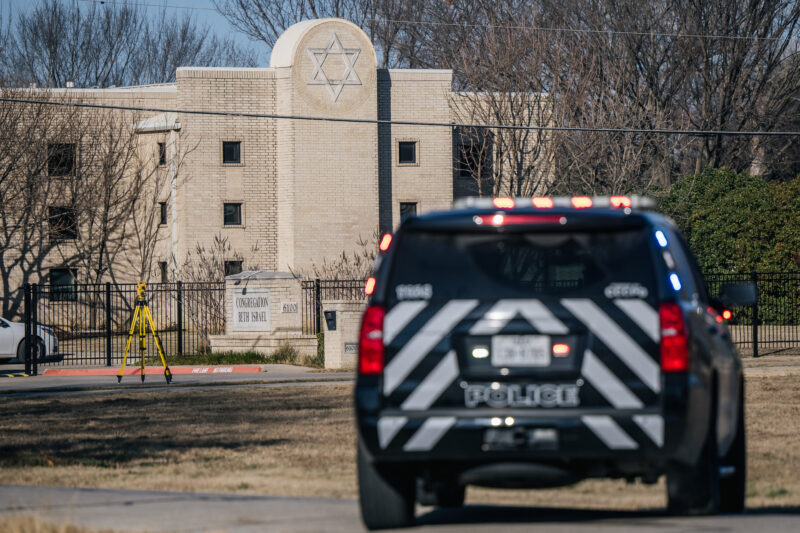
A law enforcement vehicle sits near the Congregation Beth Israel synagogue on January 16, 2022 in Colleyville, Texas.


 Add JewishInsider on Google
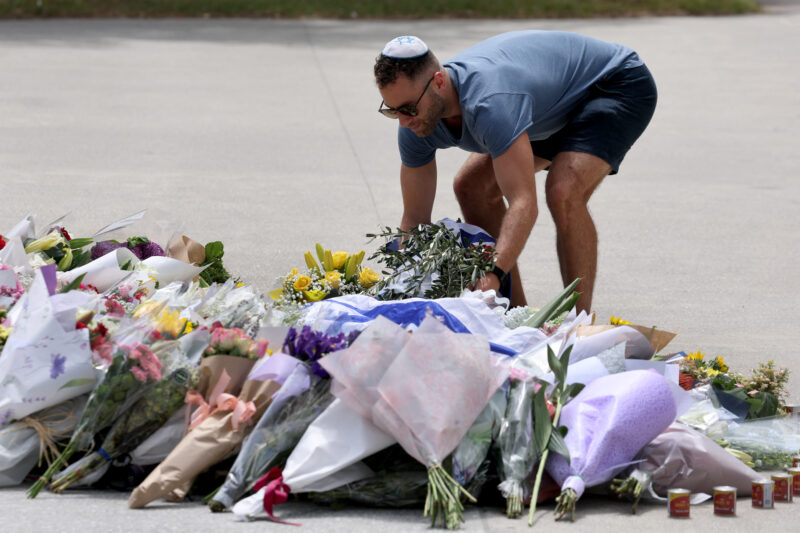
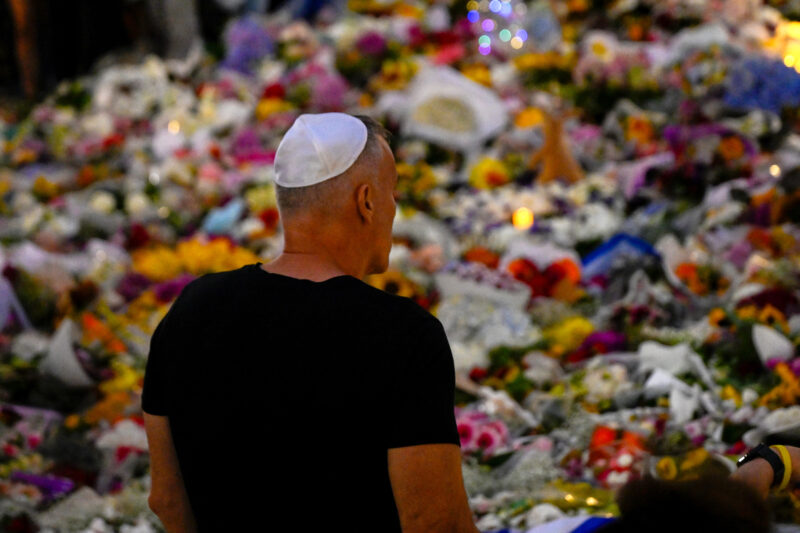
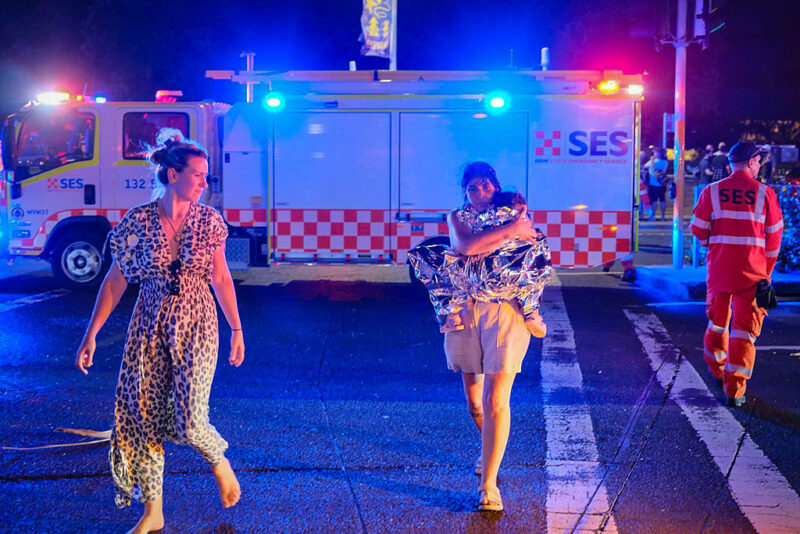
The massacre in which 15 people were killed at a Hanukkah celebration at Bondi Beach in Sydney, Australia, on Sunday has once again brought the Jewish community’s security vulnerabilities into stark focus.
But for the American Jewish community, the prospects for much-needed help from the federal government in the form of additional Nonprofit Security Grant Program funding remain unclear.
The Senate Appropriations Committee’s homeland security subcommittee still hasn’t released a draft bill for 2026, greatly increasing the chances of a full-year continuing resolution that would keep funding for the program flat, at $274.5 million, a level that advocates and proponents on the Hill and Jewish groups say is severely insufficient. The House has passed its own version of the bill with $335 million in funding for the program.
Eric Fingerhut, the CEO of the Jewish Federations of North America, told JI, “The events in Australia and California these past days are terrible reminders of the violent antisemitism Jewish communities face. We’ve worked to ensure that every Federation community has a professional security program and director, but at the end of the day it is the government’s responsibility to keep its citizens safe from terrorism, and that’s why it is critical to both ensure that the Nonprofit Security Grant Program is fully funded and not allowed to lapse.”
Multiple lawmakers on the committee and those who follow the NSGP funding process closely said they have little clarity on the state of play on the funding bill, including subcommittee ranking member Sen. Chris Murphy (D-CT) and Sen. James Lankford (R-OK), a co-chair of the Senate antisemitism task force.
Sen. John Kennedy (R-LA), who serves on the homeland security subcommittee, told JI that a full-year continuing resolution is “a real possibility” at present, noting that the legislation “is always tough to put together.”
But Kennedy said there are other ways to boost funding for the grant program. “There’s no reason we can’t do that [add more money for NSGP] if we end up with an omnibus for the remainder of the bills that don’t pass. But every day that goes by that we don’t do something on [Appropriations], an omnibus or CR looks more and more likely,” Kennedy told JI.
Government funding runs out again at the end of January, so lawmakers will need to put together a plan quickly on how they plan to proceed when they return from the holidays.
Grant funding allocations for this year also remain pending — the administration announced applications months ago, but lawmakers have repeatedly raised concerns about unclear timelines and a failure by the Department of Homeland Security to conduct statutorily required outreach programs.
Lankford told JI, “I’ve been calling all year” for the funding to be disbursed, but indicated he hasn’t heard any updates.
Looking into next year, the agenda for combating antisemitism on Capitol Hill also remains unclear. The momentum from Jewish communal institutions and lawmakers that in 2024 drove a push for the Antisemitism Awareness Act has largely died down. It’s been months since the last hearing on antisemitism — once a regular occurrence after Oct. 7, 2023. The volume of legislation introduced and congressional letters on the issue has also seemed to flag.
It’s still early, but there’s little sign that the events of this weekend are fundamentally altering the inertia that seems to have set in on antisemitism policy. Which raises the question: what can?
More Stories
COMMUNITY CONCERN
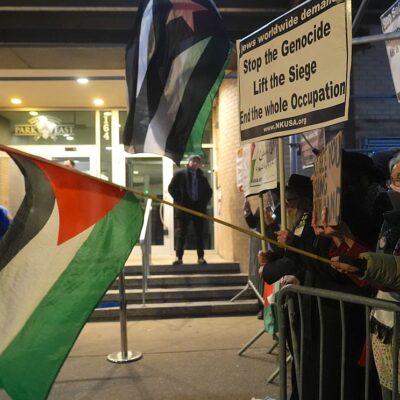
Jewish leaders, lawmakers, scramble to protect synagogues amid threatening anti-Israel protests
rabbinic rebuke
Over 800 rabbis speak out against Mamdani as threat to ‘safety and dignity of Jews in every city’
STANDING TOGETHER
New York Jewish community comes out in solidarity with Park East Synagogue at major rally
heated exchange
Sen. Van Hollen attacks Maryland Jewish community liaison Ron Halber as Netanyahu ‘apologist’
blake's backtrack
In 2020 AIPAC position paper, Michael Blake vowed to support Israel, highlighted Black-Jewish unity