
































The judge overseeing the Maduro trial blazed a trail for Jewish lawyers
Judge Alvin Hellerstein became a law clerk because firms would not hire an Orthodox lawyer; now, he cites Torah from the bench
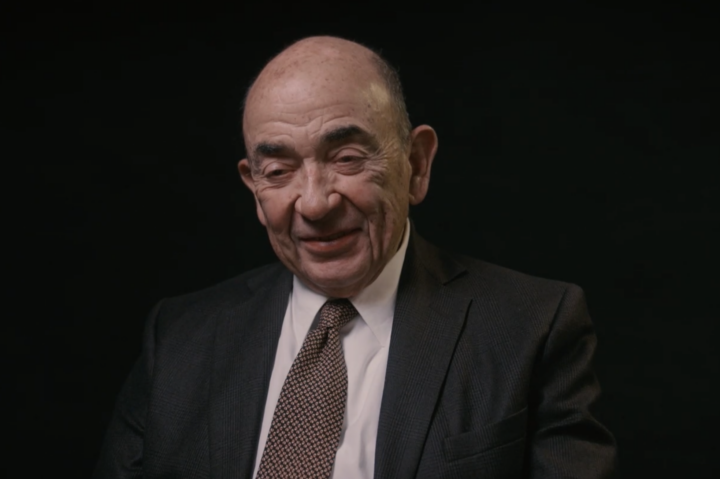
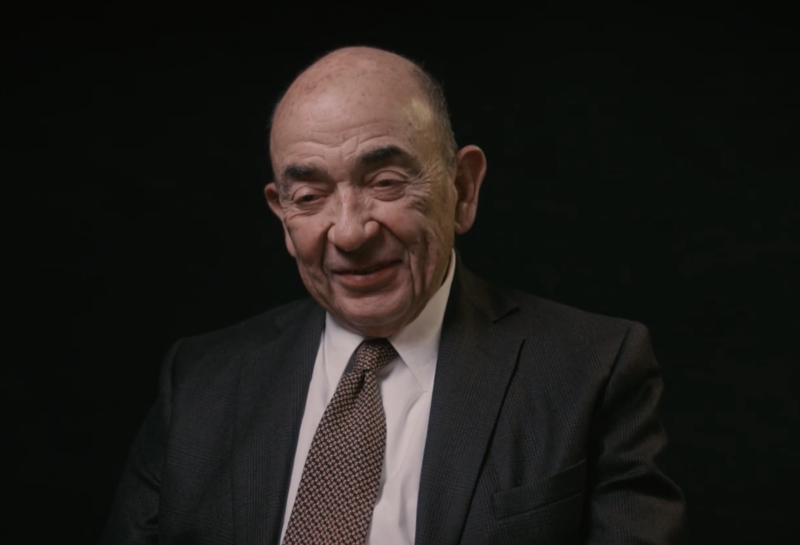
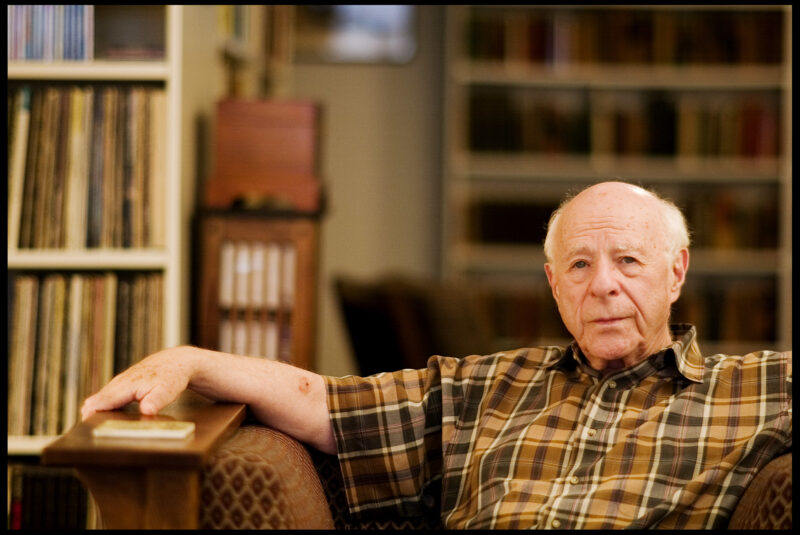
Screenshot/ Blavatnik Archive, Oral History Project
Judge Alvin Hellerstein


 Add JewishInsider on Google
Judge Alvin Hellerstein is 92 years old, and with 27 years on the federal bench in Manhattan, he has presided over some of the most prominent trials in recent memory — including thousands of lawsuits brought in the aftermath of the Sept. 11 terrorist attacks, a suit against disgraced Hollywood producer Harvey Weinstein and, now, the criminal case against deposed Venezuelan President Nicolás Maduro.
It’s a remarkable final chapter in a legal career that was once nearly derailed by antisemitism. Hellerstein has described his judicial style as being influenced by Judge Edmund Palmieri, for whom Hellerstein served as a law clerk in the 1950s. (Ruth Bader Ginsburg, later a Supreme Court justice, clerked for Palmieri a few years later.) But that chapter almost didn’t happen. Hellerstein wanted to work at a law firm, but he ended up applying to clerkships because he said the non-Jewish law firms in New York would not hire him.
“As a Jewish boy coming to interview at law firms, you met up with very strong discrimination, some of it overt, most of it implied,” Hellerstein said in an interview in 2020 on the podcast “Behind the Bima.” He ended up working at a Jewish firm — one of the first Orthodox lawyers to be employed at any New York City firm.
“I was pleased to say that after me, that there were others, and some credit me with having broken the precedent,” Hellerstein said. “When I became a judge, it didn’t make any difference if I was Orthodox or not. It made no difference if I was religious or not. My capabilities as a lawyer were measured, as well as my character and other characteristics, but there was no discrimination.”
Now, the eyes of not just the legal profession but the world will be upon Hellerstein as he oversees the federal criminal case against Maduro following the brazen U.S. capture of the controversial Venezuelan leader. Maduro pleaded not guilty on Monday in his first court appearance in New York, where he faces narco-terrorism and weapons charges.
Hellerstein was nominated to serve as a federal district judge in the Southern District of New York by President Bill Clinton in 1998. In 2011, he assumed senior status, which means he hears fewer cases than he once did. (President Barack Obama nominated Jesse Furman, also an observant Jew, to fill Hellerstein’s seat on the bench.)
In his chambers, Hellerstein displays a sign bearing a Hebrew phrase from the book of Deuteronomy: “Tzedek tzedek tirdof,” it reads. “Justice, justice, you shall pursue.”
Hellerstein has spoken often about a case he presided over nearly two decades ago, in which a Mexican immigrant truck driver faced drug charges related to narcotics planted in his truck by a different driver. Hellerstein helped the defendant obtain legal counsel, and the case was ultimately dismissed by federal prosecutors — saving the defendant from prison and deportation. When the truck driver appeared in front of Hellerstein, thanking him and crying, Hellerstein invoked that passage from the Torah.
“I told him about the sign I had in my office, tzedek tzedek tirdof,” Hellerstein said in the 2020 interview. “I told him that there are many reasons that are given for the repetition, but the one I favor is that we don’t know where justice is. We have to pursue it. We have to look for it. And when an opportunity is given to have justice in the courtroom, justice in the eyes of the defense counsel, justice in the eyes of the prosecutor, justice in the eyes of the judge and the public, we have to thank him [the defendant] for giving us this opportunity.”
Hellerstein has been active in Jewish communal life for decades. Before he was appointed to the federal bench, Hellerstein served as president of the Board of Jewish Education of Greater New York. He has also been a philanthropic supporter of The Jewish Center, an Orthodox synagogue on the Upper West Side, and AMIT, a network of schools in Israel. According to a 2016 New York Times article, Hellerstein played tennis with three rabbis weekly for more than 45 years.
But Hellerstein has long said that being Jewish does not influence the decisions he reaches as a judge.
“I would not want it to be said that I ruled in a certain way because I am an Orthodox Jew, and I would not want to feel that my Jewish upbringing or values cause me to rule in one way and not another,” Hellerstein wrote in a 2013 article in the Touro Law Review. “My rulings, over thirteen years of judging, are my record. They reflect all that influenced me … indeed, all my life experiences, and, certainly, my Jewish education and my Jewish values. But, above all these influences, there is one category that stands pre-eminent — the Constitution, statutes, and cases that I swore as a judge to follow and uphold.”
In the 2020 interview, recorded during the High Holy Days, Hellerstein was asked by Rabbi Philip Moskowitz of Boca Raton Synagogue what advice he, as a judge, would share ahead of Yom Kippur, the ultimate judgment day.
“You’re in a much better place than I am to make those suggestions,” he quipped to the rabbi. “I do feel that I have to account for what I do. Part of my accountability is to the Court of Appeals, where I can be reversed, and I often am. Another is my account to the individuals involved directly in the process. And third, I have to account to God. My purpose in life is to be as good a judge as I can be, and I have to ask for strength and wisdom in performing that job.”
More Stories

HEZBOLLAH HIT
Israel kills Hezbollah chief of staff in Beirut airstrike
rabbinic rebuke
Over 800 rabbis speak out against Mamdani as threat to ‘safety and dignity of Jews in every city’

MAKING IT OFFICIAL
Trump signs executive order pledging to designate chapters of Muslim Brotherhood as terrorist orgs

AI ALERT
ADL study finds leading AI models generate extremist content after antisemitic prompts
DOHA DEALINGS
FBI Director Patel signs security deals with Qatar, his former lobbying client