BRENDAN SMIALOWSKI/AFP via Getty Images
Saudi Arabia pivots from moderation
Recent Saudi moves across Yemen, Sudan and the Horn of Africa — including a widening rift with the UAE and closer alignment with Qatar — are challenging long-held assumptions about Riyadh's regional posture


 Add JewishInsider on Google
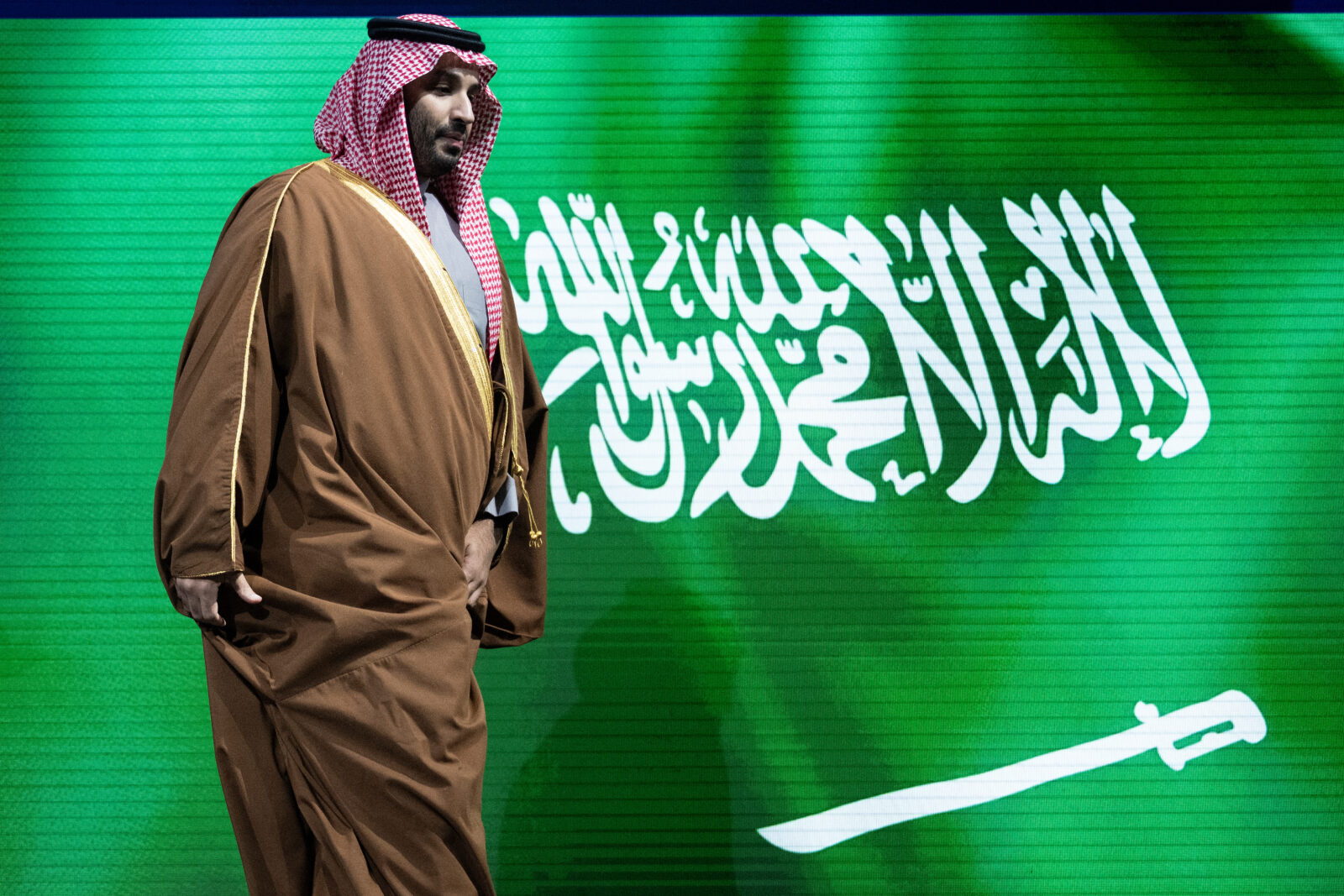
Saudi Arabia is recalibrating its regional posture in ways that are challenging long-held assumptions about Riyadh’s role as a moderating force in the Middle East, as recent moves across Yemen, Sudan and the Horn of Africa expose the country’s widening rift with the United Arab Emirates and a growing alignment with Qatar and Turkey — two countries with openly hostile positions toward Israel.
The realignment has been most stark on the issue of Yemen, where Saudi Arabia led an airstrike on an Emirati shipment of vehicles on Tuesday which Riyadh claimed was intended for the UAE-backed Southern Transitional Council (STC), which has consolidated power in the country’s south as Saudi-backed efforts to stabilize the war-torn nation have stalled. Hours after the strike, the Emirati government announced it would withdraw its remaining troops from the country.
The Saudis’ decision to embrace Islamist-aligned factions in Sudan, where the UAE is aligned with rival forces, has caused additional fissures with the Emiratis, putting the two U.S. allies and Gulf power players at odds.
The Gulf states have also taken opposite sides on Somalia, with the UAE quietly supportive of Somaliland, while Saudi Arabia condemned Israel for recognizing its independence and Israel’s Channel 12 reported that the move threatened the chances of Riyadh and Jerusalem establishing diplomatic relations.
These actions, taken together, have raised questions about Riyadh’s role as a moderating force in the region and potential partner for normalization with Israel.
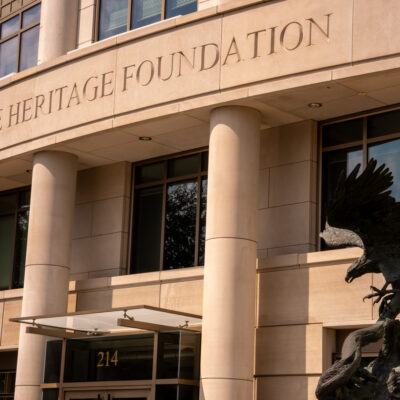
“Yes, Saudi Arabia is moving away from its position of recent years,” Hussain Abdul-Hussain, a research fellow at the Foundation for Defense of Democracies, told Jewish Insider on Tuesday. “Since [Crown Prince Mohammed bin Salman] came to power, he promised drastic change under the banner of ‘Saudi First.’”
Abdul-Hussain said that Saudi Arabia is “abandoning its past policy and distancing itself from the UAE and the moderate capitals and getting closer to Islamist Qatar and Turkey. … How far on the scale of Islamism the Saudis decide to go remains to be seen.”
“There have been two alliances competing in the region: A radical Islamist one led by Turkey and Qatar and allied with Iran and Pakistan and a moderate one led by Israel and UAE and allied with India, Greece and Cyprus,” Abdul-Hussain said. “While America has friends on both sides, it is clear that American national interests are served by taking the side of Israel, the UAE, India and Greece coalition against the rival axis.”
Nervana Mahmoud, a political commentator based in the U.K., told JI that while “it’s very difficult to read the strategic decisions within the kingdom because they don’t announce plans … I noticed a shift in the Saudi [posture] from mid-2024.”
Mahmoud said that the Saudi-UAE divergence has also expanded because of the Saudi’s softened stance on Qatar, something she argued reflects the kingdom’s acknowledgement of Doha’s growing influence both in the region and globally, specifically pointing to Qatar’s positive standing with the Trump administration.
“I see the Saudis saying, ‘We cannot defeat the Islamists, but we can influence [them], using them for strategic influence,’” Nervana Mahmoud, a political commentator based in the U.K., told JI. “They think they can influence Islamists rather than be fooled by them. Before Islamists were infiltrating Saudi, now Saudi thinks [they’re] powerful enough to influence and tame them to serve strategic interests. I see that as wishful thinking.”
Saudi Arabia has improved ties with Qatar, ending a blockade on Doha in 2021 and signing a deal earlier this month to link Riyadh and Doha with a high-speed rail.
The UAE, meanwhile, has expressed concerns over Doha’s influence in Trump’s Gaza peace plan, including its potential role in post-war Gaza, as well as Qatar’s Islamist ties.
“I see the Saudis saying, ‘We cannot defeat the Islamists, but we can influence [them], using them for strategic influence,’” Mahmoud told JI. “They think they can influence Islamists rather than be fooled by them. Before Islamists were infiltrating Saudi, now Saudi thinks [they’re] powerful enough to influence and tame them to serve strategic interests. I see that as wishful thinking.”
Mahmoud pointed to Saudi Arabia’s engagement in Syria where Riyadh has supported efforts to rehabilitate Syrian President Ahmad al-Sharaa and encourage engagement with the Trump administration, despite Al-Sharaa’s Islamist background. Israel, meanwhile, has taken a more suspicious view of al-Sharaa and has thus far failed to secure a security agreement with Damascus.
Another cause for concern has been the Saudis’ reticence to engage on joining the Abraham Accords, despite publicly expressing willingness to normalize relations with Israel on condition of the establishment of a pathway to Palestinian statehood and a ceasefire in Gaza.
“Since 9/11, and especially since MBS came to power in 2015, Saudi Arabia made enormous effort to distance itself away from Muslim Brotherhood and Islamism,” Hussain Abdul-Hussain, a research fellow at the Foundation for Defense of Democracies said. Now, “Saudi is getting closer to all Islamist, anti-Israel, anti-West governments, whether it’s Iran and Pakistan or Qatar and Turkey.”
Mahmoud accused Riyadh of “playing the game” on the normalization issue, saying that the kingdom had continued to signal interest in joining the Abraham Accords while “always [having] an excuse not to.”
“The excuses will never end,” Mahmoud told JI of the Saudis, adding that the kingdom was “trying to be on the good side of [President Donald] Trump.”
Riyadh’s shift away from moderate Gulf states has also been marked by diverging views on how to approach the Muslim Brotherhood. While Qatar has long sponsored the Islamist movement’s actions, Saudi Arabia and the UAE have historically taken a harsher stance against the group, proscribing it as a terrorist organization, aligned with the Trump administration’s recent moves to do the same.
“There was a period from 2017 to 2021 where the Saudis, Emiratis and Bahrainis completely isolated Qatar because they considered the Qataris as sponsoring the Muslim Brotherhood, and the Muslim Brotherhood meant harm to the political systems in Saudi and UAE and Bahrain,” Edmun Fitton-Brown, a senior fellow at the Foundation for Defense of Democracies and a former British diplomat who served in Kuwait, told JI.
Abdul-Hussain argued that there has been “some reversal” on Saudi Arabia’s reputation as a moderate actor on the brotherhood, creating a potentially concerning landscape for Israel and dampening efforts toward normalization.
“Since 9/11, and especially since MBS came to power in 2015, Saudi Arabia made enormous effort to distance itself away from Muslim Brotherhood and Islamism,” Abdul-Hussain said. Now, “Saudi is getting closer to all Islamist, anti-Israel, anti-West governments, whether it’s Iran and Pakistan or Qatar and Turkey.”