

























Trump, Netanyahu at odds over Israeli plans to end reliance on U.S. military aid
Two sources told JI the president pushed back on Netanyahu’s claims about the prudence of Israel’s proposal to end U.S. military assistance over the next decade
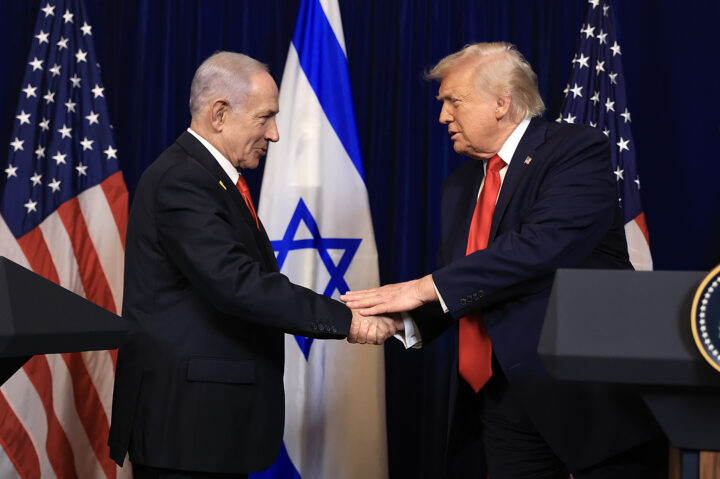
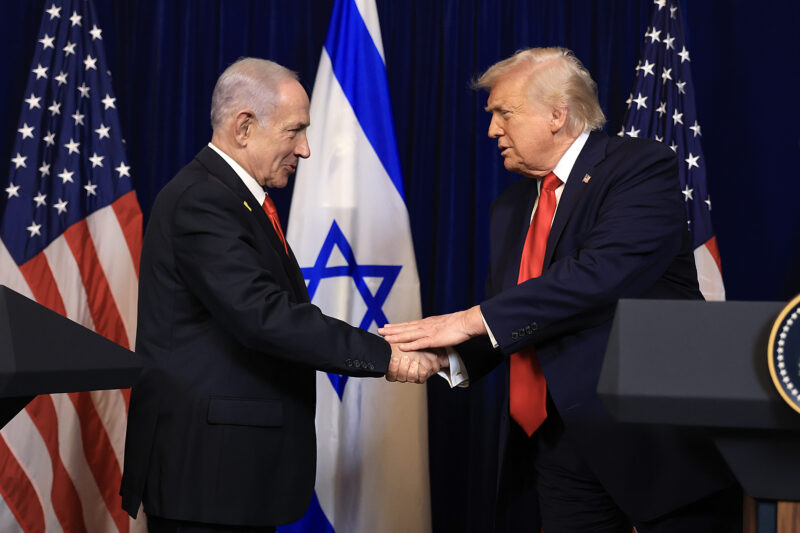
Joe Raedle/Getty Images
President Donald Trump shakes hands with Israeli Prime Minister Benjamin Netanyahu during a press conference at his Mar-a-Lago club on December 29, 2025 in Palm Beach, Florida.


 Add JewishInsider on Google
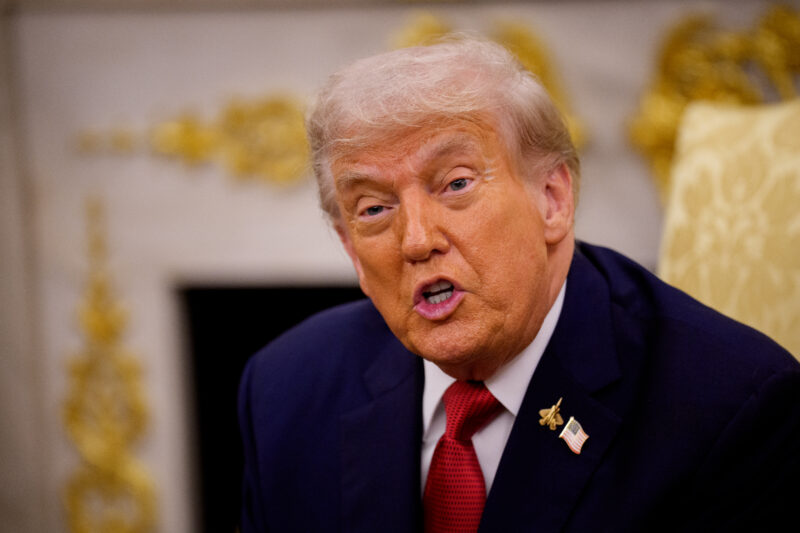
When Israeli Prime Minister Benjamin Netanyahu proposed winding down U.S. military aid late last year, President Donald Trump was bewildered and did not immediately support the move, two sources familiar with the matter told Jewish Insider.
Since then, Netanyahu has announced his intentions to move ahead with the plan anyway.
Netanyahu pitched the president on his proposal while visiting Trump at his Mar-a-Lago estate in Palm Beach, Fla., in late December, the Israeli prime minister told The Economist in an interview released on Friday. The idea was spearheaded by Ron Dermer, Israel’s former minister of strategic affairs and a top Netanyahu advisor, according to two sources familiar with the matter.
Dermer has defended the idea to U.S. lawmakers and other officials, arguing that such a move would improve the Jewish state’s embattled reputation in the United States, a claim that Netanyahu repeated to Trump. Since Dermer left government late last year, Israeli Ambassador to the U.S. Yechiel Leiter has become the point person on the matter, a source close to the prime minister told JI.
Netanyahu even suggested that Israel may not take or could return some of the military aid it is set to receive from the U.S. in 2027 and 2028 under the terms of the current memorandum of understanding, one source said.
Trump could not understand why Netanyahu would propose ending American military aid to Israel and disagrees that the move would improve U.S. public opinion on the Jewish state, one source familiar with the president’s perspective told JI. He is skeptical that the plan would benefit either country, but is also not dismissing it out of hand, they said.
Netanyahu departed Trump’s Palm Beach resort on New Year’s Day without having committed to going through with or abandoning the plan. He continued engaging with U.S. lawmakers about the idea in the week and a half that followed, two congressional sources familiar with the matter said, with Netanyahu ultimately announcing last week that the plan was “in the works.”
“We’ve come of age and we’ve developed incredible capacity,” Netanyahu told The Economist. “And our economy, which will reach, certainly within a decade, will reach about a trillion dollars — it’s not a huge economy, but it’s not a small economy. So I want to taper off military aid within the next 10 years.”
“And that’s not saying that I don’t want to fight for the allegiance and support of the American people — I do, you would have to be crazy not to,” he continued.
White House Deputy Press Secretary Anna Kelly told JI in a statement regarding the meeting that “Israel has had no better friend in its history than President Trump. The administration continues to work closely with our ally Israel to successfully implement the President’s 20 Point Plan for Peace and strengthen regional security in the Middle East. We do not detail the President’s private conversations — any announcements would come from the administration directly.”
The apparent disconnect between the Israeli and U.S. positions on aid comes as the next MOU is being negotiated between the two countries, with the current 10-year agreement coming to an end in 2028.
One source said they understand Trump to be supportive of continued aid, something the Israelis have miscalculated, because “the president sees the aid relationship as a bridge to potentially restoring American manufacturing; essentially, giving Israel money to invest in the American industrial base.”
Israel receives $3.3 billion annually from the U.S. under the current MOU in foreign military financing, which usually must be used to purchase American defense products and services. Israel is unique in that it is allowed to use a portion of its FMF for domestic procurement, a benefit that is set to be phased out by the MOU’s end in 2028.
The other $500 million that Israel receives annually under the MOU is earmarked for joint missile-defense programs, such as Iron Dome, David’s Sling and the Arrow systems, which is appropriated directly to the Department of Defense, similarly to other U.S.-Israel cooperative programs including anti-tunneling and drone initiatives. This method of funding, appropriated to the U.S. government rather than directly to Israel, could be expanded to replace FMF if it is wound down.
Likud lawmaker Amit Halevi, who has been the primary engine within the party pushing to phase out U.S. military aid, told JI that the model Israel has been presenting to the Trump administration and on Capitol Hill is this one of “joint projects and investments.”
While Netanyahu has not detailed what he thinks phasing out U.S. aid would entail, Halevi’s proposal involves shifting to jointly funded research and development projects in defense, cybersecurity and intelligence.
Halevi said that Netanyahu “has a list of things he wants to get done before the next election,” which is officially set for late October but could take place sooner, and that an “MOU that he sees as an achievement” is likely on that list.
The Likud MK has led multiple Knesset subcommittee meetings on the matter, in which representatives from Dermer’s office said they were seriously discussing changing the military aid model.
Halevi argued that Netanyahu’s remarks in The Economist interview are unique in that it is the first time the prime minister is saying he wants Israel to eventually receive no aid at all.
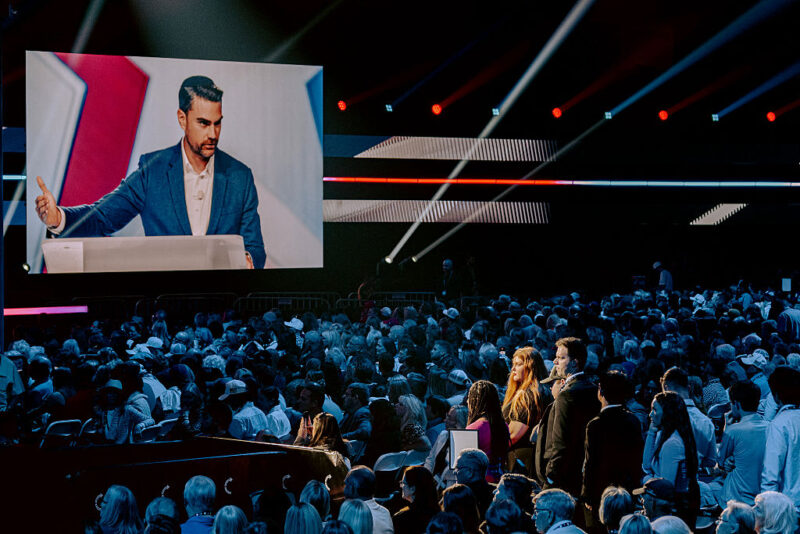
Two of Netanyahu’s spokespeople, however, said that Netanyahu’s position is not new, citing his comments to conservative commentator Ben Shapiro in October and Australian journalist Erin Molan in November. In both interviews, Netanyahu recounted that he phased out American financial aid to Israel in his first term in office in 1996, and that he intends to do the same for military aid.
“I am committed to making Israel as fully self-sufficient as possible,” Netanyahu told Shapiro. “We can transform our military defense industry, make a quantum jump to be able to be self-sufficient and to share with America the extraordinary developments that we have.”
Netanyahu also said in a Cabinet meeting in May that “we receive close to $4 billion for arms. I think we will have to wean ourselves off of American security aid.”
His spokespeople had no further comment when asked if anything had changed in light of Netanyahu’s meeting with Trump in December.
Last March, Leiter canceled a meeting with Halevi over his advocacy on the Hill against continuing aid. Weeks earlier, Leiter pulled out of a Heritage Foundation event due to the publication of a paper that called for the gradual elimination of U.S. aid to Israel.
Yet, in September, reflecting the shift in Israel’s position, Leiter told JI that “the nature of any MOU or collaborative effort is going to change,” and it may consist of “greater [joint] research and development between our two countries, rather than relying on American weapons.”
One American source familiar with the negotiations said, “The Israelis just have to come in and ask for what they need and stop trying to figure out what the U.S. wants to hear.”
More Stories

Fuentes’ following
New report documents foreign engagement driving online antisemitic activity
eye on the prize
Virginia lawmaker with history of anti-Israel rhetoric eyes 2026 congressional run
priority check
Trump’s national security strategy balances global engagement with ‘high bar’ for intervention

academic adversity
Columbia antisemitism task force report finds all its Middle East faculty are anti-Zionist
TERROR TAGS
Florida designates Muslim Brotherhood, CAIR as terrorist organizations