Shlomi Amsalem, GPO
Why Israel recognized Somaliland — and what the rest of the world might do next
After Israel announced it would recognize the secessionist region, the big question remains whether the United States will follow suit


 Add JewishInsider on Google
When Israel announced the day after Christmas that it would formally recognize Somaliland, making it the first country in the world to announce formal diplomatic relations with the secessionist region in the Horn of Africa, even some of Washington’s foremost foreign policy experts were sheepishly asking the same question: What, exactly, is Somaliland?
There was no single event that led to Israel’s choice to recognize the sovereignty of Somaliland, which announced its independence from Somalia in 1991. The territory has functioned independently for 35 years; nothing in its governance changed last year.
What changed was Israel — and its geopolitical calculus regarding regional security threats.
“The Houthis didn’t used to fire missiles at Israel. That’s new, and Israel’s now trying to respond to a new situation,” said David Makovsky, the Ziegler Distinguished Fellow at The Washington Institute for Near East Policy. “I have no doubt that this was driven by how to try to neutralize a threat from the Houthis that Israel takes very seriously.”
Somaliland sits just across the Gulf of Aden from Yemen, from which the Iran-backed Houthis have fired drones and ballistic missiles at Israel following the Oct. 7 Hamas attacks in 2023. Allying with Somaliland could allow Israel to target the Yemeni militia from much closer range. Israel has also reportedly approached Somaliland about resettling Palestinians from Gaza there, although officials in the country have denied that such conversations took place.
Somaliland also sits in a strategic location south of Djibouti and to the east of Ethiopia, and its coastland is close to where the Indian Ocean and Red Sea meet, making it a prime shipping location.
“No one can ignore the strategic location of Somaliland,” Israel’s ambassador to the United Nations, Danny Danon, told The Wall Street Journal. “The straits are a strategic point.”
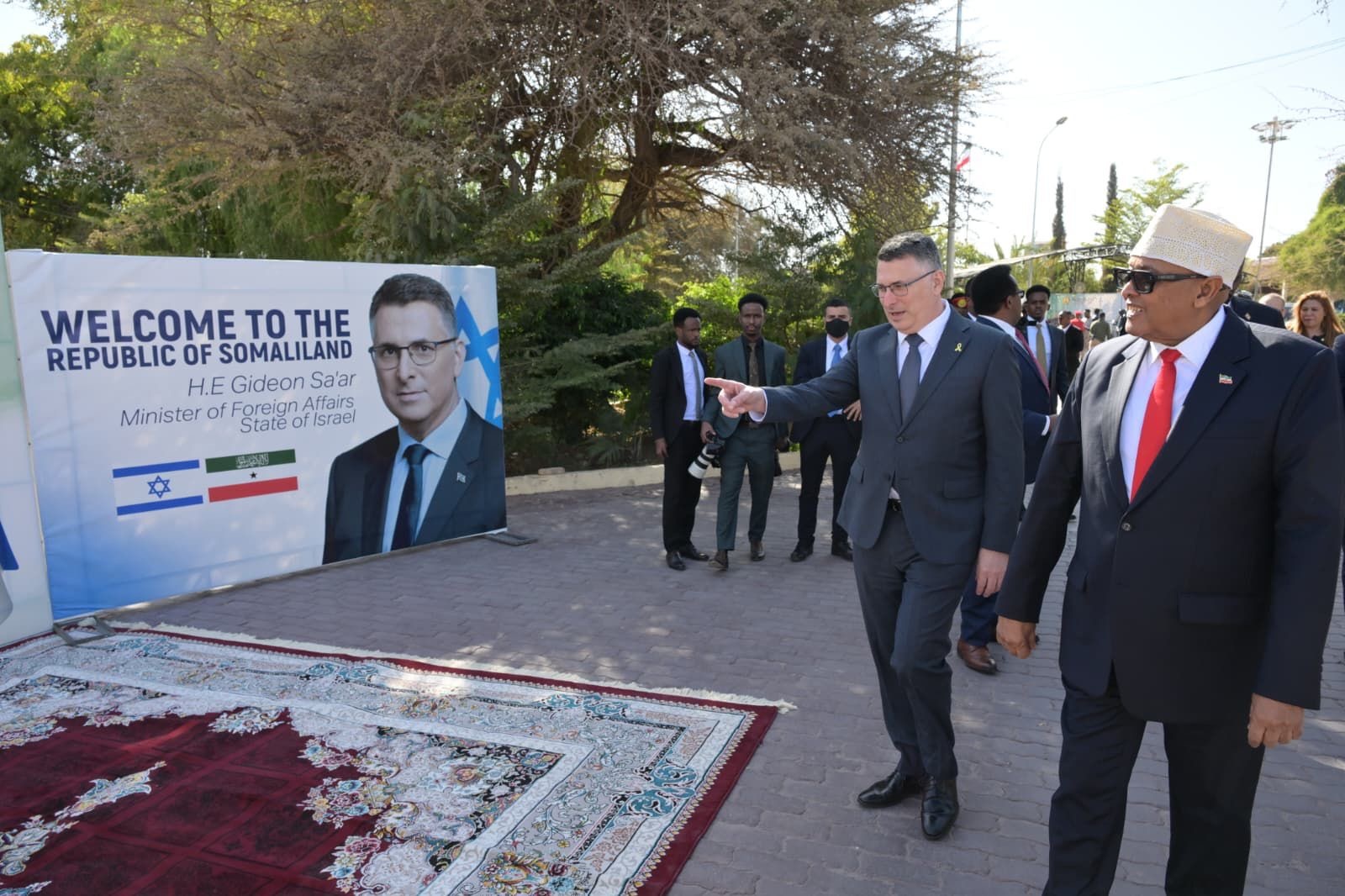
Israeli Foreign Minister Gideon Sa’ar visited Hargeisa, Somaliland’s capital, on Tuesday to meet with President Abdirahman Mohamed Abdullahi. It was the first visit by a foreign minister to Somaliland in its more than three decades of existence as a self-governing entity.
The key question is whether Jerusalem’s recognition of Somaliland will prompt similar moves by other nations. Somalia, with which Israel does not have diplomatic nations, has slammed the move. The African Union on Tuesday called for Israel to walk back its recognition, saying the move “represents an unacceptable interference in the internal affairs of a sovereign Member State of the United Nations.”
But even as Israel faces diplomatic pushback even from allied African nations, it has created an opening for Somaliland to press its case internationally.
The region was a separate entity from Somalia beginning in the 19th century, when it was controlled by the British — in contrast to present-day Somalia, which was previously ruled by Italy. Today Somaliland is home to 6 million people, and it has held democratic elections throughout the past two decades.
Washington has not recognized Somaliland, and a State Department spokesperson told Jewish Insider on Tuesday that no such announcement is forthcoming.
“The United States continues to recognize the sovereignty and territorial integrity of the Federal Republic of Somalia, which includes the territory of Somaliland,” the spokesperson said.
But at an emergency United Nations Security Council hearing last week, Tammy Bruce, the U.S. deputy representative to the U.N., defended Israel’s right to conduct diplomacy, and she called out the body’s “persistent double standards” in treating the recognition of Somaliland as different from states that have unilaterally recognized a Palestinian state.
“The Americans are engaging with the country. How quickly they move to recognize Somaliland, I don’t know,” said Max Webb, a Horn of Africa expert who works at Israel Policy Forum. “Somaliland has been a fixture of Republican politics.”
“Israel has the same right to conduct diplomatic relations as any other sovereign state,” said Bruce. “Earlier this year, several countries including members of this council made the unilateral decision to recognize a non-existent Palestinian state, and yet no emergency meeting was called to express this council’s outrage.”
Even though Washington does not recognize Somaliland, the region has a small diplomatic mission in the United States. In December, the top U.S. military official overseeing the Africa Command visited Somaliland and met with Abdullahi, its president.
“The Americans are engaging with the country. How quickly they move to recognize Somaliland, I don’t know,” said Max Webb, a Horn of Africa expert who works at Israel Policy Forum. “Somaliland has been a fixture of Republican politics.”
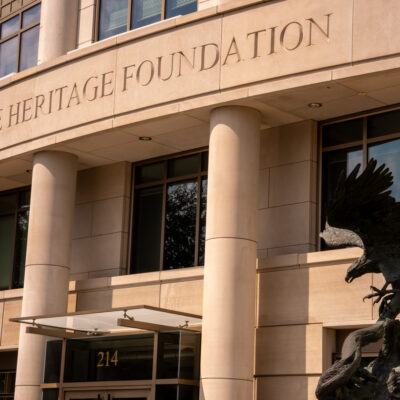
The conservative Heritage Foundation first called for U.S. recognition of Somaliland in 2021. Sen. Ted Cruz (R-TX) threw his support behind recognition last August, and he said in a post on X on Monday that Somaliland recognition “aligns with America’s security interests.” President Donald Trump told The New York Post in December that he wasn’t yet ready to recognize Somaliland but that he will “study” the issue. “Does anyone know what Somaliland is, really?” Trump said.
Taiwan, which is not a United Nations member state, has a representative office in Somaliland, but it has not formally recognized Somaliland as an independent state. A handful of regional powerhouses, including Ethiopia and the United Arab Emirates, also have strong economic relationships with Somaliland. They have yet to establish full diplomatic ties, although Somaliland and Ethiopia — the second most populous nation in Africa — signed a major memorandum of understanding in 2024. There are larger geopolitical factors at play: Egypt is closely aligned with Somalia, while Egypt and Ethiopia have long been at odds over an Ethiopian hydroelectric project on the Nile River. Turkey and Qatar, both of which are close to Mogadishu, condemned Israel’s actions.
Somalia is a key counterterrorism partner for the U.S., particularly as the Islamist group al-Shabab has grown and become more deadly alongside a Somali affiliate of ISIS. Some worry that U.S. recognition of Somaliland could hamper that coordination.
“Somaliland is on the map,” said Michael Rubin, a senior fellow at the American Enterprise Institute. “People who had never heard of Somaliland a week ago are suddenly reading up on its history and understanding its arguments.”
“I’m sure there are other countries as well beyond the U.S. that worry if they recognize Somaliland, then Somalia will have a full meltdown and will cut off counterterrorism cooperation, for instance, and then al-Shabab will make even further gains,” said Joshua Meservey, a senior fellow at the Hudson Institute who has called for U.S. recognition of Somaliland. “Somalia’s dysfunction almost protects it, in a way, from Somaliland gaining wider recognition.”
Over the past 10 days, no other states have followed Israel’s lead. But a diplomatic crisis has not emerged, at least not yet — and now, Somaliland is part of the global conversation in a serious way for the first time since it declared independence.
“Somaliland is on the map,” said Michael Rubin, a senior fellow at the American Enterprise Institute. “People who had never heard of Somaliland a week ago are suddenly reading up on its history and understanding its arguments.”