


















The Muslim Brotherhood’s surprising legal status in Israel
Plus, Musk’s role in rising online antisemitism


 Add JewishInsider on Google
Good Thursday morning!
In today’s Daily Kickoff, we examine the growing Saudi-Turkish competition for influence over Damascus and talk to House Foreign Affairs Committee Chair Rep. Brian Mast (R-FL) about his current position on Syria sanctions. We highlight the blessing given by Rabbi Yosef Hamra, the brother of the last chief rabbi of Syria, to Syrian President Ahmad al-Sharaa during his visit to Washington and delve into the legal status of the Muslim Brotherhood in Israel and why it’s not fully banned. We also report on an interview with the founders of the Track AIPAC account, who until now had been anonymous, and on Jordan Wood’s comment, after he announced his Senate bid in Maine, that he would reject contributions from AIPAC. Also in today’s Daily Kickoff: Michael Rapaport, Alex Moore and Charlie Spies.
Today’s Daily Kickoff was curated by Jewish Insider Israel Editor Tamara Zieve and U.S. Editor Danielle Cohen-Kanik, with an assist from Marc Rod. Have a tip? Email us here.
What We’re Watching
- The U.S. Commission on International Religious Freedom is holding a hearing this morning on religious freedom in Syria during the country’s transition out of dictatorship.
What You Should Know
A QUICK WORD WITH JI’S Josh Kraushaar
So much of the conversation about the rise of right-wing antisemitism has been focused on the supply side of the equation — the growing number of online commentators and podcasters, led by Tucker Carlson and Candace Owens, who are mainlining anti-Jewish tropes, conspiracy theories and Holocaust revisionism to their sizable audiences.
Less scrutinized is the demand-side part of the equation: Why are so many people in the independent podcasting ecosystem mimicking the same antisemitic arguments and hosting the same extremist guests? Is there really a significant audience for this nonsense?
On paper, there’s no constituency for this type of extremism. As an example: Carlson’s public sympathizing towards Russian dictator Vladimir Putin, for instance, is about as politically toxic as you can get with the American public. A recent NBC News poll found just 3% of Americans view Putin favorably, while a whopping 84% view him negatively.
But in the world of social media, a small but passionate audience of superfans — even if they’re extremists — can be more lucrative than a much broader audience of mainstream news consumers. The problem is that the perception of influence, fueled by these social media platforms, can become a self-fulfilling prophecy.
We saw this pattern play out on the left in the run-up to the 2020 presidential election, when politically toxic views about policing, immigration, race and gender identity received outsized attention on Twitter, were enforced by a small number of online influencers and quickly became conventional wisdom in institutional liberal circles. The shift was so profound that most of the 2020 Democratic presidential candidates embraced left-wing positions that they later ended up regretting.
With Elon Musk’s purchase of Twitter (now X), the platform’s algorithm now incentivizes far-right discourse, creating a marketplace for bigoted and antisemitic influencers. It’s what’s creating a demand for the conspiratorial content of Carlson, Owens and others, and it also explains why more-mainstream figures in the “independent” media space, like Megyn Kelly, are increasingly flirting with these extremist narratives.
“It’s not lost on me that there was a great celebration on the right when Elon Musk bought Twitter — and now it looks like one of the worst things for the right in a long time. The algorithms on X really promote the worst excesses of the post-liberal right,” said one former official at a conservative policy institution granted anonymity to discuss concerns. “Tucker and Megyn are in the business of monetizing the algorithm more than building an audience.”
REGIONAL POWER PLAY
Trump, al-Sharaa meeting highlights growing Saudi-Turkish competition for influence over Damascus
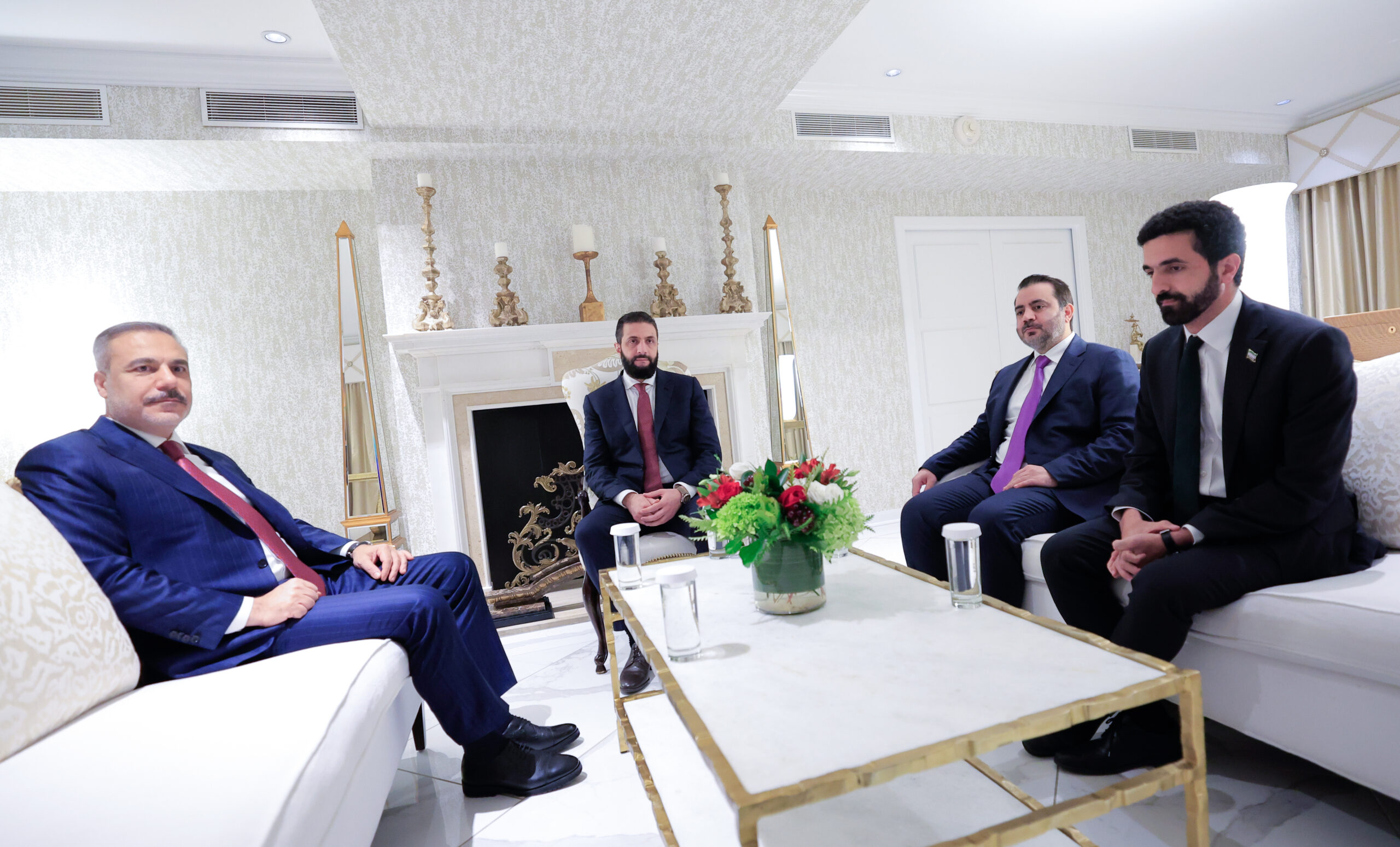
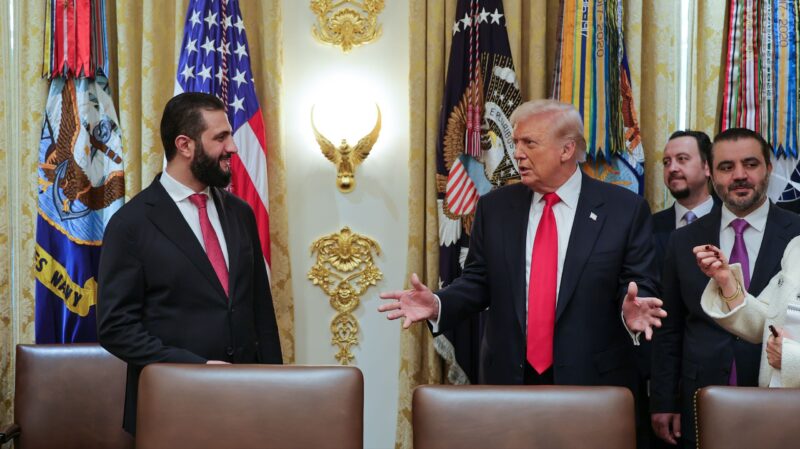
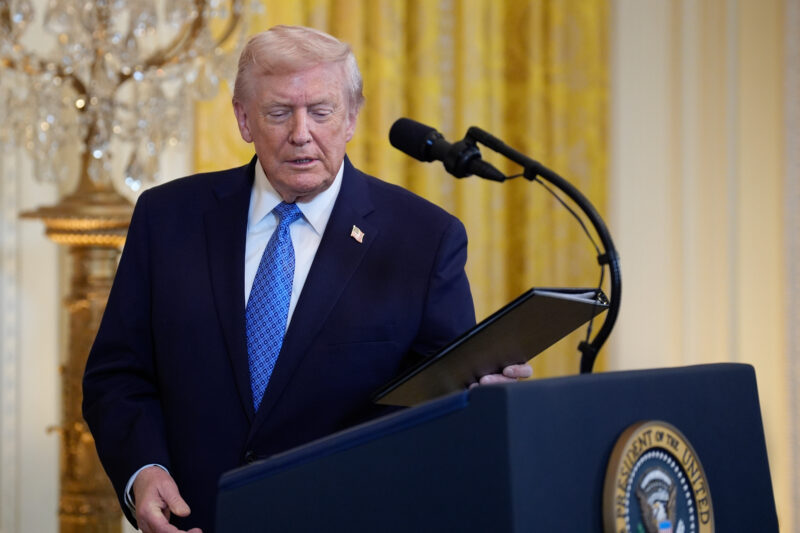
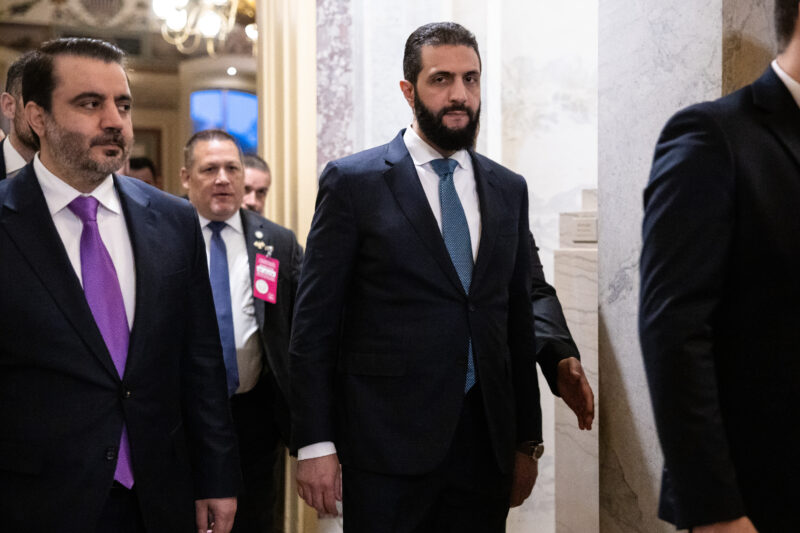
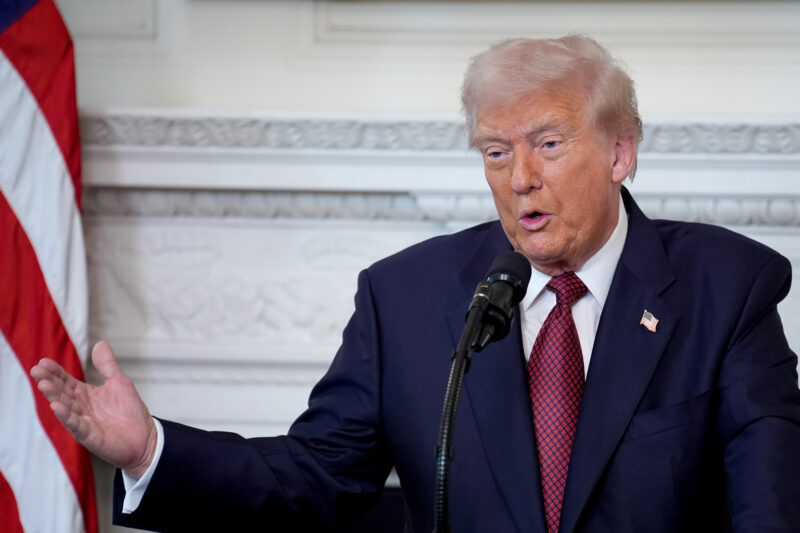
At the White House on Monday, as President Donald Trump met with Syrian President Ahmad al-Sharaa, two other high-level figures were in attendance — Saudi Defense Minister Prince Khalid bin Salman and Turkish Foreign Minister Hakan Fidan, underscoring how Syria has become a new battleground for regional influence. Following the fall of longtime dictator Bashar al-Assad’s regime last December, the war-ravaged nation has become a political vacuum, transformed into a critical security frontier for many regional players — most notably Turkey and Saudi Arabia, Jewish Insider’s Matthew Shea reports.
Stakes in Syria: “Saudi Arabia and Turkey are among the most powerful Middle Eastern countries. The power vacuum caused by the Syrian civil war turned Syria into a stage for these competing powers,” said David May, a research analyst at the Foundation for Defense of Democracies. “Both countries supported elements working to topple former Syrian strongman Bashar al-Assad.”
CAESAR QUESTIONS
House Foreign Affairs Chair Mast now says he’s undecided on Syria sanctions repeal effort
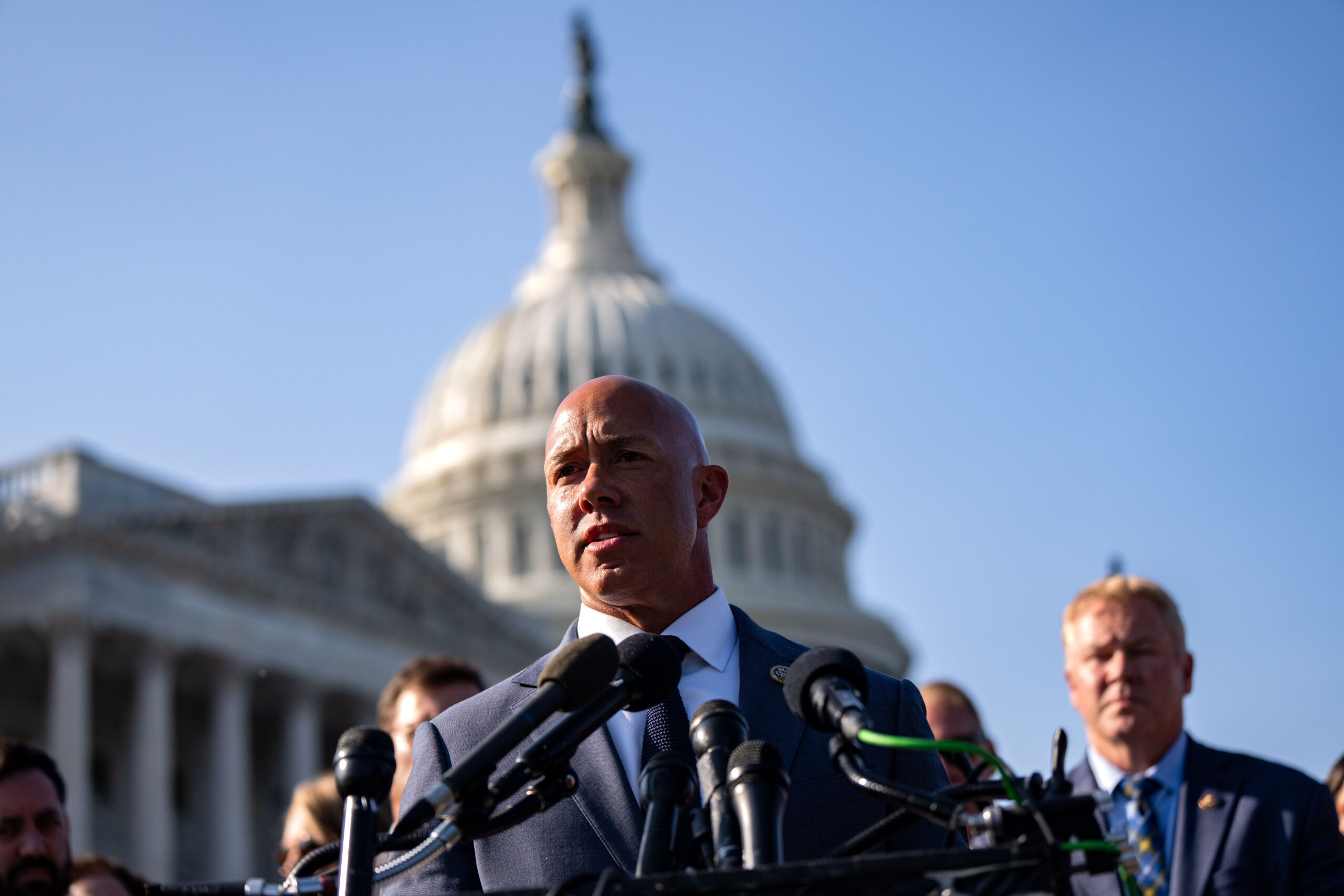
House Foreign Affairs Committee Chair Rep. Brian Mast (R-FL) told Jewish Insider’s Marc Rod that, after his meeting with Syrian President Ahmad al-Sharaa earlier this week, he’s going to “think about” his skeptical stance on the repeal of sanctions on Syria under the Caesar Civilian Protection Act. Mast has expressed concerns about lifting the sanctions, and his sign-off would be needed for the repeal to be included in the final 2026 defense bill.
Readout: Asked if the meeting had changed his views on the issue, Mast said that he had read at length about al-Sharaa and his background prior to the meeting. “We had a lot of conversation, good conversation,” Mast said. “I asked him very pointedly [to] explain why we’re no longer his enemy. He gave a pretty good answer. Said he was hoping for a noble future for his people, one free of radicalism, fundamentalism … and ISIS. So it was a good answer.”
Bonus: Mast told JI that the Foreign Affairs Committee is looking to take up consideration of legislation designating the Muslim Brotherhood as a terrorist organization, but did not elaborate on a potential timeline. Sponsors of the companion legislation in the Senate are pushing for a markup in the Senate Foreign Relations Committee.
BROTHERHOOD PARADOX
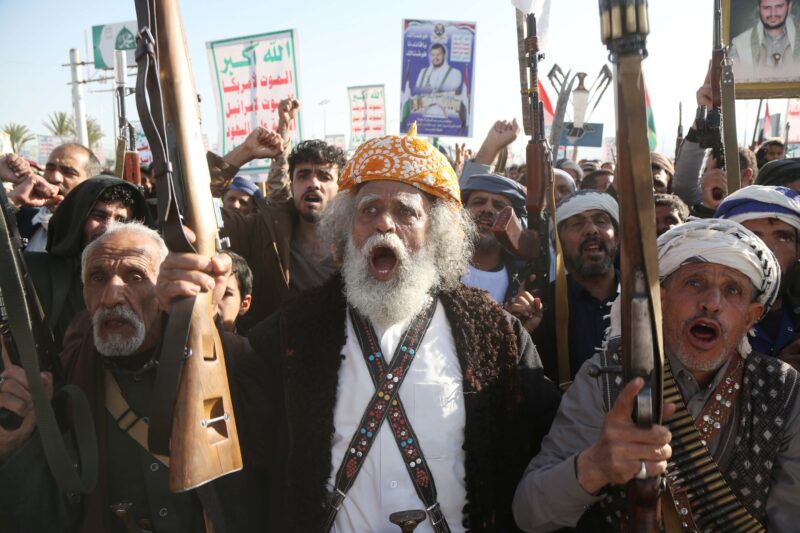
Israel’s neighbors have banned the Muslim Brotherhood, but Israel hasn’t. Why not?
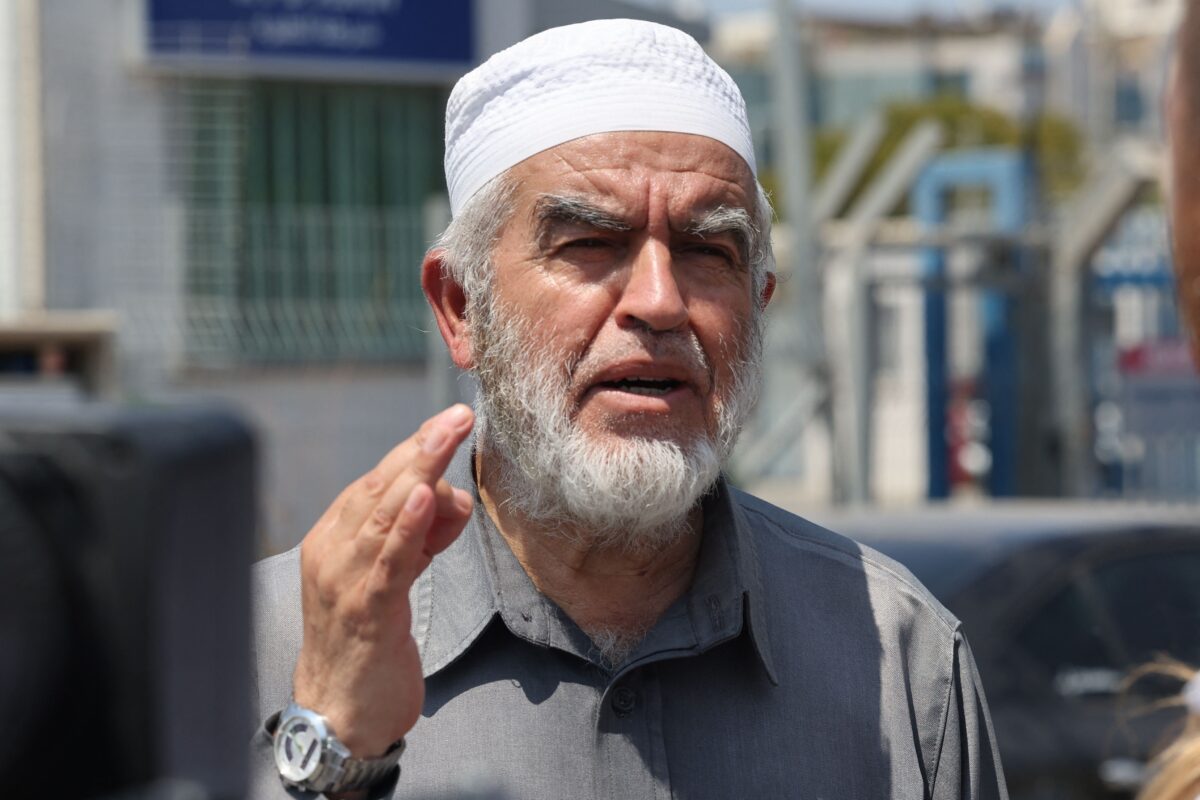
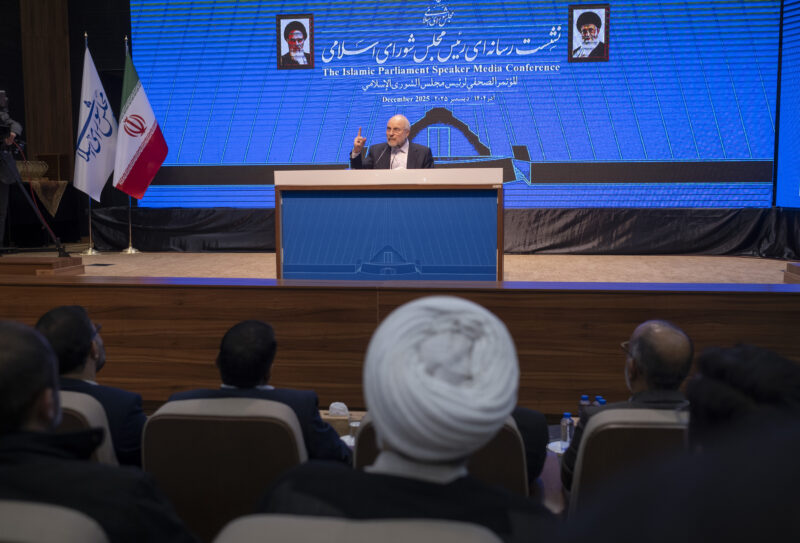
While Congress is working on a bill to designate the Muslim Brotherhood a terrorist organization in the U.S., and the Islamist group is banned from Egypt, Syria, Saudi Arabia, the United Arab Emirates and beyond, the group’s status in Israel is much more complicated. The matter drew renewed attention this week after Mansour Abbas, the leader of the Ra’am party in the Knesset, an ideological offshoot of the Muslim Brotherhood, declined to call for the eradication of Hamas on Israeli radio, Jewish Insider’s Lahav Harkov reports.
Backlash: The interview sparked headlines and analysis in right-leaning Israeli media and comments by politicians on the right about the viability of center and left-wing parties once again forming a coalition with Ra’am to oust Prime Minister Benjamin Netanyahu, when Ra’am’s leader would not say that he is for eradicating Hamas. The historic and recent connections between Hamas and Ra’am, both of which were founded by adherents of the Muslim Brotherhood, shed light on the nuances of the international Sunni Islamist movement and its status in Israel. Michael Milshtein, head of the Palestinian Studies Forum at the Moshe Dayan Center at Tel Aviv University, emphasized, in an interview with JI on Wednesday, that the Muslim Brotherhood is an ideology aiming to make Muslim societies more religious, and is not one centralized organization spanning the Muslim world.
historic handshake
Syrian American rabbi blesses Syrian president in Washington
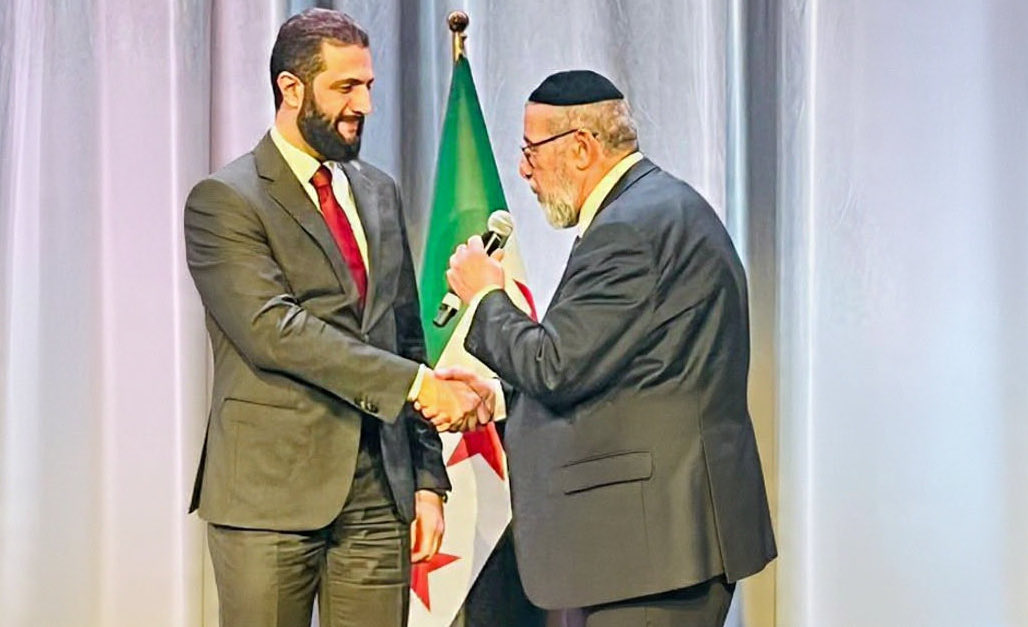
Rabbi Yosef Hamra, the brother of the last chief rabbi of Syria, who now lives in Brooklyn, was invited to offer a blessing to Syrian President Ahmad al-Sharaa during a meeting between al-Sharaa and a variety of Syrian diaspora activists in Washington on Sunday, Jewish Insider’s Marc Rod reports.
Making history: “Syrian Jews coming up and sitting down with the president — this is really history,” Henry Hamra, who leads the Jewish Heritage in Syria Foundation with his father, told JI. “A lot of people from over here, from our community, were very, very emotional about it. It’s a beautiful thing, and my father was so touched and it was a great moment.” Hamra said that al-Sharaa had thanked his father for the blessing and said that he would “love to see you again in Syria.” He said that al-Sharaa had also, during the meeting, expressed a commitment to religious inclusion and pluralism.
ANONYMOUS NO MORE
Anti-AIPAC account’s co-founder is former staffer for AOC, Bush, Bowman
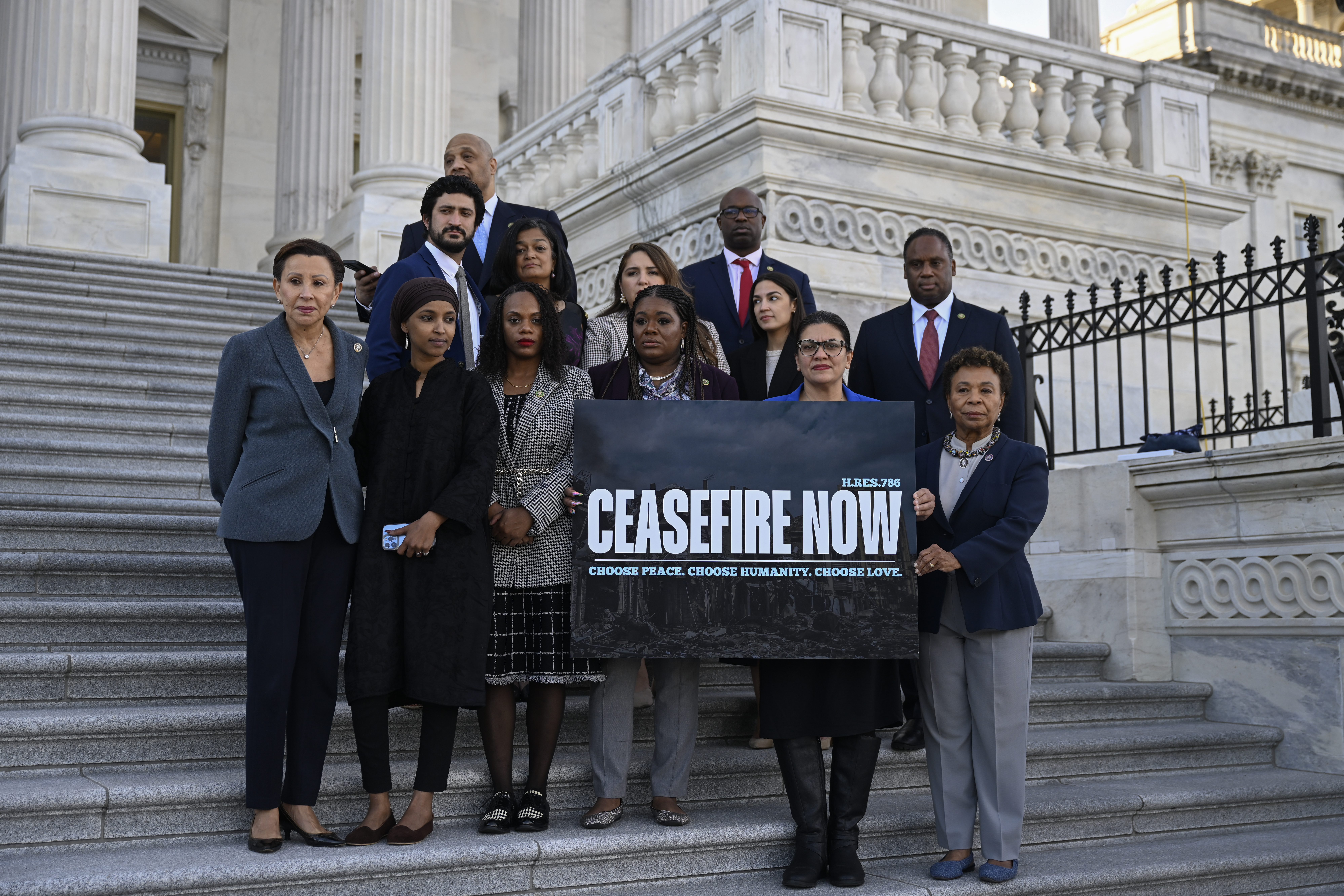
One of the co-founders of the Track AIPAC account and website that has gone viral in online anti-Israel circles is a former campaign staffer for a series of far-left lawmakers, she revealed in an interview on Wednesday. The group’s founders had previously remained anonymous. Cory Archibald, who founded the Citizens Against AIPAC Corruption PAC before merging with Track AIPAC, described herself in an interview with the “Breaking Points” podcast as a former campaign staffer for Rep. Alexandria Ocasio-Cortez (D-NY) and former Reps. Cori Bush (D-MO) and Jamaal Bowman (D-NY), all members of the anti-Israel Squad, Jewish Insider’s Marc Rod reports.
Podcast playback: Casey Kennedy, Archibald’s other co-founder, said in the interview that numerous members of Congress have reached out to the group to start a dialogue. The Track AIPAC founders also said that they plan to expand their efforts to tracking individual pro-Israel donors’ political spending generally. Asked about accusations that it is antisemitic to demand, as Track AIPAC does, that AIPAC register as a foreign lobbying organization — given that AIPAC’s members and leadership are American citizens and do not take direction from the Israeli government — the two did not directly address the issue. “I would say it is not antisemitic to stand against an ongoing genocide that’s being perpetrated with American backing,” Kennedy responded.
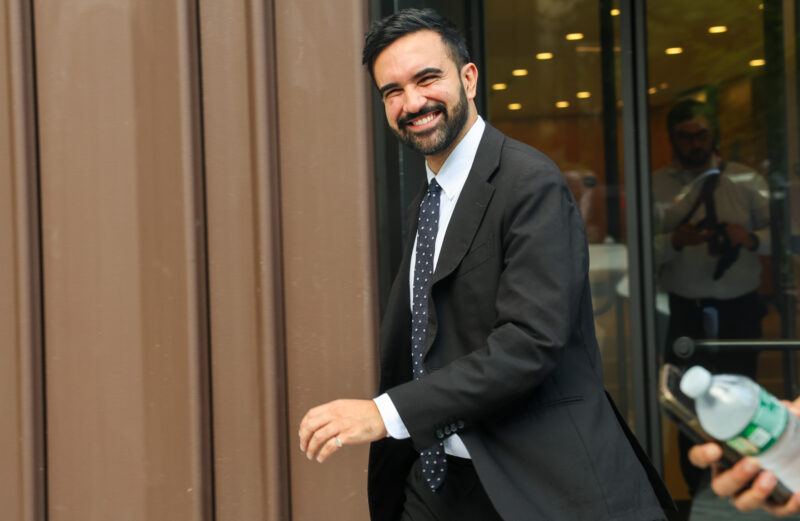
Wood-n’t take it: Jordan Wood, a Maine Democrat who dropped his Senate bid on Wednesday to run for the seat held by retiring Rep. Jared Golden (D-ME), said in a recent podcast interview that he would reject contributions from AIPAC, the pro-Israel advocacy group, joining a growing crop of Democratic candidates who have made similar pledges, Jewish Insider’s Matthew Kassel reports.
EDUCATION CONSTERNATION
ADL report finds pervasive antisemitism in 20 American academic associations
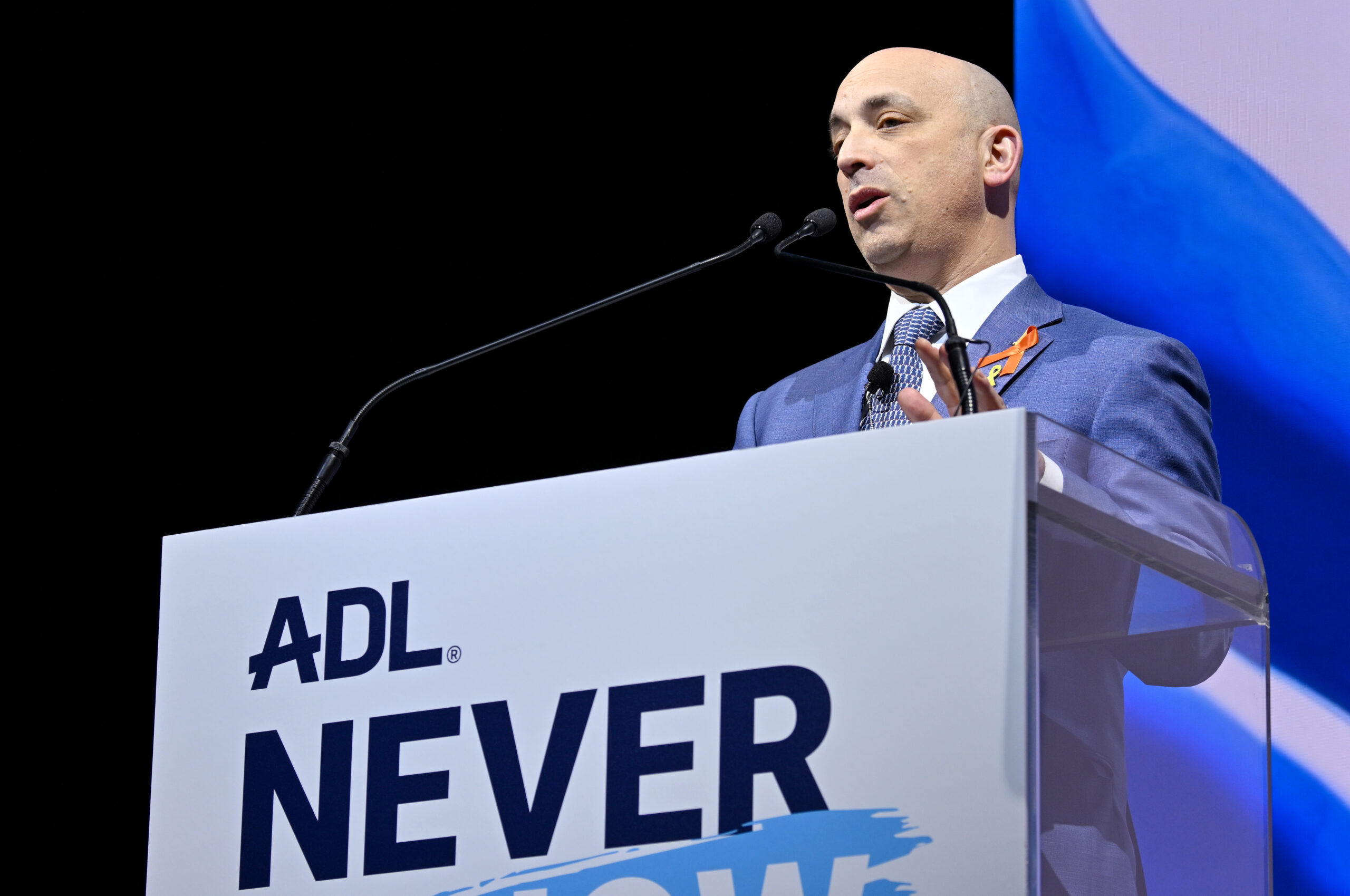
Antisemitism is on the rise within 20 major U.S.-based professional academic associations, according to a study published Thursday by the Anti-Defamation League, Jewish Insider’s Haley Cohen reports. The research, conducted in September, found that 42% of surveyed Jewish faculty members who belong to an association report feeling alienated because they are Jewish or perceived as Zionist; 25% report feeling the need to hide their Jewish or Zionist identity from colleagues in their association; and 45% report being told by others in their associations what does and does not constitute antisemitism. The data was collected using the International Holocaust Remembrance Alliance’s working definition of antisemitism.
Impacted organizations: Among the associations the report profiles is the Association of American Geographers, which faced pressure from members to adopt a boycott of Israel in August. Other organizations in which the ADL reported antisemitism include: National Women’s Studies Association, American Public Health Association, American Psychological Association and American Educational Research Association. A Jewish member of the American Anthropological Association interviewed for the study said that the organization’s 2023 conference, held one month after the Oct. 7, 2023 terrorist attacks in Israel, “was one of the first times I felt afraid professionally as a Jewish person. I felt very vulnerable … if I had been wearing a Star of David, which I wasn’t, I would have taken it off. I did not feel safe.”
Worthy Reads
Can Vance Save the Right?: Following on his Substack article lamenting the rise of “new radicalism” among Gen Zers on the political right, conservative author Rod Dreher posits in The Free Press that the one person who can “save the right, and America, from this rising extremism” is Vice President JD Vance. “Vance is — or could be — the answer to the problem of [Nick] Fuentes and the nihilistic culture that spawned his popularity. Vance lived out a grim version of the chaos that so many men of the generation just below his own are living — and triumphed over it. As a veteran who turned against the Iraq War in which he served, he knows all too well about the failures of American institutions. … Vance should not try to reason with the Groypers, to talk them into the tent. They only want to mock, destroy, and humiliate. Aside from hating Jews, Israel, blacks, and women, they have no program or vision. The best way — the only way — to counter their malignant influence is to condemn them, straight up, but without dismissing the legitimacy of the despair that drives young men into their ranks. … Then, Vance and his team must develop concrete solutions to the economic precarity in which the Zoomers live. … Third, Vance should lean hard into his Christian faith, which is deep and authentic. … Finally, Vance’s biography is an asset that none of his would-be rivals has.” [FreePress]
Antisemites in Their Midst: David Drucker warns in Bloomberg that rising antisemitism on the right could be what “unravels” the GOP’s coalition. “Yet many traditional Republicans remain reluctant to criticize [Tucker] Carlson. The former Fox News host is popular on the populist right and his podcast is among the country’s most influential media platforms. Others fear alienating the populists, concerned Republicans cannot defeat Democrats in national elections without them. … In the four decades from Reagan to Trump, Republicans generally fought the Democrats using ideas as weapons; and conservative media personalities used whatever ideological authority they possessed to enforce party dogma. But during Obama’s presidency, Republicans and their media allies got it into their heads that the US was on the brink of an irreversible collapse that could only be prevented by permanently blocking the Democrats from power. Ideology became secondary — if that — to defeating the left. With that in mind, it’s only logical that, as long as their votes are on offer, some Republicans are willing to tolerate antisemites in their midst.” [Bloomberg]
Libel Lessons: Adam Louis-Klein, founder of the Movement Against Antizionism, argues in The Free Press that New York City Mayor-elect Zohran Mamdani’s win must be understood in the frame of what he calls “the libel-cycle: a recurring civilizational pattern in which anti-Jewish libels spread through society, generate moral hysteria, and rapidly recode entire ideological systems into engines of anti-Jewish meaning. … [Mamdani’s victory] is not just a local event or a mere function of economic populism. It signals a broader cultural shift — one in which opposition to Jewish peoplehood has become a mark of moral virtue. And it marks something larger still: a recurring civilizational pattern — the cycle of libel — to which the only adequate response is historical consciousness and the courage to forge a new paradigm.” [FreePress]
Word on the Street
U.S. and Saudi officials are working to finalize a defense pact between the two countries ahead of Crown Prince Mohammed bin Salman’s visit to Washington next week, Axios reports. Riyadh is also reportedly looking to purchase a large weapons package from the U.S., including F-35 fighter jets…
Venture capital investor Alex Moore is exploring laser warfare startups and sea-cruising drone technology that could capture a portion of the hundreds of billions of dollars MBS promises to spend in the U.S. Moore, an early protégé of Palantir co-founder Peter Thiel, heads the defense portfolio at Austin, Texas-based 8VC and traveled to Israel last week to assess new investment prospects and sat down for an interview with The Circuit’s Jonathan Ferziger…
After a spate of violent attacks by Israeli settlers in the West Bank, Secretary of State Marco Rubio told reporters there is “some concern about events in the West Bank spilling over and creating an effect that could undermine what we’re doing in Gaza”…
In the latest incident overnight, a mosque in a Palestinian village in the West Bank was torched and defaced with anti-Islamic graffiti…
The Treasury Department issued sanctions against 32 individuals and entities based in countries including Iran, China, the UAE and India that contribute to Iran’s ballistic missile and drone production…
Emirati officials have expressed concerns about the roles of Qatar and Turkey in the plan for postwar Gaza, The Jerusalem Post reports…
Former Vice President Kamala Harris told pro-Palestinian hecklers at a speaking event this week that the Biden administration “should’ve spoken publicly about our criticism of the way that Netanyahu and his government were executing this war. … But let’s be very clear, that the inhuman nature of what has happened to the Palestinian people in Gaza, the innocent civilians, the extent of hunger, famine, suffering, death, is something that we must acknowledge”…
New York City Mayor-elect Zohran Mamdani has a meeting scheduled with NYPD Commissioner Jessica Tisch, Politico reports, in a sign that he will follow through with his pledge to keep her in the role….
After a group of rabbis in the Bronx issued a statement calling congressional candidate Michael Blake’s use of a video of anti-Israel activist Guy Christensen “deeply offensive,” the former assemblyman apologized and denounced the murder of two Israeli Embassy staffers outside the Capital Jewish Museum in May, which Christensen had celebrated. “I apologize for any pain our campaign video caused any member of the Jewish community by including someone who condoned this horrific event,” Blake, who is challenging Rep. Ritchie Torres (D-NY) in the Democratic primary, said…
In his memoir released this week, Sen. John Fetterman (D-PA) details his falling out with Pennsylvania Gov. Josh Shapiro, accusing him of being driven by “optics and fear”…
Virginia Gov.-elect Abigail Spanberger, a Democrat, asked the board of the University of Virginia to refrain from choosing a replacement for its former president, James Ryan, until she takes office, saying she is “deeply concerned” about the board’s failure to push back against the Trump administration’s ouster of Ryan…
The Republican Jewish Coalition announced on Wednesday that it had elected to its board of directors Dan Conston, the former president of the Congressional Leadership Fund; Charlie Spies, a veteran elections attorney; and philanthropist David Gemunder, Jewish Insider’s Emily Jacobs reports…
The St. Louis Board of Aldermen, akin to its city council, passed a nonbinding resolution calling on the city’s retirement system to divest from companies involved in Israel and its war in Gaza, including Boeing, a significant employer in the region, after a heated debate…
IDF Arabic-language spokesperson Col. Avichay Adraee is set to retire soon after 20 years of service. He is likely to be replaced by Maj. Ella Waweya, one of the most senior female Arab Muslim officers in the IDF…
Former German Chancellor Angela Merkel toured sites and communities attacked by Hamas in the Oct. 7, 2023, attacks, including a visit to the home of Amir Tibon, Haaretz journalist and author of The Gates of Gaza, a book about the attack on his kibbutz, Nahal Oz. Merkel was in Israel to receive an honorary doctorate from the Weizmann Institute of Science…
The New York Times chronicles the distrust in the Five Eyes — the intelligence alliance comprising the U.S., U.K., Canada, Australia and New Zealand — with FBI Director Kash Patel, over his personnel decisions, inexperience in intelligence matters, partisanship and interpersonal interactions…
An Israeli-founded AI cybersecurity company, Tenzai, founded just six months ago, came out of stealth yesterday with a $75 million seed round, with support from major venture capital firms including Greylock Partners, Lux Capital and Battery Ventures…
Pic of the Day
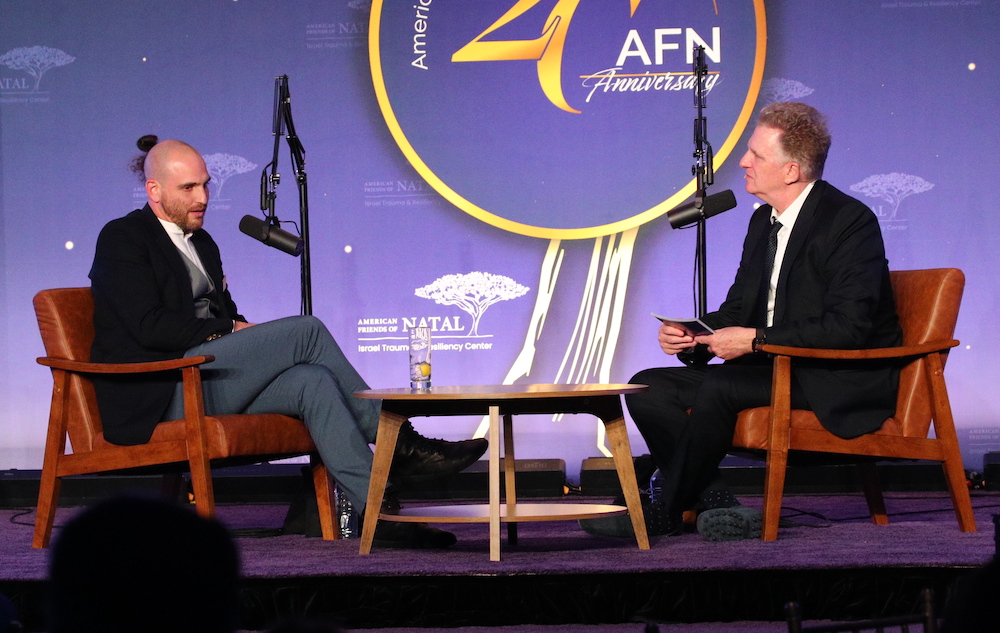
Actor and Israel advocate Michael Rapaport (right) led a conversation with Daniel Goldstein, a 33-year-old IDF reservist, licensed social worker and trauma survivor, at the American Friends of NATAL’s 20th anniversary gala in New York on Monday evening. Rapaport hosted the gala, which aimed to raise funds for trauma care and spotlight the mental health crisis Israel is facing.
Birthdays

Former relief pitcher in the Colorado Rockies organization, he pitched for Team Israel at the 2017 World Baseball Classic, now an EMT in Los Angeles, Troy Neiman turns 35…
Former president and COO of the Las Vegas Sands Corporation, who serves on the boards of many Jewish organizations and founded the Jewish Future Promise, Mike Leven turns 88… Israeli industrialist with holdings in energy, real estate and automobile distributorships, Gad Zeevi turns 86… Shmuel Harlap… Chief rabbi of Rome, Rabbi Dr. Shmuel Riccardo Di Segni turns 76… Publisher of the independent “Political Junkie” blog and podcast, Kenneth Rudin… U.S. attorney general throughout the Biden administration, Merrick Garland turns 73… Israeli businessman Nochi Dankner turns 71… Managing director of the Jewish Education Innovation Challenge, Sharon Freundel… Former president of the D.C. Board of Education, Ruth Wattenberg… Former editor-in-chief of British Vogue for 25 years, she is a strategic advisor to Atterley, an Edinburgh, Scotland-based fashion marketplace, Alexandra Shulman turns 68… U.S. senator (R-AK), Dan Sullivan turns 61… Producer and writer, he has written for 10 television shows, Matt Weitzman turns 58… San Jose, Calif., resident, Katherine (Katya) Palkin… Somali-born activist who has served in the Dutch parliament, she is a research fellow at the Hoover Institution, Ayaan Hirsi Ali turns 56… Former Israeli government minister for the Shas party, he has served as minister of communications and then minister of sousing, Ariel Atias turns 55… Founder of Pailet Financial Services, a predecessor agency of what is now the Dallas office of Marsh & McLennan, Kevin Pailet… Rabbi Andrea Dobrick Haney… President and CEO at the U.S. Travel Association, Geoffrey Freeman… Member of the Knesset for the Yesh Atid party, Meirav Ben-Ari turns 50… Television journalist employed by Hearst Television, Jeff Rossen turns 49… President of baseball operations for MLB’s Los Angeles Dodgers, Andrew Friedman turns 49… Israeli rapper and record producer, generally known by his stage name “Subliminal,” Yaakov (Kobi) Shimoni turns 46… CEO of the JCC of Greater Baltimore, Paul M. Lurie… Judoka who won three national titles (2000, 2002 and 2004), she competed for the U.S. at the Athens Olympics in 2004, Charlee Minkin turns 44… Senior director of policy and communications at Christians United For Israel, Ari Morgenstern… Political communications consultant, Jared Goldberg-Leopold… PR and communications consultant, Mark Botnick… Professional soccer player, then a soccer coach and now a sales account executive at Les Friedland Associates, Jarryd Goldberg turns 40… Michael Schwab… Member of the U.S. House of Representatives (R-OH), one of four Jewish Republican congressmen, Max Leonard Miller turns 37… Staff attorney for the ACLU’s voting rights project, Jonathan Topaz… Israeli film, television and stage actor and model, Bar Brimer turns 28… J.D. candidate at University of Houston Law Center, Cole Deutch… VP of Israel and global philanthropy and director of Christian Friends of the Jewish Agency for Israel, Danielle Mor…