


































Families of Oct. 7 victims file suit against Binance
Plus, Anna Wintour mingles with Sinwar supporter in Doha


 Add JewishInsider on Google
Good Tuesday morning.
In today’s Daily Kickoff, we look at how X’s new location feature has pulled the curtain back on the numerous foreign accounts attempting to foment unrest, antisemitism and anti-Israel sentiment in the West, and report on a new lawsuit filed against Binance by the families of individuals killed in the Oct. 7, 2023, Hamas terror attacks and in captivity in Gaza. We cover President Donald Trump’s signing of an executive order targeting the Muslim Brotherhood, and report on Anna Wintour’s mingling with Sheikha Moza bint Nasser, the mother of the Qatari emir, who glorified slain Hamas leader Yahya Sinwar. Also in today’s Daily Kickoff: Paul Finebaum, Len Blavatnik and David Amram.
Today’s Daily Kickoff was curated by Jewish Insider Executive Editor Melissa Weiss and Israel Editor Tamara Zieve. Have a tip? Email us here.
What We’re Watching
- We’re keeping an eye on the implementation of President Donald Trump’s executive order issued yesterday targeting chapters of the Muslim Brotherhood. More below.
- Palestinian terror groups said they will turn over the body of a hostage to Israel this afternoon, a day after the Palestinian Islamic Jihad confirmed it was in possession of the body.
- Iranian Foreign Minister Abbas Araghchi is traveling to Paris for talks with senior French officials, slated to begin tomorrow, on a range of issues, including Tehran’s refusal to grant access to international nuclear weapons inspectors as well as French nationals being detained in the Islamic Republic.
What You Should Know
A QUICK WORD WITH JI’S MATTHEW KASSEL
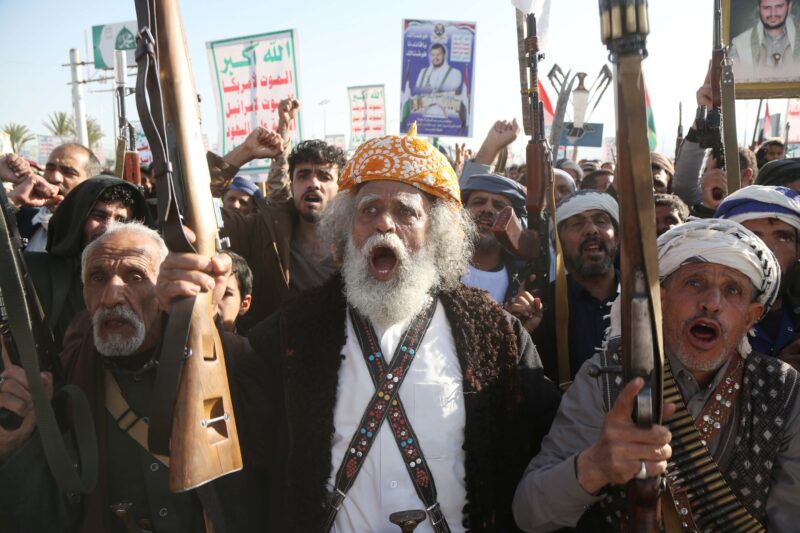
A new feature from X that allows users to see where accounts are located across the world has exposed a range of extreme political actors as misrepresenting the countries in which they claim to be operating — raising questions over foreign involvement in online discourse.
The discrepancies have been particularly clarifying with regard to anti-Israel commentators as well as far-right MAGA influencers who frequently spread antisemitic rhetoric while espousing “America First” ideology.
Thanks to digital sleuths, it quickly became clear that many widely followed accounts were actually operating in such far-flung locales as Bangladesh, India, Pakistan and Qatar, among other places — underscoring the degree to which outside agitators are fomenting division on both the left and right.
One illustrative far-right account, “MAGA Nation,” which claims to be “standing strong with President Trump,” for instance, was based in Eastern Europe rather than the United States, the X feature showed. Other similarly named accounts were discovered to be based in Nigeria and Thailand, contradicting the isolationist tenor of their rhetoric.
Several accounts that built large audiences condemning Israel and its war in Gaza were found to be running out of foreign countries. One account called “Gaza Notifications,” for example, is listed as being Turkey-based. Meanwhile, Palestinian journalist Motasem Dalloul denied claims that he was operating from Poland, which X showed to be his location, while purporting to live in Gaza. Dalloul responded to the claims with a video of himself in front of destroyed buildings and tent encampments and told podcast host Daniel Mael that he was using an e-SIM.
Meanwhile, a far-left political activist tied to Track AIPAC — an X account that has faced accusations of antisemitism for demanding the pro-Israel lobbying group register as a foreign agent — was found to be living in Germany, the Washington Free Beacon reported reported.
“Why are people in Pakistan, India, Qatar, Bangladesh and elsewhere trying to sell us division and racism?” Robby Soave, a senior editor for Reason magazine, asked in The Hill on Monday. “The answer is self-apparent,” he said. “Because they want America to fail. They want us to weaken. They want us to descend into infighting. They want us to start pointing fingers and scream in each other’s faces. They want us to fall behind.”
Other accounts disputed the accuracy of the feature, which was introduced over the weekend, or claimed that it did not provide a full picture of the situation.
The political advocacy arm of the Council on American-Islamic Relations, responding to scrutiny over a location in Turkey, said in an X post Monday that its director “first registered the account while he was visiting family in Istanbul,” adding: “Hardly a grand terrorist conspiracy.”
weapons worries
Iranian scientists’ visit to Russia raises concerns about rebuilding nuclear weapons program

A series of recent events and revelations has raised concerns that Iran could be working to reconstitute its nuclear weapons program damaged during the 12-day war with Israel and the U.S., and that Russia could be playing a role in aiding the effort. Iran withdrew last week from an agreement with the International Atomic Energy Agency to allow the watchdog to inspect its nuclear sites, just after the U.N. agency’s board of governors passed a resolution calling on Iran to provide more complete information about its nuclear sites and remaining stock of enriched uranium. The resolution came as the IAEA’s chief, Rafael Grossi, said that there were indications of activity at some Iranian nuclear sites. Also last week, the Financial Times reported that Iranian scientists and nuclear experts visited Russian military research institutes a second time last year. Those developments come on the heels of a $25 billion deal between Russia, Jewish Insider’s Lahav Harkov and Matthew Shea report.
Unsurprising finding: Jonathan Ruhe, fellow for American strategy at the Jewish Institute for National Security of America, told JI that the FT’s reporting fits with Western intelligence findings from before the Israeli and American strikes on Iranian nuclear sites that the Islamic Republic was trying to reduce the time it would take to turn its enriched uranium into a bomb. “These activities focused on simulating a nuclear explosion, without actually detonating a test device. Israel’s growing urgency about Iran’s progress contributed to its decision to launch the 12-day war when it did,” he said.
FOLLOW THE MONEY
New lawsuit accuses Binance of ‘knowingly’ enabling Oct. 7 terror attacks

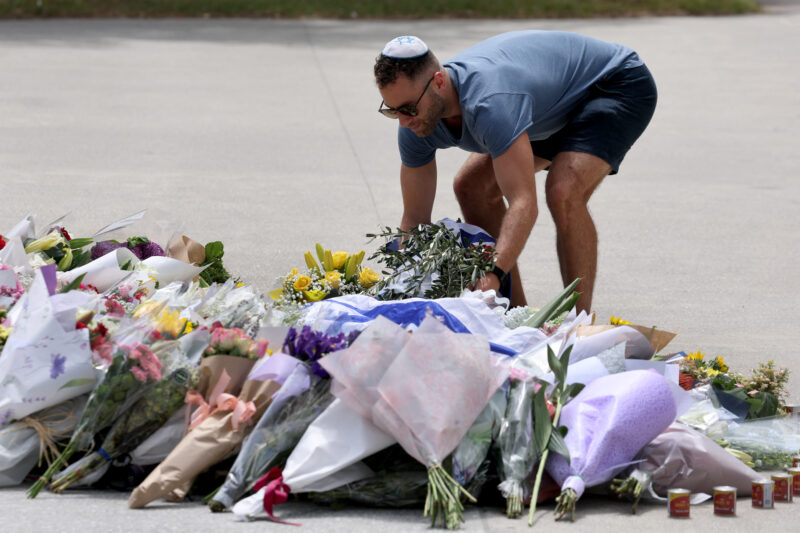
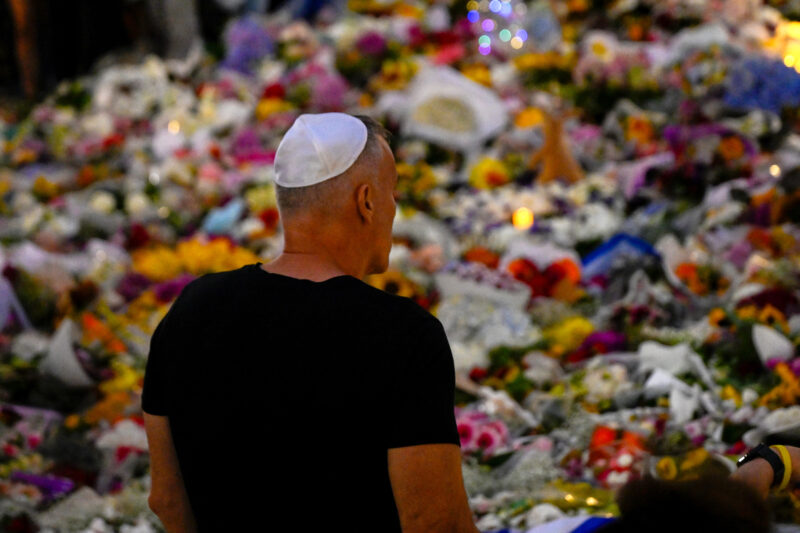
A new federal lawsuit filed on behalf of families of victims of Hamas’ Oct. 7, 2023, attacks accuses the crypto giant Binance of knowingly facilitating the transfer of hundreds of millions of dollars to U.S.-designated foreign terror organizations on an “industrial scale,” helping contribute to the deadly incursion in Israel that killed around 1,200 people and took more than 250 hostages, Jewish Insider’s Matthew Kassel reports. Among the 306 American plaintiffs are the families of American Israeli citizens Hersh Goldberg-Polin, Itay Chen and Danielle Waldman.
The accusations: According to the complaint, Binance, the world’s largest cryptocurrency exchange, “deliberately” failed “to monitor inbound funds” to such terror groups as Hamas, Hezbollah, Palestinian Islamic Jihad and the Islamic Revolutionary Guard Corps, ensuring “that terrorists and other criminals could deposit and shuffle enormous sums on the exchange with impunity.” The complaint states, “Moreover, when specific customers were designated or particular accounts were subject to seizure orders, Binance allowed those customers and accounts to shift the assets into other Binance accounts, thus negating the effect of any ‘blocking’ or ‘seizing’ of the account.”
ALABAMA RACE
ESPN’s Paul Finebaum nearing decision on bid for Tommy Tuberville’s Senate seat

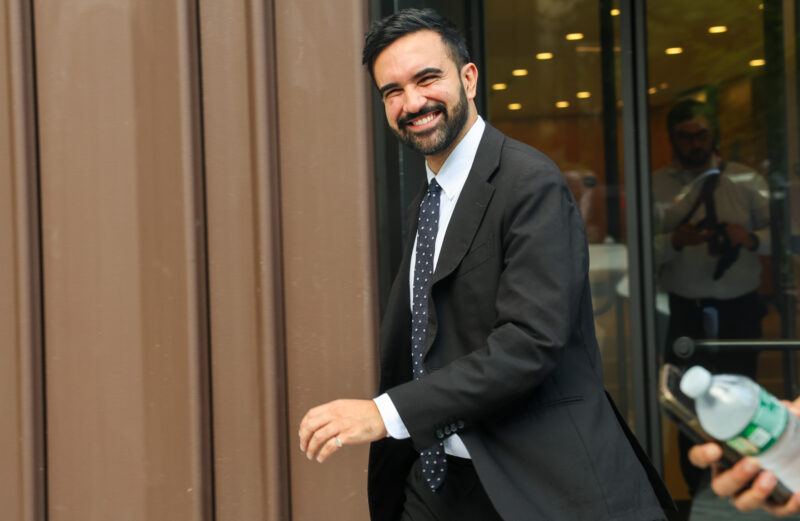
Paul Finebaum, the longtime ESPN host and veteran Birmingham, Ala., college football commentator, is seriously considering entering the Republican primary to replace outgoing Sen. Tommy Tuberville (R-AL), three sources familiar with the matter confirmed to Jewish Insider. Finebaum, 70, began considering a run in late August, as it became clear that former Auburn University men’s basketball coach Bruce Pearl, whom Finebaum had encouraged over the summer to enter the race, was not going to make his own bid. Both men are Jewish and have known each other for over a decade as prominent figures in the Southeastern Conference — Pearl as a legendary college basketball coach and Finebaum as an outspoken football commentator, JI’s Emily Jacobs reports.
Where he stands: Reached for comment, Finebaum told JI, “It’s true, I’ve received a lot of calls encouraging me to run for Senate. So many of those calls have the same theme: Alabamians aren’t looking for someone running for the Senate as a job promotion. They want a senator ready to fight for their families, for conservative values and for President Trump’s agenda.” His statement continued, “We all have a belief system, things that drive us and make us who we are, faith is a big part of that for me. I’m praying about the best path forward for me and my family. I’m flattered that so many people think I can serve in that role for them. Like I tell everyone who calls me or stops me at the grocery store, I’ll have something to say soon.”
MAKING IT OFFICIAL
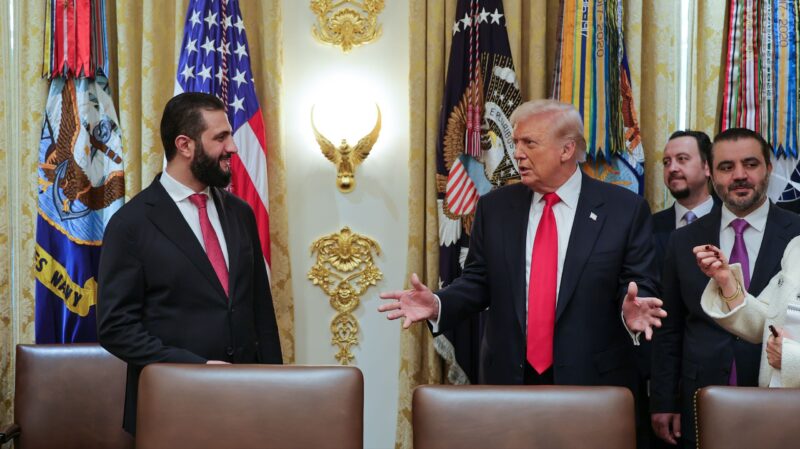
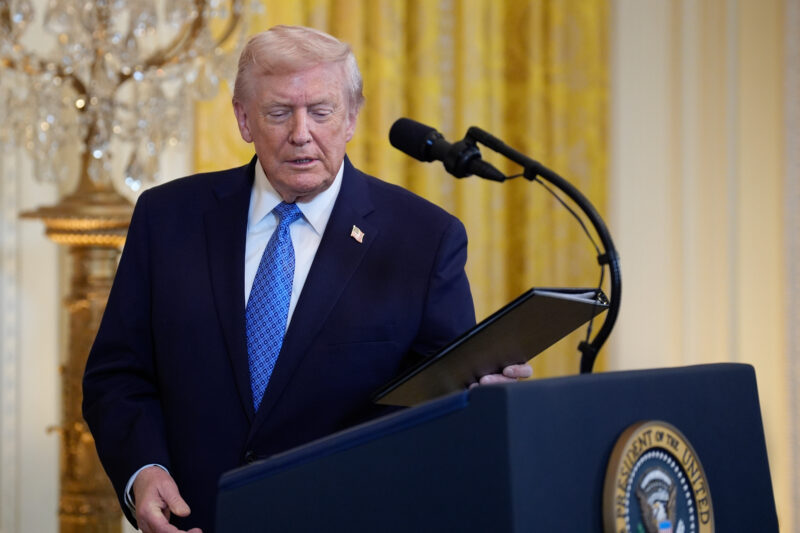
Trump signs executive order pledging to designate chapters of Muslim Brotherhood as terrorist orgs

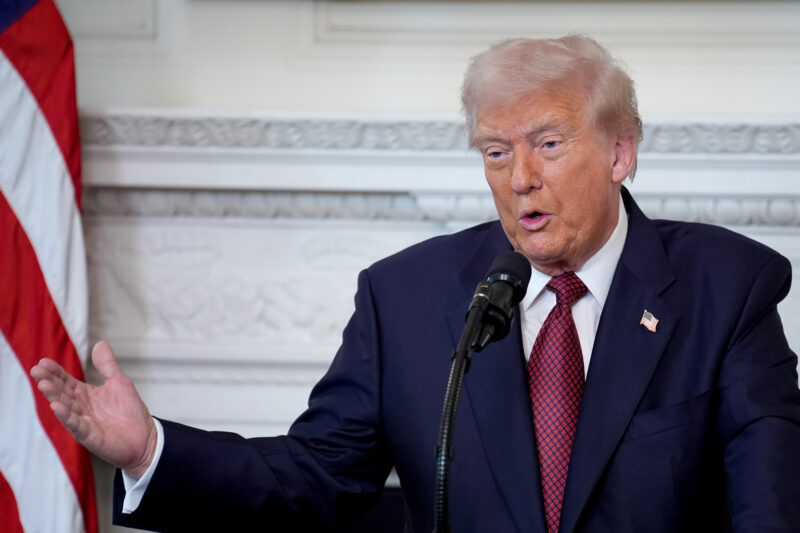
President Donald Trump signed an executive order on Monday pledging to designate certain chapters of the Muslim Brotherhood as terrorist organizations, identifying the organization’s branches in Lebanon, Jordan and Egypt as particularly problematic, Jewish Insider’s Gabby Deutch reports. “Its chapters in Lebanon, Jordan and Egypt engage in or facilitate and support violence and destabilization campaigns that harm their own regions, United States citizens and United States interests,” according to the executive order.
What it means: The new policy gives the secretary of state and the secretary of the Treasury 30 days to identify which branches should be designated “Foreign Terrorist Organizations” and which should be deemed “Specially Designated Global Terrorists,” another formal designation by the U.S. government that comes with less severe consequences than the FTO designation. According to the executive order, it is now official U.S. policy “to cooperate with its regional partners to eliminate the capabilities and operations of Muslim Brotherhood chapters designated as foreign terrorist organizations” and to “deprive those chapters of resources, and thereby end any threat such chapters pose to United States nationals or the national security of the United States.”
Bonus: The Foundation for Defense of Democracies’ Mark Dubowitz called the executive order the “start, not the finish, of the [counterterrorism] and lawfare campaign against this dangerous Islamist movement. The Trump administration chose the smartest path — a surgical, branch-by-branch framework that strikes the Brotherhood where it’s most vulnerable.”
Meanwhile in Israel: Mansour Abbas, leader of the Ra’am party in the Knesset, an ideological offshoot of the Muslim Brotherhood, accused Prime Minister Benjamin Netanyahu of trying to “steal the elections” after Netanyahu said the government was “working to complete” the process of banning the Muslim Brotherhood “soon.”
FASHION FAUX PAS?
Anna Wintour mingles with Qatari royal who glorified Hamas’ slain leader

Anna Wintour, the Vogue figurehead and fashion icon, mingled in Doha, Qatar, over the weekend alongside Sheikha Moza bint Nasser, the mother of the Qatari emir, who has drawn controversy for celebrating the slain Hamas leader Yahya Sinwar after he was killed by Israeli forces operating in Gaza last year, Jewish Insider’s Matthew Kassel reports. “The name Yahya means the one who lives,” Moza wrote on social media in October 2024, mourning the man who orchestrated the Oct. 7 attacks. “They thought him dead but he lives. Like his namesake, Yahya bin Zakariya, he will live on and they will be gone.”
Rubbing shoulders: Wintour, Vogue’s global editorial director and chief content officer for Condé Nast, was pictured sitting next to the sheikha during the Fashion Trust Arabia awards ceremony at the National Museum of Qatar on Saturday. Moza, who is among the most famous women leaders in the Arab world and seen as a Middle East style icon, has been a fierce critic of Israel following Hamas’ Oct. 7 terror attacks — frequently using her social media platform to denounce the Jewish state and to spread anti-Israel content.
Worthy Reads
Dems Who Want to Fight: The New York Times’ Lisa Lerer spotlights a group of progressive Democratic senators that includes Sens. Chris Murphy (D-CT) and Chris Van Hollen (D-MD) who are challenging the approach being taken by Senate Minority Leader Chuck Schumer’s (D-NY) and Sen. Kirsten Gillibrand (D-NY) to recruit and back mainstream candidates for open seats in upcoming primaries. “The party’s campaign arm, the Democratic Senatorial Campaign Committee, has not made any formal endorsements in contested primaries. However, the senators are convinced that it is quietly signaling support for and pushing donors toward specific Senate candidates: Representative Angie Craig in Minnesota, Representative Haley Stevens in Michigan and Gov. Janet Mills in Maine. The dispute exploded in a private meeting with Mr. Schumer and Ms. Gillibrand last month, when the skeptical senators raised concerns about the campaign arm’s electoral strategy. They were livid after the New York senators denied showing any preference in the three states, according to three people familiar with the conversation.” [NYTimes]
Warped Coverage of the War: In the National Interest, Ludovic Hood, a career foreign service officer who served as a senior advisor in the Biden administration’s State Department, suggests that much of the animus toward Israel over the last two years originates from biased reporting and political gesturing. “It is hardly surprising that Hamas was disinclined to contemplate ending the war when Washington’s foremost foreign policy preoccupation for much of 2024 was criticizing or threatening Israel. … In many respects, it is heartening to see young people engage in activism in this age of screen-induced torpor. But when protestors disregard or downplay Hamas’s role in the suffering in Gaza, or appear utterly unmoved by the ongoing massacres and starvation in Sudan or by the recent slaughter of hundreds of thousands of Arab Muslims in the civil wars in Syria and Yemen, one must ask what is unique about this conflict — or about Israel — that breeds such singular animosity.” [NationalInterest]
What Ayatollah?: In The Wall Street Journal, Reuel Marc Gerecht and Ray Takeyh posit that Israeli military successes in the region over the last two years have defanged Iranian Supreme Leader Ayatollah Ali Khamenei and allowed his acolytes to largely replace him in decision-making matters. “If Mr. Khamenei had died on Oct. 6, 2023, he would be remembered as a successful, history-bending revolutionary. But the Oct. 7 war caught the cleric unprepared, utterly blind to the chain reaction that militant Palestinians were about to unleash. When the Israelis showed that the rules of the game had changed, Mr. Khamenei stayed with his old playbook. … Now when Mr. Khamenei pronounces on critical issues, VIPs he once humbled contradict him.” [WSJ]
Word on the Street
The House Committee on Education and the Workforce is launching investigations into the public school systems in Berkeley, Calif.; Fairfax County, Va.; and Philadelphia over the districts’ handling of complaints of antisemitism in recent years…
A poll from the University of New Hampshire found 35% of Massachusetts voters undecided in the Senate primary matchup between Sen. Ed Markey (D-MA) and Rep. Seth Moulton (D-MA); Markey pulls in 34%, while 25% of respondents said they backed Moulton…
The New York Times reports on Jewish communal concerns over New York City Mayor-elect Zohran Mamdani’s response to a protest outside a Manhattan synagogue last week in which he condemned efforts by the NGO Nefesh B’Nefesh to assist in Jewish immigration to Israel…
The Daily Wire’s Ben Shapiro and The Free Press’ Bari Weiss sat for a wide-ranging discussion, released Monday, with “Call Me Back” host Dan Senor during a live taping of the podcast during the Tikvah Fund’s Jewish Leadership Conference…
eJewishPhilanthropy’s Nira Dayanim looks at the Canadian government’s decision to revoke the tax-exempt statuses of three Jewish NGOs in the country…
Len Blavatnik purchased for $115 million the East Hampton, N.Y., home previously owned by former Warner Bros. Chairman Terry Semel, marking the most expensive single residential home sale in the Hamptons’ history…
The owners of Washington, D.C., bagel chain Call Your Mother filed a trademark infringement lawsuit against the owner of the New Jersey-based Bubbi Bagels, which uses a similar logo and the phrase “Call Your Bubbi” on its marketing materials…
The New York Times spotlights musician David Amram, whose varied works include an opera about Jewish inmates at a concentration camp holding a Passover Seder and the “Songs of the Soul” symphony that combines Jewish folk elements from around the world…
Colombian officials took 17 children into protective custody after conducting a raid on a hotel where members of the Lev Tahor sect had been staying; authorities said the nine adults accompanying the children, who were questioned by officials, would likely be deported…
Israel’s Yad Vashem clashed with Polish officials over Warsaw’s complicity in the Holocaust following comments by U.S. Ambassador to Poland Tom Rose last week in which the diplomat criticized what he said was “the slander that Poland somehow bears responsibility for the crimes committed by others”…
The Gaza Humanitarian Foundation is formally closing down weeks after suspending its operations following the ceasefire last month between Israel and Hamas…
Israeli media reports that Emirates is planning to resume its flights between Israel and Dubai in early 2026…
An Iran-based nuclear-testing and diagnostics company linked to the Islamic Republic’s military is using U.K.-made radiation-detection equipment in products that are available for purchase…
The amount of Iranian crude oil being held on offshore tankers has reached its highest level in two and a half years as China, Tehran’s top buyer, decreases its imports…
Fernando Lottenberg was reappointed as the special advisor on antisemitism at the Organization of American States…
The Charles E. Smith Jewish Day School in Rockville, Md., announced Jonathan Levy as its incoming head of school, succeeding Rabbi Mitchel Malkus…
Rabbi Daniel Septimus was named the executive director of the JCC Association of North America’s Center for Jewish Peoplehood…
Pic of the Day
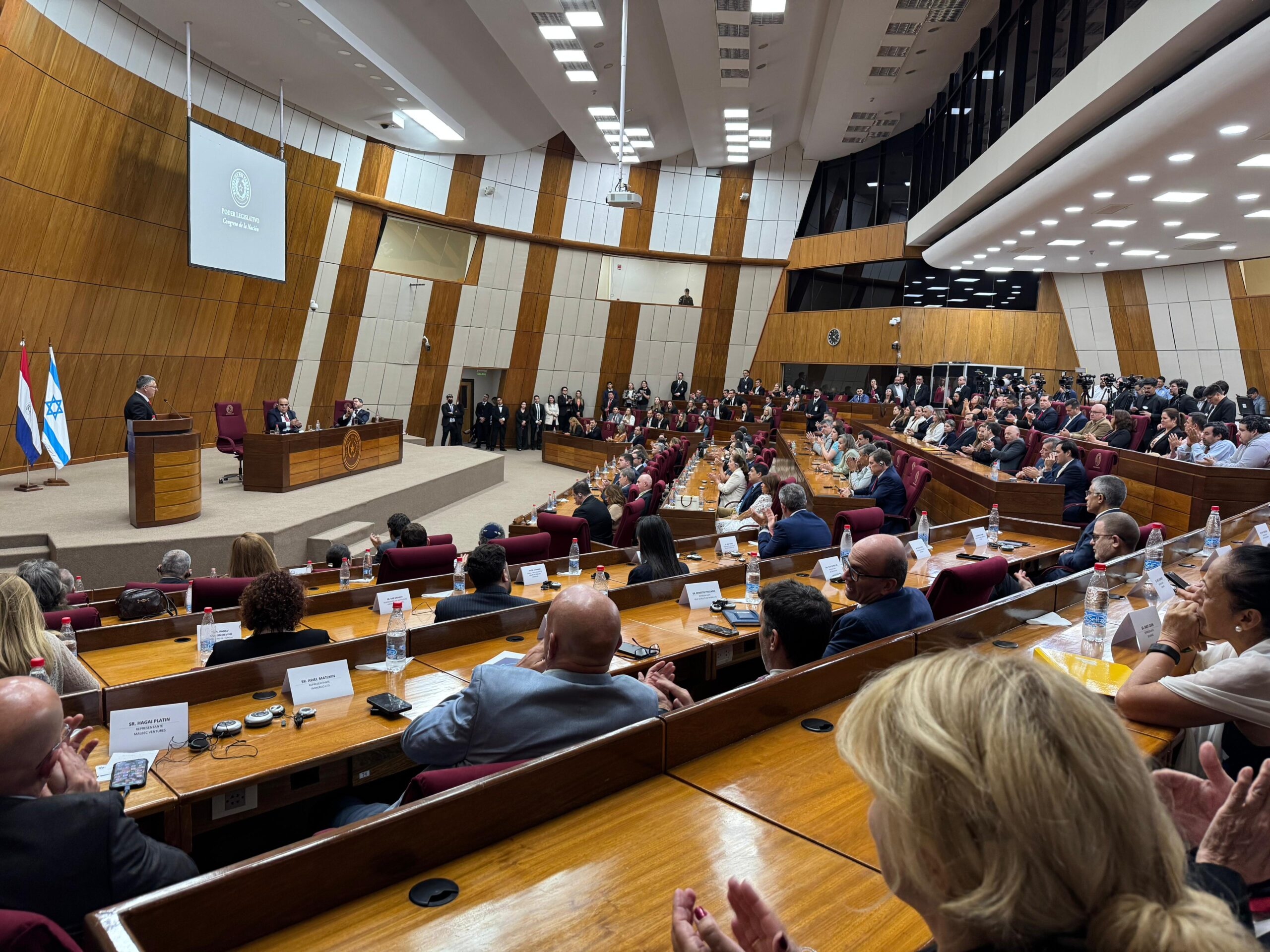
Israeli Foreign Minister Gideon Sa’ar addressed a special joint session of Paraguay’s National Congress in the capital of Asunción on Monday during Sa’ar’s multicountry visit to South America, which will also include a stop in Argentina.
Birthdays

Comic book writer and novelist, during his 16-year stint writing X-Men from 1975-1991, it is the best-selling comic book in the world, Christopher S. Claremont turns 75…
Writer, lawyer, actor and economic commentator, including an Emmy Award-winning stint as a game show host, Ben Stein turns 81… President and CEO of the American Council for Capital Formation, Mark A. Bloomfield turns 76… Israeli scholar of Arab culture and a lecturer at Bar-Ilan University, Mordechai Kedar turns 73… Obstetrician and gynecologist, he is a past president of the Jewish Federation of Greater New Haven, Norman Ravski, MD turns 72… Beverly Hills, Calif., commercial real estate investor, Albert Ahobim… Retired men’s college basketball coach with 615 career wins, he won coach of the year honors four times in two different conferences, Ben Braun turns 72… Historian at Tel Aviv University, focused on religious phenomena in the Middle Ages, he is also president of the Ruppin Academic Center in Israel, Aviad Kleinberg turns 68… Director of the Chabad House in Johannesburg, South Africa, Rabbi David Masinter turns 66… Retired senior research scientist at ExxonMobil and editor of Rav J.B. Soloveitchik’s commentary to the Rosh Hashanah and Yom Kippur machzorim, Arnold Lustiger… Israeli fashion and wedding dress designer, her reality TV show airs in over 145 countries worldwide, Pnina Tornai turns 63… Member of the Knesset for the Likud, he was the editor-in-chief at the Israel Hayom newspaper, Boaz Bismuth turns 61… Actress, comedian, entertainer and past member of the Tel Aviv-Yafo city council, Orna Banai turns 59… CEO of the Israeli American Council, Elan Carr turns 58… Founder and former managing director at Beacon Global Strategies LLC, Philippe Reines turns 56… Attorney and former member of the Florida House of Representatives from 2003 until 2011, Adam Hasner turns 56… Strategic communications manager at the Jewish Federation of Greater MetroWest NJ, Lauren Sueskind Theodore… Judge of the U.S. District Court for Maryland, Julie Rebecca Rubin turns 53… Former member of both houses of the South Dakota Legislature, now a bail bondsman and a teacher at Congregation Beth Shalom in Sioux City, Iowa, Daniel Isaac Lederman turns 53… United States deputy secretary of labor, Keith Sonderling turns 43… Executive editor at Jewish Insider, Melissa Weiss turns 39… Deputy Washington editor and democracy editor for the Guardian, Kira Lerner… Bitcoin advocate and podcast host, Charles “Charlie” Shrem IV turns 36…