Courtesy
A Mandarin-speaking Hasidic Jew walks into Washington…
Mitchell ‘Moyshe’ Silk, the first Hasidic Jew confirmed to a post by the Senate, speaks to JI about his path from Borough Park to Washington


 Add JewishInsider on Google
To the business community in Asia and to his former colleagues at the Department of Treasury, Mitchell Silk was usually called Mitch. To his friends and family in the Jewish community he is, always, Moyshe.
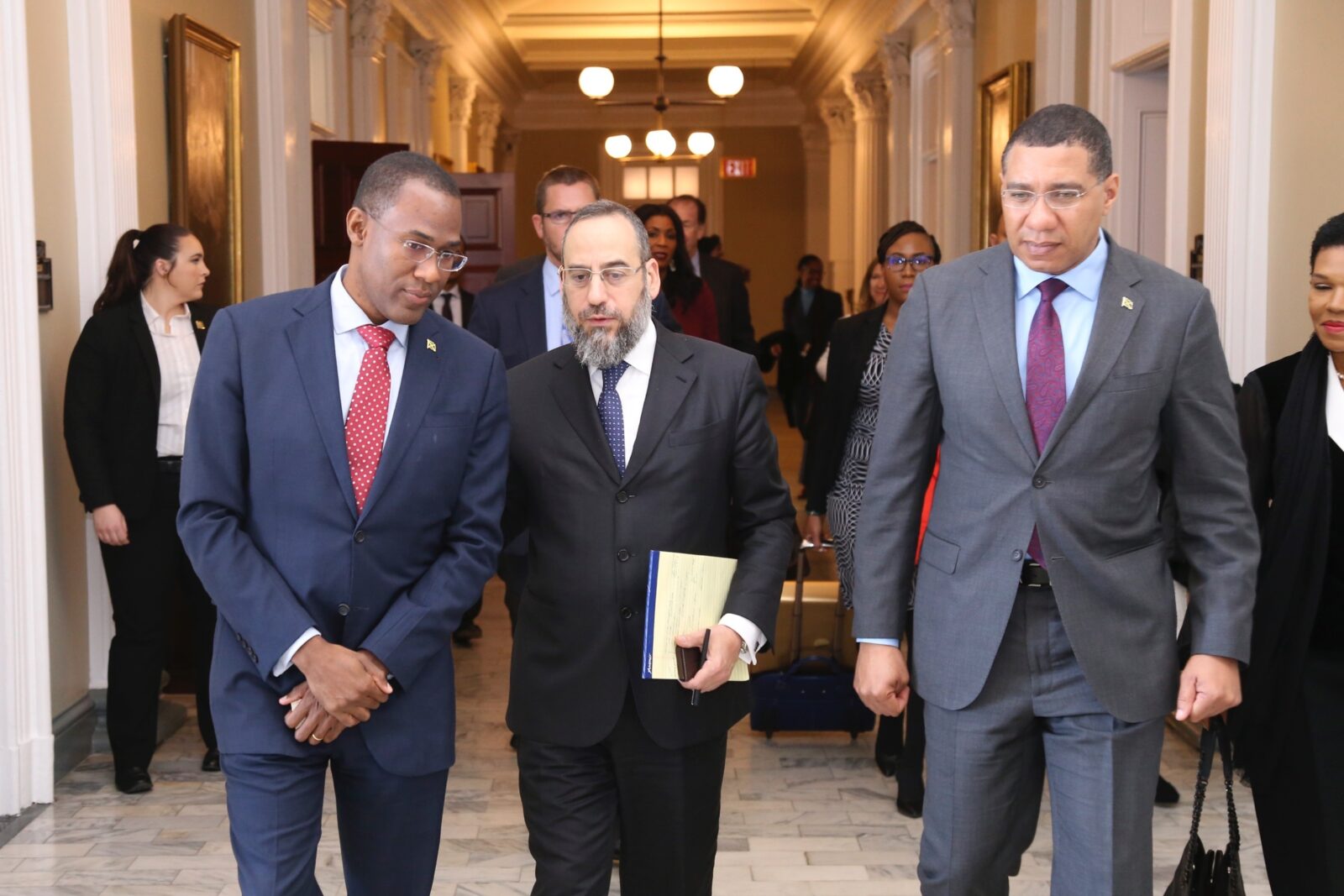
However those who know him refer to him, Silk in 2020 became the first Hasidic Jew to serve in a government role that required Senate confirmation. (The next Hasidic Jew to be tapped for a Senate-approved role also came from President Donald Trump: Yehuda Kaploun, whose nomination to serve as antisemitism special envoy was approved by the Senate Foreign Relations Committee on Wednesday.)
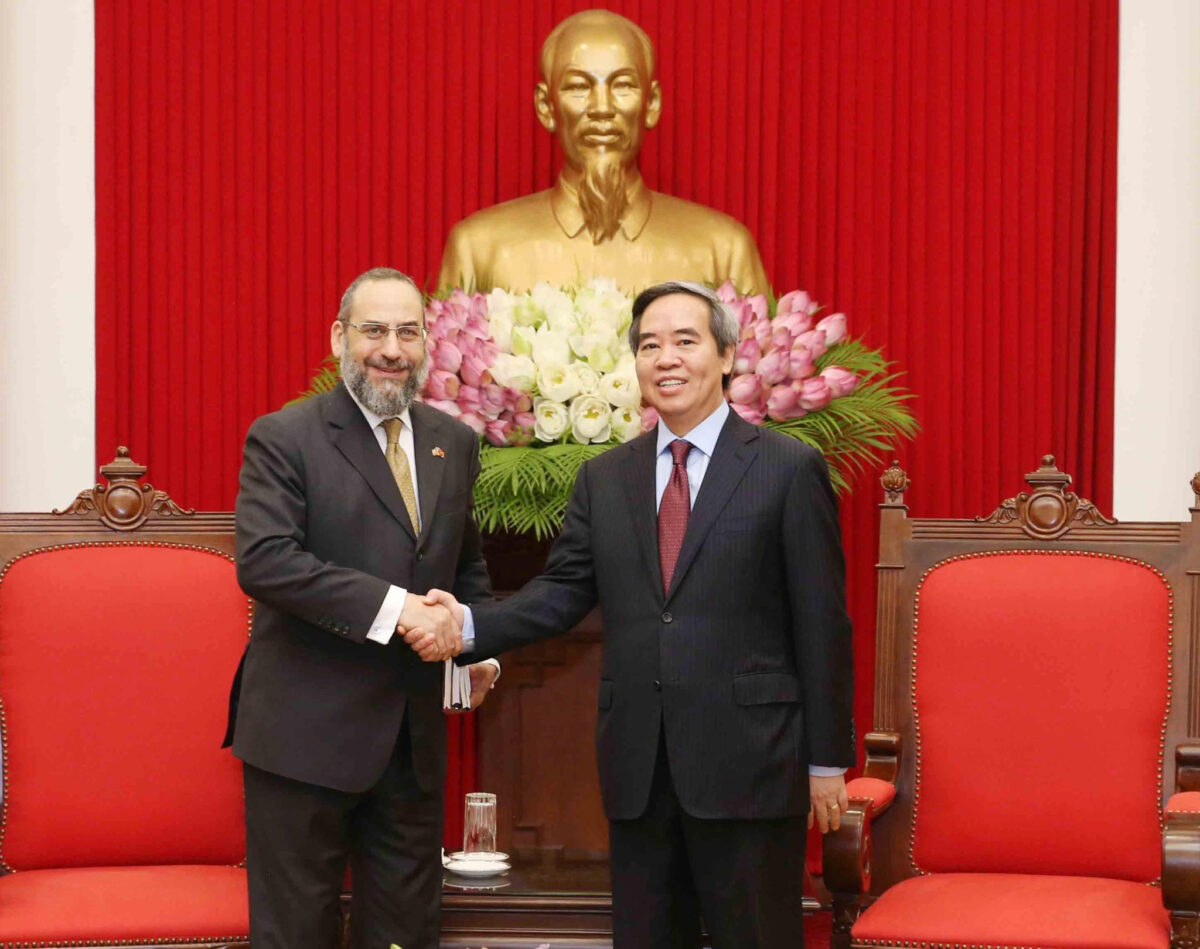
As assistant secretary of the Treasury for international markets in Trump’s first term, Silk worked on trade negotiations with China — he previously spent several years living in Hong Kong, where he found a surprisingly robust Jewish community that enjoyed more kosher restaurants than he would later encounter in Washington — and on a COVID-era program that provided assistance to the airline industry.
He did all of this while commuting weekly to Washington from Borough Park, leaving Brooklyn on Sunday afternoon and returning on Thursday night, just as the scents and sounds of Shabbat cooking began to fill the air.
His service “demonstrated beyond any doubt that there need not be any compromise in the Jewish lifestyle of an observant, Hasidic Jew with the highest echelons of government service,” said Rabbi Levi Shemtov, executive vice president of American Friends of Lubavitch (Chabad). They prayed together most days during Silk’s three years in Washington. “I think that with his extraordinary breadth of experience and broad talent, plus a very engaging personality, Mitch Silk — or Moyshe, as we called him — remains one of the extraordinary Jewish figures in public service of this generation.”
In a conversation with Jewish Insider last month, Silk reflected on an unlikely career path that began with a high school job at a Chinese restaurant, and later took him from studying abroad in Taiwan to conducting business deals in Hong Kong and then advising former Treasury Secretary Steven Mnuchin on trade with Asia. And while many other China experts have passed through Washington over the years, it’s doubtful that any of them spent the period following their government service working on a major translation and commentary of a seminal work of Jewish thought. (For Silk, that was Kedushat Levi, an important text by the Hasidic Rabbi Levi Yitzchak of Berditchev. He published his three-volume edition in 2023.)
“If I were to do a backward run for you of where I ended up and am at now, to each stage and link in the progression and the trajectory, I could do it only in a manner that highlights exactly how much hashgacha pratis, how much divine providence, factored into where I am today,” Silk told JI, using a Hebrew term. “I cannot explain it in any other way than how much I had a divine hand guiding me.”
Silk, who is 64, never set out to become an expert in international markets with a law practice in Asia. He grew up first in Chicago and later in Fort Lauderdale, Fla., which is where the path began — with, as Silk would put it, a little help from God.
“I found the Asian mystique interesting, but I just ended up working in a Chinese restaurant to make money to help my mother. I ended up learning Chinese because I needed to for my work,” Silk recalled. He spent a year studying in Taiwan, as well as a period in China. Shortly after getting married, he and his wife moved to Hong Kong in 1992 when Silk was tasked with opening an office there for a large law firm.
“It was a really great period in my religious and spiritual development,” he said of his years in Hong Kong.
While his work took Silk to places with smaller Jewish communities than his home in New York, he said he never lacked for religious options. He saw the number of synagogues in Hong Kong grow during his time there, as well as the number of kosher restaurants — though both were a tiny fraction of the options available to him just steps from his home in Borough Park. But with fewer people in the community, Silk got involved. As an active member of Hong Kong’s Hevra Kadisha, the group of Jews who make sure bodies are prepared for burial according to Jewish law, he helped remodel the facilities where that process takes place.
“I think the real distinguishing factor for me is that I was able to make an impact in a way in communal life that I would have never had the opportunity to do in the United States,” said Silk.
Silk spent 21 years at the law firm Allen and Overy, and it was only when a former colleague from the firm joined the Treasury Department and suggested Silk for a role there did he contemplate working in Washington. He first served as a deputy assistant secretary before Trump nominated him to the more senior role.
“It was the greatest job that I ever had in my life,” said Silk.
No longer in government, Silk still believes strongly in Trump’s approach to the economy, including his controversial use of tariffs to wrest trade deals from other nations.
In a new book, A Seat at the Table: An Inside Account of Trump’s Global Economic Revolution, Silk outlines his religious journey as he progressed through his career. He writes longingly of the joy of returning home to Brooklyn before Shabbat, and the difficulty of driving away from the Yiddish-tinged chaos of his community as he headed toward the “sterile calm” of Washington.
But he also uses the book to make a case for Trump’s economic agenda, and to present himself as a loyal steward of — and cheerleader for — that message.
“This book is not a memoir,” Silk writes. “It’s a road map and a call to action. It’s an inside look at Trump’s economic principles and strategies through the lens of my Treasury portfolio, to help illuminate what Trump really stands for.”
At the beginning of the book, Silk makes clear what he stands for, and the ideals that drive him. The book’s epigraph features three quotes — one from the Talmud, one from Kedushat Levi and one from Rabbi Mordchele of Nadvorna, the Ukrainian shtetl where his grandfather was born: “True justice demands action. Hard work redeems hardship. To serve with heart is to lead with purpose.”