












































Professor who backed encampment selected for role on Northwestern presidential search committee
Ian Hurd’s appointment to the search committee drew criticism from some of the school’s Jewish alumni

Vincent Alban for The Washington Post via Getty Images
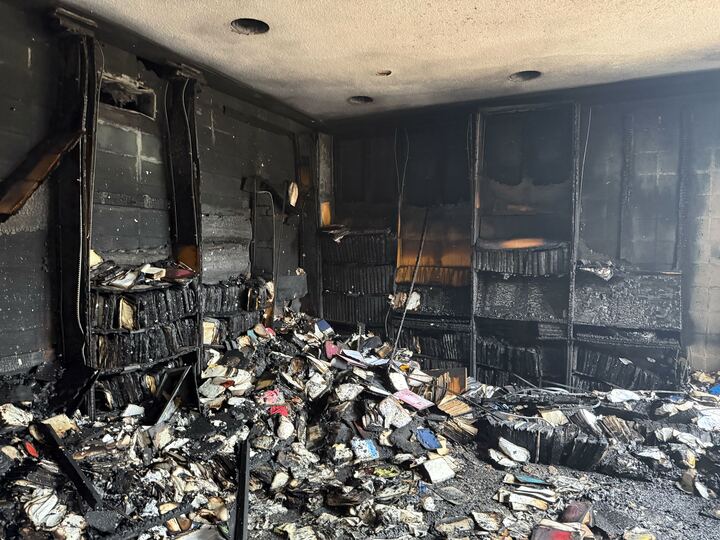
Northwestern University in Evanston, Ill. on Saturday, October 5, 2024.


 Add JewishInsider on Google
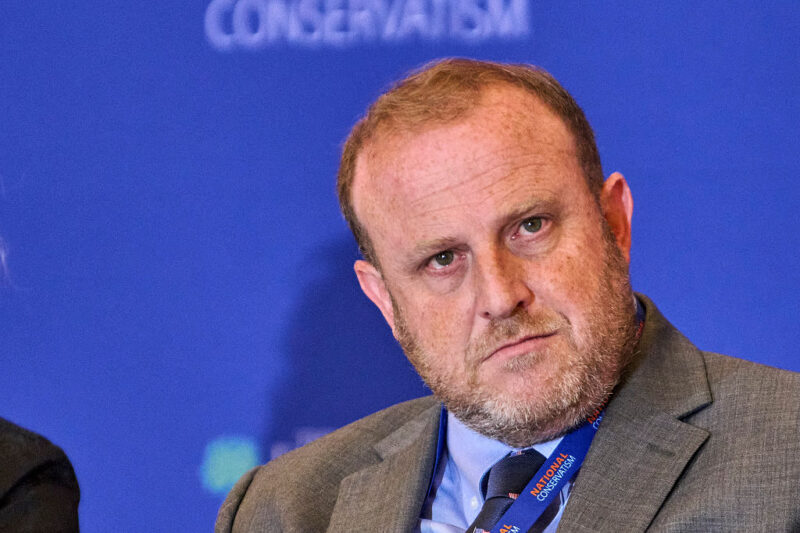
A Northwestern University professor who supported the anti-Israel encampment on the Evanston, Ill., campus and is married to the founder of the university’s chapter of Educators for Justice in Palestine was tapped to join a new presidential search committee, the school announced last week.
Ian Hurd, a professor of political science and president of the faculty senate at Northwestern University, is listed on Northwestern’s website as an “expert on the Middle East.” As Faculty Senate president, Hurd has played an influential role in shaping faculty responses to campus protests, academic freedom disputes and university governance questions.
During this period, faculty leadership — including the Senate — was widely criticized by Jewish students, parents and advocacy groups for failing to condemn antisemitic conduct, for blurring distinctions between political speech and discriminatory harassment and for prioritizing faculty and activist concerns over student safety and civil rights compliance.
The search committee is tasked with making a recommendation to the board of trustees for selecting the school’s next president. The search comes following President Michael Schill’s resignation in September, amid widespread controversy over the school’s handling of antisemitism during his tenure.
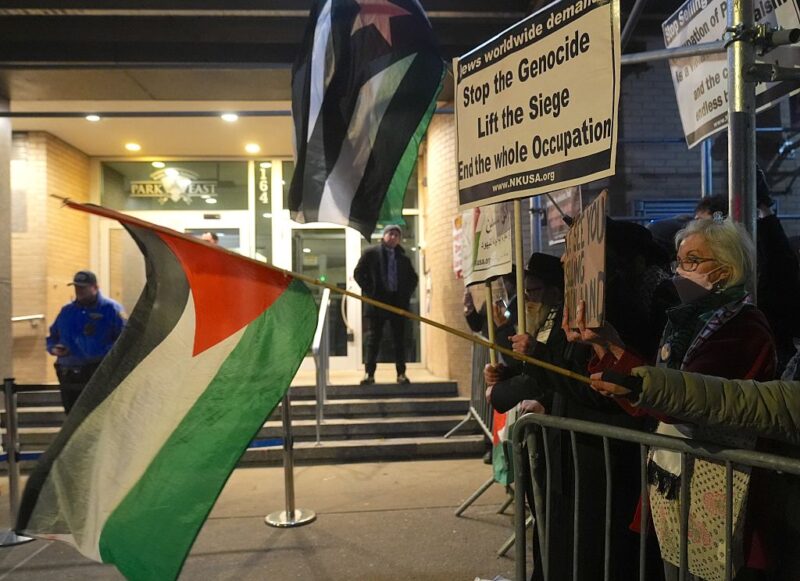
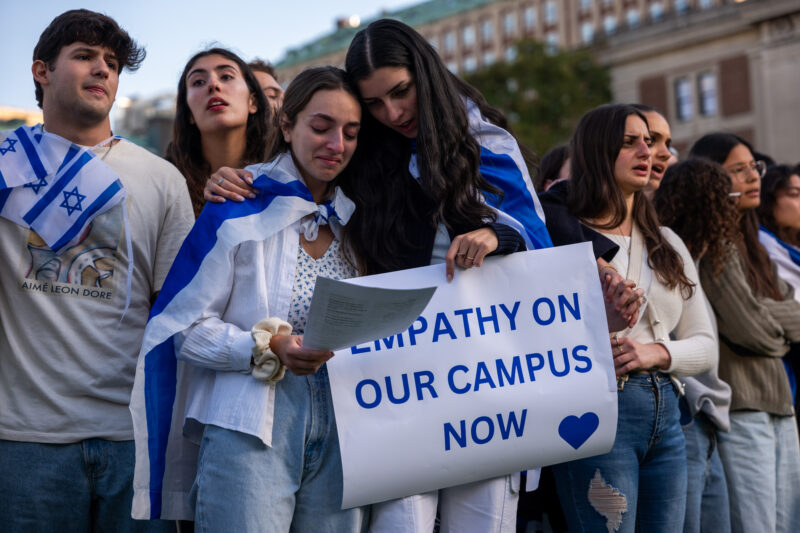
During the anti-Israel encampment that overtook Northwestern’s campus in April 2024 — in which Jewish students were surrounded by mobs and told to “go back to Germany and get gassed” — Hurd signed an open letter with 171 faculty members backing the encampment.
Schill was heavily scrutinized by Jewish leaders for overseeing the Deering Meadow agreement, a controversial pact made with anti-Israel encampment participants in the spring of 2024, that allowed students to protest the war in Gaza until the end of the school year so long as tents were removed, and encouraged employers not to rescind job offers for student protesters. The document also allowed students to weigh in on university investments — a major concession for students who had demanded the university divest from Israel.
The Illinois private university agreed to end its commitment to the agreement last month as part of a $75 million settlement with the federal government to restore federal funding that was frozen earlier this year over allegations that administrators failed to address campus antisemitism.
Hurd praised Schill’s capitulation to demonstrators in a May 2024 interview with the Daily Northwestern, saying he was “really proud of how NU handled the situation.”
Hurd’s wife, Elizabeth Shankman Hurd, who is also a professor of political science at Northwestern, was among the founders of the NU chapter of Educators for Justice in Palestine, a faculty-staff network established in December 2023 aligned with NU Students for Justice in Palestine. Shankman Hurd signed the October 2023 faculty letter that downplayed the Hamas attacks in Israel and also helped circulate multiple faculty statements opposing Northwestern’s antisemitism task force, even as Jewish students reported harassment and exclusion from campus spaces.
Hurd’s appointment to the search committee drew criticism from some of the school’s Jewish alumni. “The antisemitic encampment at Northwestern occurred in April 2024, immediately before Ian Hurd was elevated into senior faculty leadership. At the time, Hurd was a leading figure in the Faculty Senate and publicly defended the administration’s response,” Michael Teplitsky, president of the Coalition Against Antisemitism at Northwestern and an alum of the school, told Jewish Insider.
“That sequence is not incidental — it is disqualifying,” continued Teplitsky. “Northwestern is under federal civil rights scrutiny precisely because its leadership normalized antisemitic conduct and chose negotiation over enforcement. Elevating a faculty leader who publicly endorsed that approach into a gatekeeping role for selecting the next president signals continuity, not reform. It raises profound concerns about judgment, civil rights enforcement, and whether the university is capable of the governance reset that Jewish student safety and federal compliance now plainly require.”
Hurd “brings an obvious bias to this committee, likely put in there as the most respectable proxy for the anti-Zionist faculty cohort,” Rich Goldberg, a senior advisor at the Foundation for Defense of Democracies who holds bachelor’s and master’s degrees from Northwestern, told JI.
“His decision to sign the faculty letter [in support of] the pro-Hamas encampment should be disqualifying. Now is certainly the time to double down on accountability for what Northwestern has agreed to, not pretend everything is rosy because of [the settlement with the Trump administration] and [former President Michael] Schill’s resignation,” said Goldberg.
Hurd did not respond to a request for comment from JI on Monday.
More Stories
TERROR TAGS
Florida designates Muslim Brotherhood, CAIR as terrorist organizations

doha forum dispatch
Hillary Clinton reiterates concerns about anti-Israel ‘propaganda’ targeting American youth
ANALYSIS
Most Jewish voters oppose Mamdani — but remain divided on an alternative
WATERED DOWN
House amendment to Muslim Brotherhood bill removes key terrorism designation, sanctions provisions

TEXAS TALK
Two Republicans condemned by Jewish groups looking to make comebacks in Texas