














































Netanyahu advisor: Israel ‘not messing around here anymore’ post-Oct. 7
Speaking at the Hudson Institute in Washington, Caroline Glick said that she hoped an ‘accommodation’ could be reached to bring calm to the Syrian border
Matthew Shea
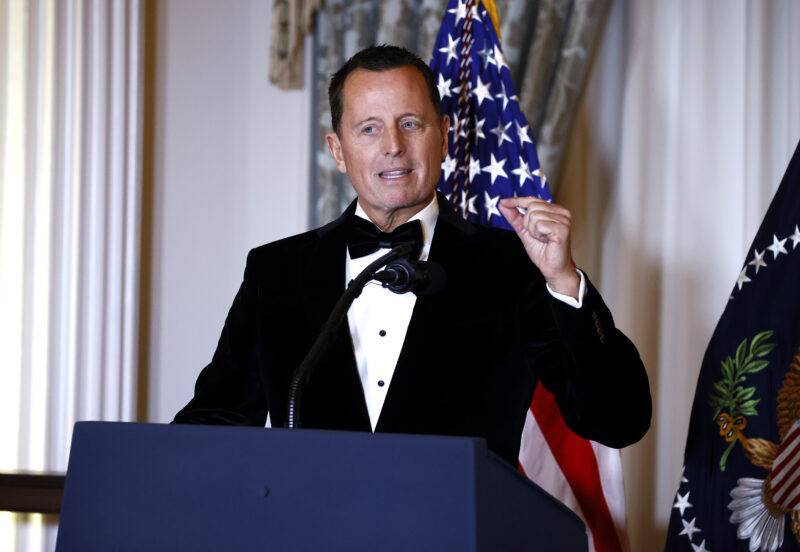
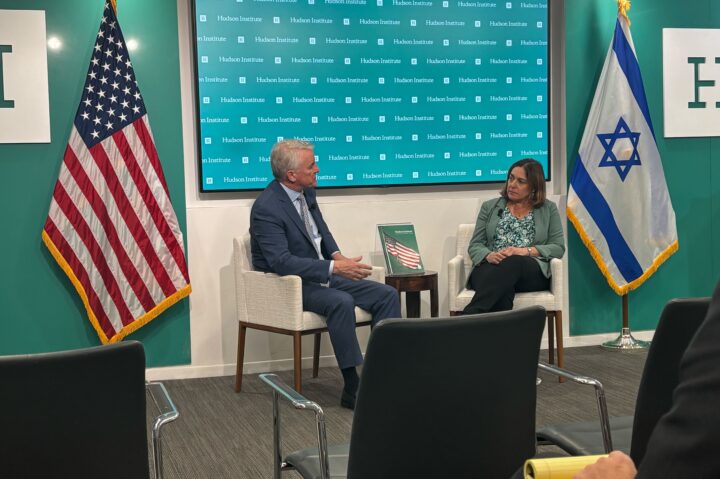
Caroline Glick, international affairs advisor to Israeli Prime Minister Benjamin Netanyahu, speaking in conversation with the Hudson Institute’s Michael Doran at the think tank’s Washington headquarters, Nov. 21, 2025


 Add JewishInsider on Google
Israel has adopted a new mindset in its defense strategy since the Oct. 7, 2023, Hamas attacks, Caroline Glick, international affairs advisor to Israeli Prime Minister Benjamin Netanyahu, said on Thursday in Washington.
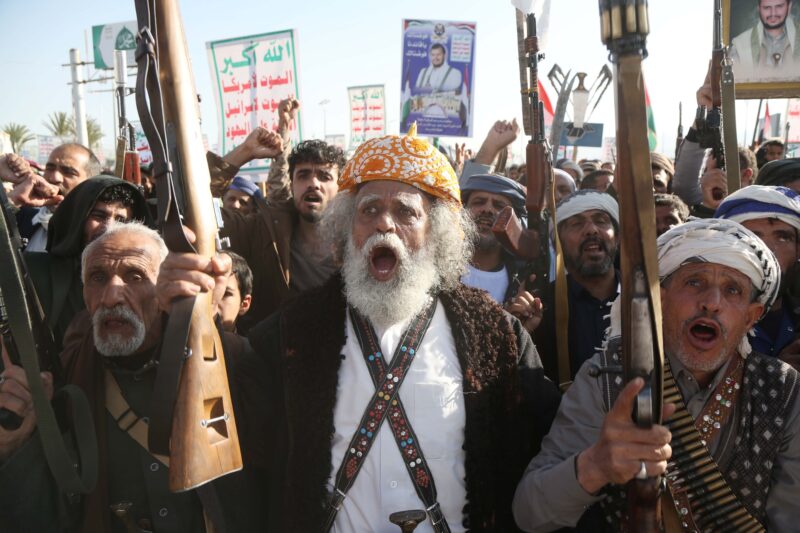
“One of the things that all of Israel’s enemies have to understand, and our friends as well, is that we’re not messing around here anymore,” said Glick. “Whether you’re Turkey, the Houthis, whomever you happen to be, you want to try to kill the Jews, it’s not going to work.”
Glick, speaking in conversation with the Hudson Institute’s Michael Doran at the think tank’s Washington headquarters, discussed opening talks with Syria, eyeing Azerbaijan as a candidate for the Gaza stabilization force and Israel’s new defense mindset amid reemerging threats from Hezbollah.
Following the fall of the Assad regime in late 2024, questions have remained about the country’s relationship with Israel and whether Damascus will pose a threat to Jerusalem’s security. Reports have indicated that Damascus is seeking an end to the Israeli presence in a U.N. buffer zone inside Syria, which troops entered to protect Israel’s borders. Meanwhile, Israel is calling for the demilitarization of southwest Syria, however no agreement has yet been made.
Glick said that while an agreement could still be far off, talks between the countries have opened up, adding that the prime minister, defense minister and head of the army were on the Syrian side of the border on Wednesday “to assess the situation there.”
“We’re engaged and we have made our expectations clear,” said Glick. “We hope that we’ll be able to reach an accommodation with them, that’s our hope. But part of reaching an accommodation that’s stable is ensuring our concerns are met.”
“We have a doctrine post-Oct. 7, which is no hostile forces on our border,” Glick added. “It’s important to us that Syria cannot be militarized. We’ve seen some concerning aspects of what the new regime is doing, so we’re distrusting and we’re verifying and like to share our concerns with our American allies.”
Glick also touched on the situation in Gaza. On Monday, the U.N. Security Council passed a resolution backing President Donald Trump’s Gaza peace plan, which was supported by several nonvoting Arab allies.
“We feel comfortable with the resolution largely because it’s President Trump, the best president that we’ve ever had in the White House, by far,” said Glick. “We know that he shares our commitment to achieving [our] goals.”
Experts told Jewish Insider that the passing of the resolution makes moving to Phase 2 of Trump’s 20-point plan more plausible and creates a legal framework for the international stabilization force. The composition of such a force is still unknown as countries have either been unwilling to provide troops, or their proposed involvement has raised concerns from Israel.
Glick said one country that could be involved in such a force is Azerbaijan, stressing the close partnership the two nations have shared for decades.
“One of the countries we’ve been looking at is Azerbaijan,” said Glick. “In their lifestyles and in their creed they are definitely not at all sympathetic to jihadists of the ilk of Hamas, and so from that perspective they fit the bill, because you can’t have forces inside of Gaza that are supportive of Hamas. It has to be a force that’s willing to actually confront Hamas.”
During Vice President JD Vance’s visit to Israel in October, reports surfaced that Turkey could be willing to join the stabilization force — a possibility that was strongly objected to by Israel due to Ankara’s deep ties to Hamas and hostile posture toward the Jewish state. Glick reiterated that having Turkish forces in Gaza is “not going to happen,” pointing to the soured relations between the two countries.
“It’s true that they are a NATO ally and it’s true that they have close relations with the United States, and that’s great, but they don’t have great relations with us, and it’s not because of Israel,” said Glick. “Israel is not calling for the conquest of Turkey. So, we’re not on a good base with Ankara.”
Glick noted that while Turkish NGOs operate in Israel and Gaza, military forces are “a different issue.” She added that Turkey has in the past directed Hamas to plan attacks in Europe.
After Oct. 7, Israel faced threats from across the region, including from Hezbollah in Lebanon, which led to the displacement of over 60,000 residents from northern Israel. In September 2024, Israel eliminated 70% of Hezbollah’s launch capabilities and eliminated leader Hassan Nasrallah, according to a report published by the Jewish Institute for National Security of America. Two months later, Israel and Lebanon reached a ceasefire. However, some experts are worried that Hezbollah’s rebuilding could reignite conflict.
“Hezbollah is trying to be tough guys and rebuild their forces with the intention of restoring the pre-war conditions along the northern border,” said Glick. “We have no intention of allowing a situation to arise along the northern border where the citizens in the border communities are going to have to leave again or be subjected to the kind of threat we experienced. It’s just not going to happen”
Glick said that Israel is trying to “destroy weapons and hubs of operations” that are viewed as a threat.
“[Hezbollah is] moving very quickly. They are highly motivated, they desperately want to get back in the game,” said Glick. “It’s not going to be allowed.”
More Stories

Fashion Faux Pas?
Anna Wintour mingles with Qatari royal who glorified Hamas’ slain leader

priority check
Trump’s national security strategy balances global engagement with ‘high bar’ for intervention
DOHA DEALINGS
FBI Director Patel signs security deals with Qatar, his former lobbying client

data diaries
New Yale Youth poll finds Gen Z fueling rise in antisemitic views
diplomats declared
Israel approves new consuls-general in San Francisco, Houston