Blake Ezra Photography Ltd.
New Humash features Rabbi Sacks’ posthumously published translations
English translation, commentary by former U.K. chief rabbi seeks to ‘make Torah relevant to us today’


 Add JewishInsider on Google
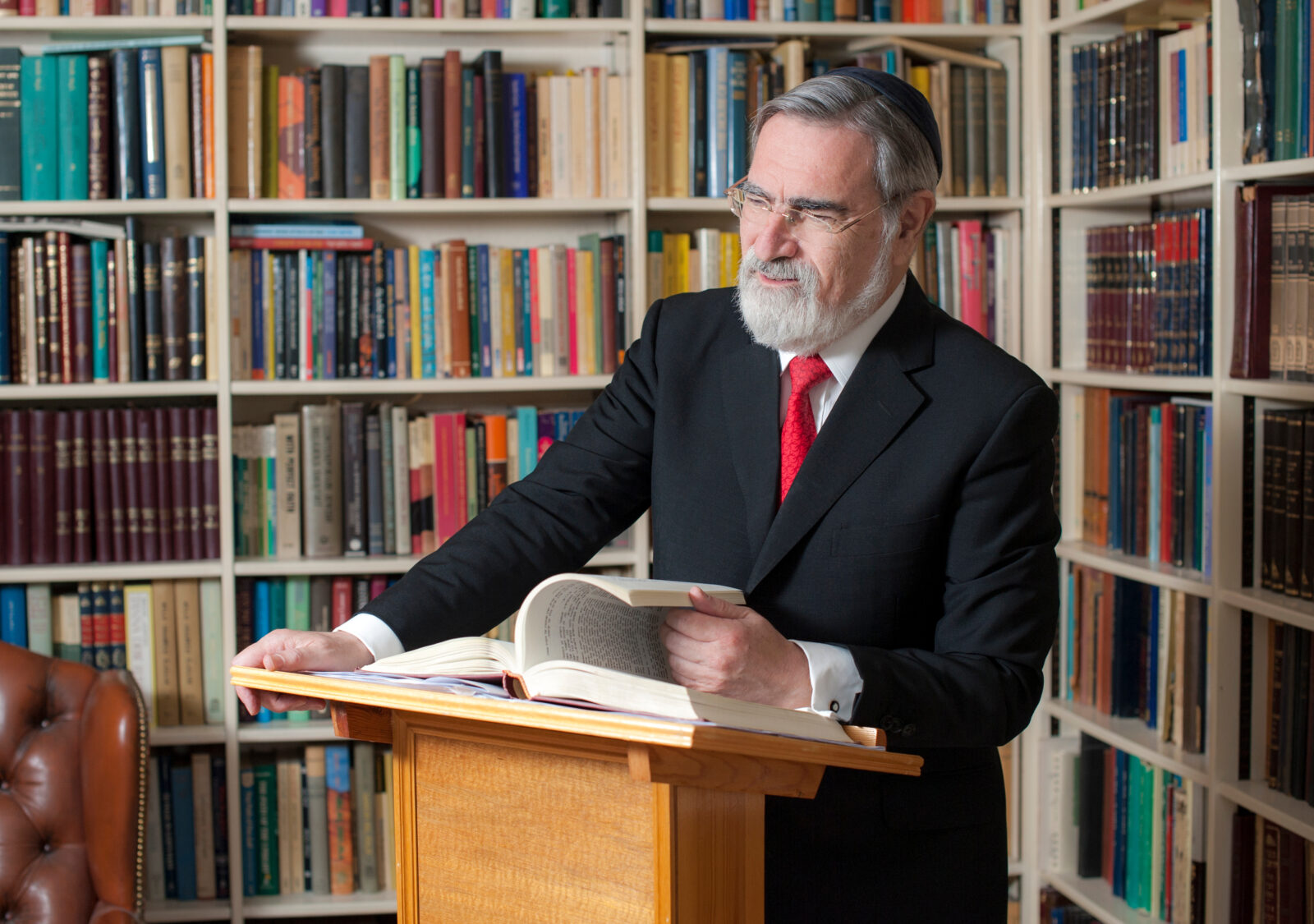
Former British Chief Rabbi Lord Jonathan Sacks was a towering figure in Jewish life whose unique blend of Torah and Western wisdom attracted adherents around the world for many years before his death in 2020.
Now, with Rosh Hashanah, the Jewish new year, approaching later this month, and the restarting of the cycle of reading the weekly Torah portion a few weeks later, Rabbi Sacks’ longtime Jerusalem-based publisher, Koren, is releasing a posthumously completed Koren Shalem Humash, with a new translation and insights to encourage deeper understanding of the Five Books of Moses.
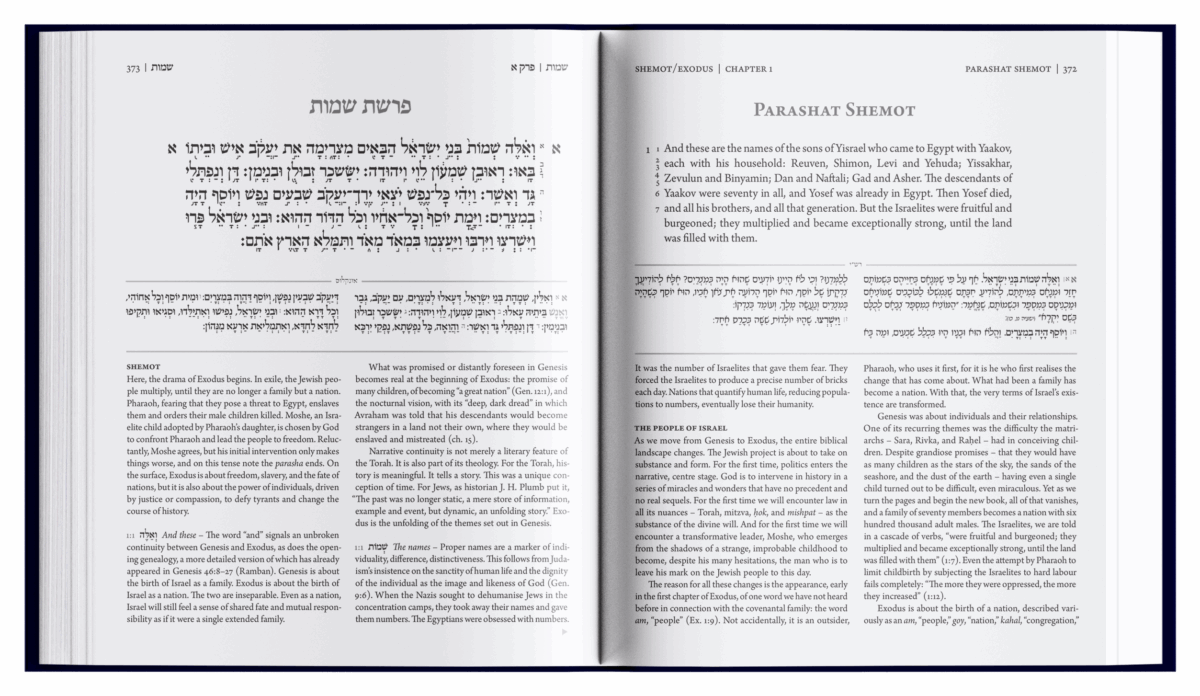
Each spread features the words of the Humash in Hebrew — written in the clear Koren font, recognizable to users of the publisher’s popular prayer books — on one side. On the other side there is a new, modern English translation that Sacks completed in 2018. Below there are two of the standard commentaries: from the 11th-century French rabbi Rashi and second-century sage Onkelos, who translated the Torah into Aramaic.
On the bottom half of the pages is Sacks’ own commentary, which he began writing before his death, after which The Rabbi Sacks Legacy continued his work based on his writings and speeches.
The story of the Koren Shalem Humash begins in 2006, Joanna Benarroch, president of The Rabbi Sacks Legacy, told Jewish Insider last week. At that time, Sacks began working on his popular series of books about the weekly Torah portion, Covenant and Conversation.
“He started writing it online every week,” Benarroch recalled. “He was the chief rabbi of the United Kingdom and the Commonwealth, based in London, but he started to build a global audience.”
Sacks’ goals for Covenant and Conversation were “to make Torah relevant to us today, so it’s not just wisdom from 2,000-3,000 years ago today, but wisdom we can also take with us. It was very important to him for us to be proud, knowledgeable Jews and to share that with the next generation … to create new leaders who were proud, knowledgeable Jews. These were the things permeating his mind when he was writing,” Benarroch said.
After Rabbi Sacks’ death, Koren brought scholars, including the rabbi’s niece, Jessica Sacks, to compile elements of Covenant and Conversation, his many other books, his BBC Radio “Thought for the Day” segments and other essays and speeches to complete Sacks’ commentary on the Humash.
“The scholars beautifully weaved his ideas from each parasha [Torah portion] into detailed commentary,” Benarroch said. “It’s his words, very carefully crafted to give a whole picture of each parasha. The ideas are woven together in a way they had never before been [presented]. You have 15 years of writing and speaking on Bereishit [Genesis] crafted in this way.”
In his Passover Haggadah, quoted in the editor’s note of the Humash, Sacks wrote that “traditional commentaries are usually close readings of individual words and phrases rather than reflections on the meaning of the whole. That is a classic Jewish response and I have not hesitated to do likewise … But it is the great themes, the overarching principles, that are often neglected or taken for granted.”
Sacks’ commentary combines both, in some places referring to specific words and phrases, and in others sharing insights on broader stories and ideas, which gives, Benarroch said, “an overview of what you can learn from the parasha. You’re coming out with a clear understanding of what it is about, with relevant ideas for today.”
Benarroch recounted recently being in synagogue and sitting near a non-Jewish visitor who was reading along to the Torah portion in English.
“I was mortified, because it was a parasha that was quite difficult, with a lot of blood and gore,” Benarroch said. “I wished at that point that the Rabbi Sacks Humash was available, because he would have given her a sense of what is going on and an understanding of the battles in the time of the Humash … He wanted people to understand the whole picture, to read it as a narrative.”
She paid tribute to Sacks’ ability to “make very complicated things accessible.”
In addition, the Humash features detailed references, such that if there is an idea a reader seeks to explore further, he or she can find the full essay, book or radio program it came from.
Benarroch worked for Sacks for 24 years, as executive director of the Office of the Chief Rabbi and then of his private office, and was key to establishing The Rabbi Sacks Legacy after his death. She said that the greatest lesson she’s taken from him is the importance of listening to and learning from one another.
“He felt active listening was absolutely imperative for all of us. We talk a lot, but we don’t listen enough,” she said. “When he was writing his Humash, he felt he was connecting to God through it, and that for us to listen to the words and the messages, we must also listen closely to one another. Judaism is a religion of listening … in terms of unity, community, being part of the Jewish people.”