Robert Alexander/Getty Images
Isaac Chotiner, The New Yorker’s interrogator out to trip up Israel supporters
Chotiner recently devoted six consecutive Q&A interviews with guests about Israel, many of them contentious and combative


 Add JewishInsider on Google
As The New Yorker refrains from addressing its controversial decision to invite an antisemitic speaker to join its upcoming festival, the magazine has otherwise exhibited a notably hostile emphasis on Israel and related issues over the past few months.
Isaac Chotiner, a staff writer for The New Yorker well-known for conducting blunt and aggressive Q&As on a variety of news-related topics, has recently been fixated on Israel — focusing almost exclusively on the subject in what have often been combative interviews with defenders of Israel who span the political spectrum.
From late July to late August, Chotiner published six consecutive interviews concerning Israel, and conducted nearly a dozen more over the preceding three-month period. His two most recent interviews on the subject featured particularly contentious discussions with Jack Lew, former U.S. ambassador to Israel during the Biden administration, and Norman J.W. Goda, a professor of Holocaust studies at the University of Florida.
Speaking with Lew last month, Chotiner repeatedly challenged the Biden administration’s approach to Israel’s war in Gaza — using a relentlessly skeptical tone that the interviewer has not shown in his questioning of anti-Israel interlocutors.
In one illustrative exchange, Lew insisted that Chotiner was “putting words in my mouth” on a point about the Biden administration’s diplomatic engagement with Israel over the course of the war, with the former ambassador calling the issue more complex than he believed their conversation was permitting.
For his part, Goda, who has prominently argued against labeling Israel’s military conduct in Gaza a genocide, sounded frustrated with Chotiner’s line of questioning as they debated the issue during a Q&A conducted in August. At one point, Chotiner said he was “surprised” that Goda, who is widely respected in his field and had characterized “the relationship between Holocaust studies and the war in Gaza” as “very fraught,” would choose to focus on the semantics around allegations of genocide instead of “the actual situation going on in Gaza today.”
“You’re acting like I’m splitting hairs over the word ‘genocide,’” Goda replied, pushing back against the framing. “The word ‘genocide’ has been ricocheting around the internet and around social media.”
Chotiner, whose interviews often feature lengthy, bracketed responses added after his discussions have taken place, has previously engaged in tense conversations about Israel. The New Yorker writer has won praise for his prosecutorial approach on a range of issues — and his consistent ability to push his targets into uttering exasperated or unflattering remarks.
Some of his interviewees have seemed to regret speaking with him, including Jonathan Greenblatt, the CEO of the Anti-Defamation League, who took part in a heated debate three years ago about whether anti-Zionism equates to antisemitism. Asked by Chotiner if he would agree that “the debate over Zionism has not necessarily had this ‘anti-Semitic veneer’ for centuries, right? There are a lot of Jews who were anti-Zionists before,” Greenblatt responded: “Give me a—Isaac. Sure, there were Jews who were worried that it would create more anti-Semitism directed against them in America. When you ask me these questions, it suggests to me that you’re coming at this from a particular editorial perspective.”
In 2019, Michael Oren, a former Israeli ambassador to the U.S., abruptly ended what he criticized as a “hostile” interview with Chotiner as they discussed Israel’s disputed territorial claims to the West Bank. “I don’t think you are actually interested in anything I have to say,” Oren said to Chotiner before hanging up on their call.
But in the wake of the Oct. 7, 2023, Hamas attacks and ensuing war in Gaza, Chotiner has taken a hostile approach to interviewing pro-Israel voices who have been sharp critics of the Israeli government, from the Israeli-American author Yossi Klein Halevi to The Atlantic’s contributing writer Eliot Cohen.
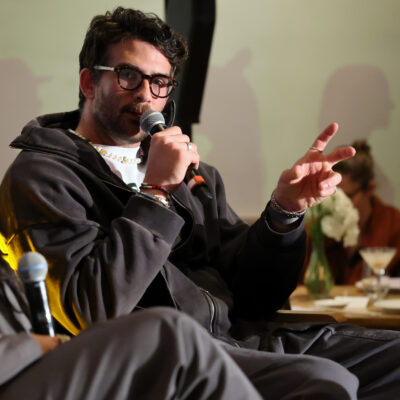
Owing to the preponderance of such interviews, media watchers will be scrutinizing The New Yorker over how it handles its upcoming rountable conversation with Hasan Piker, the far-left streamer who has gained notoriety for a range of extreme comments about Israel and Jews, including remarks that have justifed the Oct. 7 attacks and denied reports of sexual violence committed by Hamas.
The magazine’s decision to invite the controversial influencer to speak at its festival next month, where he will join a discussion about how the internet has reshaped politics, has spurred speculation among critics that he will likely continue to receive friendly or nonconfrontational treatment by the mainstream media, which has largely ignored his extreme views as his popularity has risen in recent years.
In an extensive profile of Piker published in The New Yorker in March, for instance, the reporter Andrew Marantz, who will moderate the festival’s upcoming roundtable, only lingered briefly on the streamer’s “relentless” criticism of Israel and his sympathetic remarks about Hezbollah and other terror groups.
The New Yorker has so far avoided commenting on Piker’s upcoming appearance, even as it has drawn condemnation from the ADL as well as the attorney Gloria Allred, among other critics. Chotiner did not return a request for comment.