






































Virginia Jewish leaders scrutinize Spanberger’s engagement in education appointments
The Virginia governor-elect wants to play a role in picking UVA’s new president and will be filling numerous board vacancies at the state’s public universities
Win McNamee/Getty Images
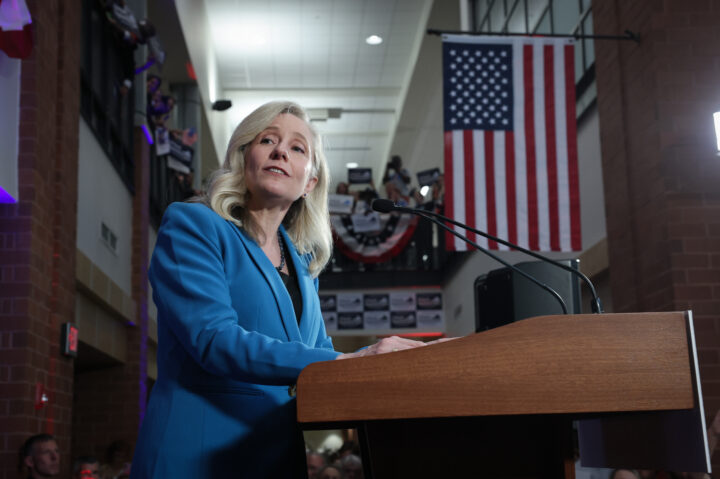
Virginia Democratic gubernatorial candidate, former Rep. Abigail Spanberger speaks to supporters during a rally on June 16, 2025 in Henrico County, Virginia.


 Add JewishInsider on Google
Conservative Jewish legal and education experts in Virginia are voicing concern over a request made by Gov.-elect Abigail Spanberger, a Democrat, for the University of Virginia to pause its presidential search until she takes office in January — and how such a move could impact campus climate for Jewish students.
The issue of selecting board members at the state’s leading public universities has been a politically charged one since Gov. Glenn Youngkin took office in 2021. Several board seats remain unfilled at George Mason University after Democrats in the state legislature blocked Youngkin’s nominees, including Ken Marcus, founder of the Louis D. Brandeis Center for Human Rights Under Law, whom Youngkin appointed in 2024.
Earlier this week, the Supreme Court of Virginia upheld the ruling in favor of Virginia Senate Democrats blocking more than 20 of Youngkin’s university board appointments at several schools, including UVA and GMU.
Spanberger has spoken out against government interference at the University of Virginia over several of the Trump administration’s civil rights investigations into the university’s diversity, equity and inclusion program and over its alleged failure to address antisemitism. The university reached a deal with the federal government in October to pause the investigations, which led its president, Jim Ryan, to resign under pressure.
Youngkin, in turn, attacked Spanberger for getting involved in university governance before she assumes office in January, criticizing a letter she wrote to the board as “riddled with hyperbole and factual errors and impugns both the Board of Visitors and the presidential search underway.” There are currently five vacancies on the UVa Board of Visitors, which Spanberger is looking to fill in order to put her own stamp on the school’s academic future.
Historically, such intraparty skirmishing over university governance and board appointments wouldn’t have a major impact on the Jewish community. But at a time when dealing with antisemitism has become tinged with partisanship — with Democrats accused of being less aggressive in dealing with some prominent antisemitic incidents — the makeup of these key leadership roles and appointments carries high stakes.
As a gubernatorial candidate, Spanberger’s campaign declined to comment when asked by Jewish Insider last year about reaction to news of a GMU student arrested for plotting a terror attack against the Israeli consulate in New York City.
“Democrats [may be] less interested in addressing campus antisemitism and associate allegations of it with the Trump administration’s so-called ‘assault on higher education’ and feel like acknowledging antisemitism may be playing into Trump’s hands,” David Bernstein, a law professor at George Mason University’s Antonin Scalia Law School, told Jewish Insider.
“Democratic-elected prosecutors in Albemarle County [where UVA is located] told universities that even if students violate the state’s anti-mask law, which is a felony, they’re not going to prosecute them. That’s evidence of Democrats in general not taking campus antisemitism seriously,” continued Bernstein, referencing the tendency of anti-Israel activists to wear masks to conceal their identities at protests.
Marcus told JI his expectations for new UVA leadership include “moving forward with stronger policies to address antisemitism, [for example] more forceful use of the International Holocaust Remembrance Alliance’s working definition of antisemitism. I’d like to see that be followed at UVA as it has been at George Mason [University].”
“But that’s now in question,” continued Marcus. “It certainly will make a difference whether the current board selects the president or whether they wait for Gov.-elect Spanberger to have a say in the matter. Issues driving selection of the president are unlikely to focus on antisemitism, but they certainly might include adjacent issues like DEI.”
Jason Torchinsky, a partner at Holtzman Vogel who has filed several lawsuits on behalf of Jewish students alleging campus antisemitism, also expressed worry that “if new board members that the governor-elect appoints are not committed to combating antisemitism on campus, the tide is going to turn and it will get worse at UVA.”
In Virginia, state university board appointees are typically former legislators of the governor’s party or an alum who donates to the school. Torchinsky said he “suspects Spanberger will follow that pattern.”
Torchinsky represented Matan Goldstein, a Jewish UVA student who sued the school in 2024 over allegations that he was “a victim of hate-based, intentional discrimination, severe harassment and abuse and illegal retaliation.” As a result of the lawsuit and an anti-Israel encampment that spring, “UVA made a lot of good changes at that time,” including enforcing an anti-mask law at protests, Torchinsky told JI.
“If the board reverses those policies or fails to enforce them, it could be bad for Jewish students,” continued Torchinsky. “I’m just hoping those don’t get reversed.”
More Stories

Fashion Faux Pas?
Anna Wintour mingles with Qatari royal who glorified Hamas’ slain leader
WATERED DOWN
House amendment to Muslim Brotherhood bill removes key terrorism designation, sanctions provisions
temple talks
Khanna addresses California synagogues on Israel policy, antisemitism
rabbinic rebuke
Over 800 rabbis speak out against Mamdani as threat to ‘safety and dignity of Jews in every city’
DOHA DEALINGS
FBI Director Patel signs security deals with Qatar, his former lobbying client