


























Can social media clout translate into votes?
Jack Schlossberg, the 32-year-old grandson of John. F. Kennedy, is joining a growing crop of young House contenders with digital clout who have been seeking to convert online popularity into a seat in Congress
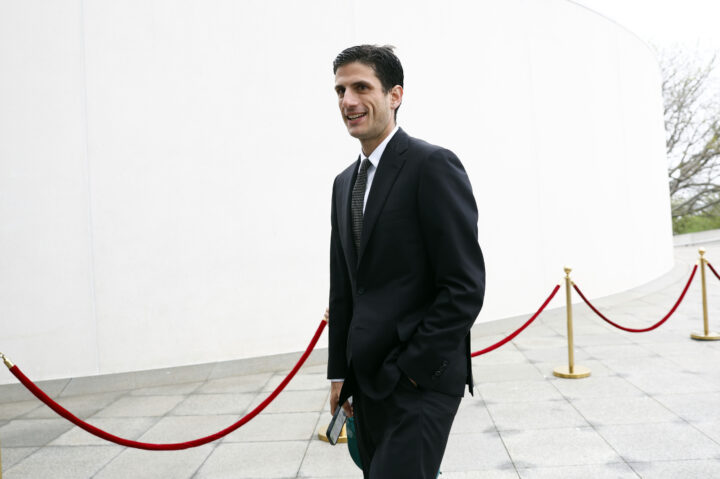
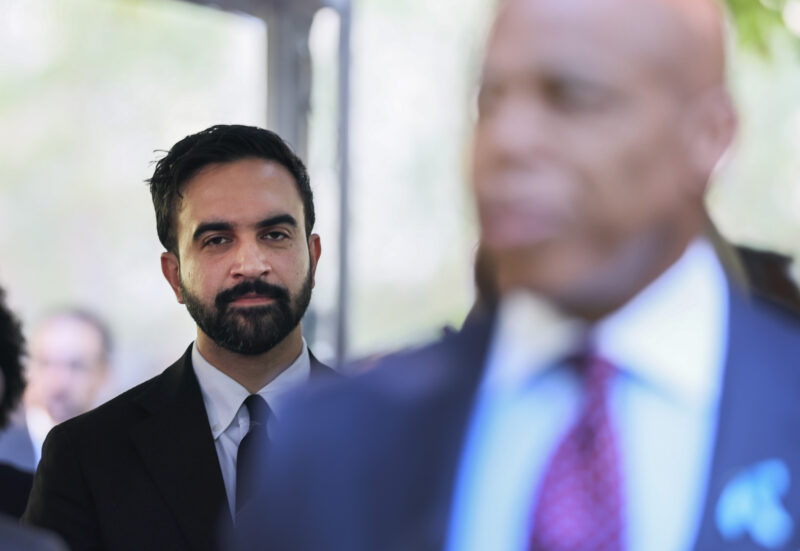
Danielle Parhizkaran/The Boston Globe via Getty Images
Jack Schlossberg walks into the John F. Kennedy Presidential Library ahead of the annual gala on May 4, 2025.


 Add JewishInsider on Google
Jack Schlossberg’s decision to launch a bid for Congress in New York City last week was just the latest example of a Kennedy scion hoping to ascend to federal office, testing the continued strength of a hallowed family name whose political currency has dwindled over the years.
His unorthodox campaign also marked the most recent arrival of a new type of political candidate that has cropped up with increasing regularity this election cycle: the social media influencer vying for power beyond the screen.
Schlossberg, the 32-year-old grandson of John. F. Kennedy, is joining a growing crop of young House contenders with digital clout who have been seeking to convert online popularity into a seat in Congress. His campaign announcement follows, among other recent newcomers, Kat Abughazaleh, a 26-year-old left-wing social media influencer running in next year’s crowded Democratic primary to succeed retiring Rep. Jan Schakowsky (D-IL) in the Chicago suburbs.
Both parties have tried to harness social media to advance their messages while courting influencers and content creators to broaden their appeal among younger online voters. But as influencers engaged in political commentary now pursue political office — most with few apparent qualifying credentials — it remains to be seen if their new efforts can translate to winning campaigns.
And it’s not just young recruits trying to parlay their social media clout into political success. George Conway, the vocally anti-Trump conservative lawyer, is hoping that 2.2 million followers on X and his prolfic online attacks against the president will translate into Democratic votes as he seriously considers running in the Nadler district as well. To succeed, voters in the heavily-Democratic district would have to overlook his long record of traditionally conservative views on policy.
So far, the results have not been promising for such candidates. In a special election for a vacant House seat in Arizona this past summer, for instance, Deja Foxx, a 25-year-old influencer, fell short by a nearly 40-point margin, losing to a more well-known local lawmaker, Adelita Grijalva — a daughter of the late congressman who represented the district for more than two decades.
Foxx, a progressive TikTok activist who first drew national attention during a viral confrontation with a former Republican senator, raised a lot of money for her campaign, and polling suggested that she was gaining traction toward the end of the race. But despite the hype, a majority of voters ultimately elevated a more traditional choice to the Capitol — underscoring the obstacles in to translating online fame to electoral success.
In Houston, meanwhile, Isaiah Martin, a young Democratic activist with a sizable online following who previously served as an advisor to the late Rep. Sheila Jackson Lee (D-TX), faced a similar outcome in a crowded special House election in November — placing fifth with only 5% of the vote.
For her part, Abughazaleh, a former video producer for Media Matters of America who recently pleaded not guilty to federal charges last month alleging that she impeded immigration agents during a protest, is also trailing well behind a more established primary opponent, Daniel Biss, the mayor of Evanston, polls have shown — though many voters still remain undecided.
On the Republican side, some far-right influencers have also fared poorly in recent elections, including Laura Loomer in Florida and Brandon Herrera in Texas.
Jonathan Nagler, the co-director of the Center for Social Media and Politics at New York University, said that “we have no evidence that being able to influence someone’s consumer decisions translates to the ability to influence their political decisions. But one of the things essential for winning office is name recognition. Influencers have that. And they have the ability to reach lots of voters. That means they have the necessary resources to run a real campaign. So they become potential candidates.”
“The challenge for influencers is to come up with issues to run on,” he told Jewish Insider. “They need some reasons to suggest they can be politically relevant and do something that matters to people.”
In Schlossberg’s case, it is for now unclear if he can meaningfully leverage his family ties as he enters an increasingly crowded primary featuring a range of state and local elected officials whose political and legislative backgrounds far outmatch his own thin resume.
The Kennedy heir, who is a graduate of both Yale and Harvard, has most notably served a stint in the State Department and was a political correspondent for Vogue, where he wrote just a handful of articles — underlining his limited professional experience.
His campaign website is short on policy and instead features vague pronouncements on such concepts as “focus,” “optimism,” “courage” and “accountability.”
He is best known for his provocative social media presence, which has stirred controversy that could fuel attacks in the open primary to succeed retiring Rep. Jerry Nadler (D-NY) in Manhattan. A recently resurfaced online video where Schlossberg seems to repeatedly perform a Nazi salute is among the posts that have raised questions about his new candidacy.
Still, one Democratic strategist who spoke with Schlossberg before he launched his campaign said that he had gotten a largely positive first impression from their conversation — despite his reputation for bizarre and often outlandish social media stunts.
“He’s smart. Had something to him. But IDK,” the strategist texted skeptically, using digital shorthand for “I don’t know.”
Nadler, who is expected to endorse his protégé, Micah Lasher, an assemblyman who represents the Upper West Side, has also expressed doubts about Schlossberg’s campaign, saying he “certainly is not going to be a major candidate” and that the House replacement “should be somebody with a record of public service, a record of public accomplishment.”
Hank Sheinkopf, a veteran Democratic consultant in New York City, told JI that “being an influencer in today’s campaign world matters certainly with younger voters,” but suggested that Schlossberg would need to adapt to reach a broader subset of voters in an older and more traditionally liberal district.
“In the complicated candidate and geography he will face, it is only a small part of the coming highly competitive campaign,” he said.
More Stories
Fashion Faux Pas?
Anna Wintour mingles with Qatari royal who glorified Hamas’ slain leader
ANALYSIS
Most Jewish voters oppose Mamdani — but remain divided on an alternative
TERROR TAGS
Florida designates Muslim Brotherhood, CAIR as terrorist organizations
diplomats declared
Israel approves new consuls-general in San Francisco, Houston

doha forum dispatch
Hillary Clinton reiterates concerns about anti-Israel ‘propaganda’ targeting American youth