



























Senate, House lawmakers to reintroduce Pray Safe Act
The bill would create a federal database for security best practices, training materials and grant opportunities for religious nonprofits

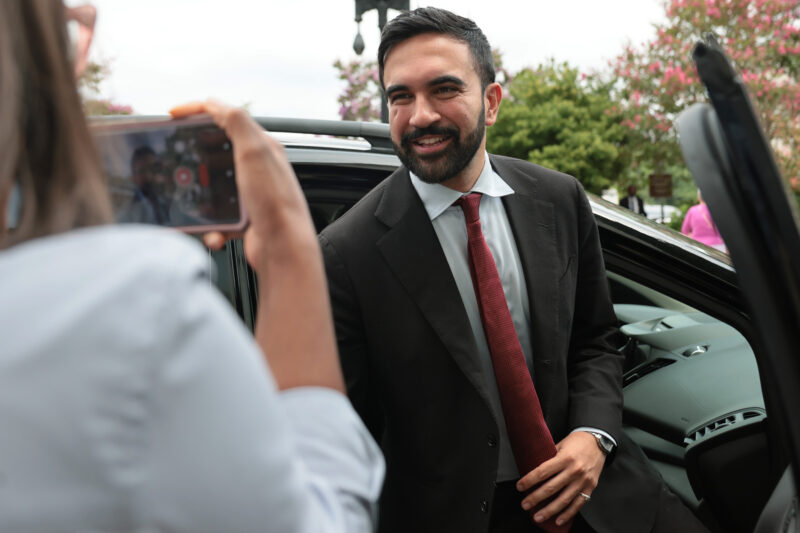
Drew Angerer/Getty Images
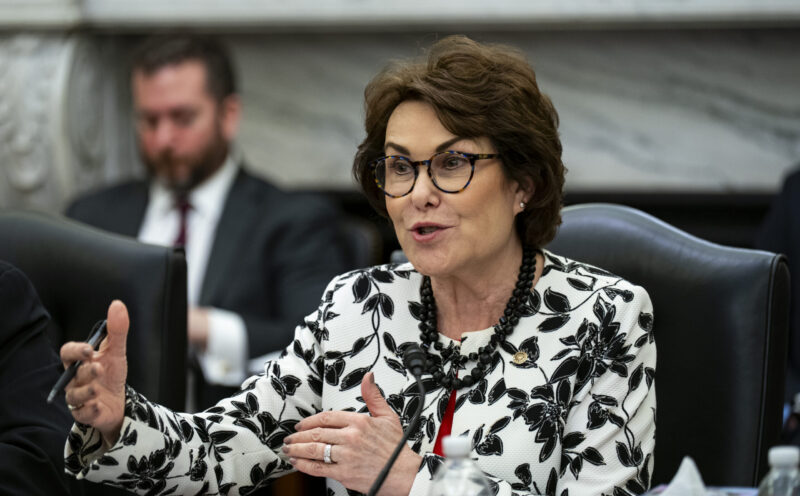
Rep. Grace Meng (D-NY) attends a bill enrollment ceremony for H.R. 3525, a bill to create a commission to study making a national museum of Asian Pacific American History and Culture, at the U.S. Capitol June 7, 2022, in Washington, D.C.


 Add JewishInsider on Google
Senate and House lawmakers on Tuesday are expected to reintroduce the Pray Safe Act, a long-gestating bill that would create a federal database and clearinghouse for security best practices, training materials and grant opportunities for religious nonprofits.
The legislation is being led by Sens. Maggie Hassan (D-NH) and Ron Johnson (R-WI) and Reps. Grace Meng (D-NY) and Maria Elvira Salazar (R-FL) and comes after a series of high-profile attacks at religious institutions, including mass shootings at a Catholic church in Minneapolis and a Mormon church in Michigan.
“No one should ever have to fear for their safety while practicing their faith,” Meng said in a statement. “However, we have seen an alarming rise in vandalism, violence, and terror targeting houses of worship, faith-based organizations, and other nonprofit organizations. It is vital that these organizations have the security resources they need, and ensuring their protection should always be a bipartisan priority.”
“The Federal government should not sit idly by while faith communities experience attacks on their houses of worship. The security needs are only increasing and creating a dedicated resource for communities to improve their security would help stop these incidents before they happen,” she continued.
“The Federal Clearinghouse on Safety and Security Best Practices would be staffed by experts who can walk even the smallest rural parish or synagogue through safety-related resources that meet their community or congregation’s direct needs,” a group of Jewish, evangelical, Catholic and Hindu leaders said in a letter of support to the chairs and ranking members of the Senate and House homeland security committees.
“In a moment when acts of hate seek to divide us, the Pray Safe Act embodies the unifying principle that every American, regardless of creed or tradition, deserves to gather peacefully,” the letter continues. “We respectfully request that you schedule a markup, move the legislation expeditiously out of Committee, and champion its swift passage on the floor.”
Jewish groups that signed the letter include the Anti-Defamation League, Jewish Federations of North America, A Wider Bridge, Agudath Israel, the Orthodox Union, the Rabbinical Assembly, Secure Community Network and the Union for Reform Judaism, joined by Christians United for Israel, the Hispanic Israel Leadership Coalition and Passages Israel.
The letter emphasizes the spate of attacks on places of worship, of various denominations, across the country in recent years.
“Empowering our churches, mosques, synagogues, gurdwaras, temples, mandirs and other houses of worship with the resources and expertise they need, yet often cannot afford, is paramount in this moment of increased violence,” the letter continues. “This support is critical to safeguarding a pillar of the American fabric, freedom of religion.”
The legislators describe the Pray Safe Act as “the most direct, cost-effective path forward” that “will not create a new grant program or impose mandates, it simply streamlines and makes more accessible resources Congress has already authorized, increasing efficiency, and ultimately saving lives.”
“As ADL’s research has shown, antisemitism and other forms of hate continue to fuel threats against faith-based organizations and houses of worship,” ADL CEO Jonathan Greenblatt said in a statement. “We are grateful to Representatives Grace Meng and Maria Salazar, as well as Senators Maggie Hassan and Ron Johnson, for reintroducing the bipartisan Pray Safe Act. This legislation will help ensure that synagogues, churches, mosques, and other faith communities have the resources, training, and best practices they need to stay safe and secure.”
More Stories
TERROR TAGS
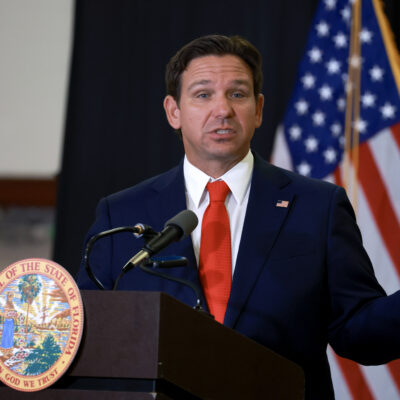
Florida designates Muslim Brotherhood, CAIR as terrorist organizations

priority check
Trump’s national security strategy balances global engagement with ‘high bar’ for intervention
WATERED DOWN
House amendment to Muslim Brotherhood bill removes key terrorism designation, sanctions provisions

doha forum dispatch
Hillary Clinton reiterates concerns about anti-Israel ‘propaganda’ targeting American youth

on the agenda
Trump meeting with Netanyahu at Mar-a-Lago later this month